Japanese Milk Bread Shokupan
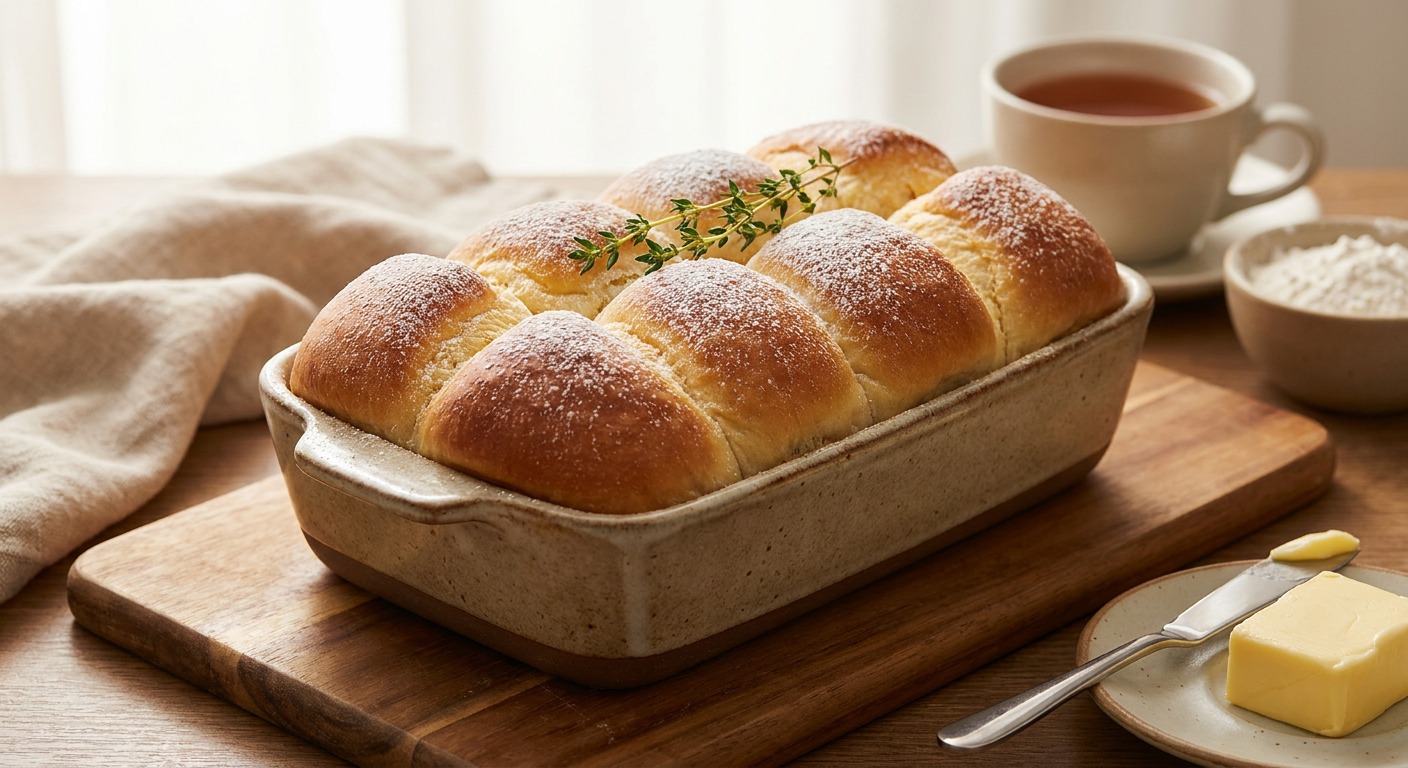
Soft, pillowy Hokkaido-style milk bread (shokupan) with a tender crumb and slightly sweet, milky flavor. This baker-friendly recipe uses a tangzhong (water-roux) for exceptional softness and reliable results at home.
Jake Woods's note
"This loaf shines as a breakfast staple or for elevated sandwiches — the tangzhong gives an irresistibly soft crumb that stays fresh for days. Home bakers will love how forgiving the dough is and how reliably it yields a glossy, tall loaf."
About This Recipe
This Japanese milk bread (shokupan) leans on a small but decisive trick — a tangzhong milk roux — to produce an unmistakably pillowy, tender crumb that keeps for days. The roux (30 g flour to 150 ml milk) gelatinizes some of the starch, trapping moisture so the loaf stays soft instead of going stale quickly; combined with kneading that develops a strong gluten windowpane and a gentle milk brush before baking, the result is a loaf with a fine, elastic crumb and a slightly sweet, milky lift that’s perfect for thick toast, elegant sandwiches, or indulgent French toast.
This version is aimed at home bakers who want reliable results without fuss: the recipe balances timing for a stand mixer (knee times) with practical proofing cues (80–90% of pan height) instead of only clock minutes. It’s forgiving — the tangzhong cushions errors in fermentation — but still rewards attention to temperature, the order of adding butter, and the windowpane test. Use a Pullman pan for perfectly square slices or a standard 9x5 loaf pan for a taller, domed top; either way you’ll get that signature soft crust and pillow-soft interior.
Ingredients for Japanese Milk Bread Shokupan
- 3 cups Bread flour (total; reserve portion for tangzhong)
- 1 3/8 cups Whole milk (total; some used for tangzhong)
- 2 tsp Instant yeast
- 3 tbsp Granulated sugar
- 1 tsp Fine sea salt
- 1 large Large egg (for dough)
- 3 tbsp Unsalted butter, softened
- 1 tbsp Milk (for brushing before bake)
How to Make Japanese Milk Bread Shokupan
Step 1: Make the tangzhong (milk roux)
Measure out 30 g (about 3 tablespoons) of the total bread flour and 150 ml of the total milk for the tangzhong. Whisk the two together in a small saucepan over medium heat until thickened and glossy, about 2–3 minutes; remove from heat and cool to lukewarm (about 25–30 minutes).Step 2: Combine dry ingredients and build the dough
In the bowl of a stand mixer, combine the remaining bread flour (subtract the 30 g used in the tangzhong), instant yeast, sugar and salt. Add the lukewarm tangzhong, the remaining milk, and the beaten egg, then mix on low with the dough hook until a shaggy dough forms, about 2–3 minutes.For this step
- 2 tspInstant yeast
- 3 tbspGranulated sugar
- 1 tspFine sea salt
- 1 largeLarge egg (for dough)
Step 3: Knead and incorporate butter
Continue kneading on medium speed for 6–8 minutes until the dough starts to smooth; add the softened butter in pieces and knead until fully incorporated and the dough is smooth and elastic with a good windowpane, about 8–10 more minutes total by machine (longer by hand).For this step
- 3 tbspUnsalted butter, softened
Step 4: First rise (bulk fermentation)
Transfer dough to a lightly oiled bowl, cover tightly with plastic wrap, and let rise in a warm spot until doubled in volume, about 60–90 minutes depending on temperature. Gently deflate the dough after it has doubled.Step 5: Shape, proof in loaf pan, and brush
Divide the dough into three equal pieces (for a 9x5-inch or Pullman-style pan) and shape each into smooth cylinders; place them seam-side down in a greased loaf pan. Cover and proof until the dough reaches roughly 80–90% of the pan height, 45–60 minutes. Brush the top lightly with 1 tablespoon milk just before baking for a soft sheen.For this step
- 1 tbspMilk (for brushing before bake)
Step 6: Bake and cool
Preheat oven to 350°F (175°C). Bake the loaf for 30–35 minutes until deep golden brown and an instant-read thermometer in the center reads about 190°F (88°C). Remove from pan and cool on a wire rack at least 1 hour before slicing to set the crumb.


- Measure out 30 g (about 3 tablespoons) of the total bread flour and 150 ml of the total milk for the tangzhong. Whisk the two together in a small saucepan over medium heat until thickened and glossy, about 2–3 minutes; remove from heat and cool to lukewarm (about 25–30 minutes).
- In the bowl of a stand mixer, combine the remaining bread flour (subtract the 30 g used in the tangzhong), instant yeast, sugar and salt. Add the lukewarm tangzhong, the remaining milk, and the beaten egg, then mix on low with the dough hook until a shaggy dough forms, about 2–3 minutes.
- Continue kneading on medium speed for 6–8 minutes until the dough starts to smooth; add the softened butter in pieces and knead until fully incorporated and the dough is smooth and elastic with a good windowpane, about 8–10 more minutes total by machine (longer by hand).
- Transfer dough to a lightly oiled bowl, cover tightly with plastic wrap, and let rise in a warm spot until doubled in volume, about 60–90 minutes depending on temperature. Gently deflate the dough after it has doubled.
- Divide the dough into three equal pieces (for a 9x5-inch or Pullman-style pan) and shape each into smooth cylinders; place them seam-side down in a greased loaf pan. Cover and proof until the dough reaches roughly 80–90% of the pan height, 45–60 minutes. Brush the top lightly with 1 tablespoon milk just before baking for a soft sheen.
- Preheat oven to 350°F (175°C). Bake the loaf for 30–35 minutes until deep golden brown and an instant-read thermometer in the center reads about 190°F (88°C). Remove from pan and cool on a wire rack at least 1 hour before slicing to set the crumb.
Japanese Milk Bread Shokupan Tips
Weigh ingredients precisely
Flour and milk volumes vary by cup method; weigh the flour and milk for consistent dough hydration and the correct tangzhong ratio.
Cool the tangzhong fully
Let the roux come down to lukewarm before adding so it doesn’t kill the yeast, and it blends smoothly into the dough without forming lumps.
Look for windowpane
Knead until a thin, translucent membrane forms when you stretch the dough—this indicates sufficient gluten for the soft, pillowy structure you want.
Incorporate butter gradually
Add softened butter in small pieces once the dough has smoothed so it emulsifies into the gluten network instead of tearing it down.
Proof by pan height
Rather than relying only on time, proof the shaped loaf to about 80–90% of the pan height to avoid overproofing and a collapsed top.
Japanese Milk Bread Shokupan Variations and Substitutions
Vegan milk bread
Use a full‑fat plant milk (soy or oat work best) and replace the butter with an equal amount of neutral oil or vegan butter; use a flax ‘‘egg’’ (1 tbsp ground flax + 3 tbsp water) in place of the egg.
Whole-grain blend
Replace up to 25% of the bread flour with whole wheat or spelt flour and increase the tangzhong by 5–10 g flour to maintain moisture and softness.
Sweet red bean swirl
Roll each divided piece thin, spread a thin layer of sweetened anko (red bean paste), then roll and stack for a subtly sweet, textured loaf perfect for tea time.
Dinner rolls
Divide the dough into 12–15 small balls instead of three logs, place in a round or square pan, and reduce the final bake time to 18–22 minutes for soft pull-apart rolls.
How to Store and Make Japanese Milk Bread Shokupan Ahead
Store cooled slices in an airtight bag at room temperature for up to 3 days; avoid refrigeration, which accelerates staling. For longer storage, slice and freeze in single-use portions for up to one month — toast or gently reheat from frozen. To revive slightly stale slices, warm in a 350°F oven wrapped in foil for 6–8 minutes or toast briefly for immediate softness.
What to Serve With Japanese Milk Bread Shokupan
Thick slices are stunning simply warmed with cultured butter and a smear of yuzu marmalade or strawberry jam; use thin slices for classic katsu sando with tonkatsu sauce and shredded cabbage. For drinks, pair the loaf with hot coffee, matcha latte, or a creamy milk tea; for brunch, accompany with soft scrambled eggs and smoked salmon for contrast.
Japanese Milk Bread Shokupan FAQs
Can I use active dry yeast instead of instant?
Yes — proof 2 tsp active dry yeast in a small portion (about 50 ml) of the lukewarm milk with a pinch of sugar for 5–10 minutes until foamy, then add it to the dough in place of the instant yeast.
Why is my crumb dense or gummy?
Dense or gummy crumb usually means insufficient gluten development, underbaking, or too much water; ensure a good windowpane, confirm the loaf reaches ~190°F (88°C) in the center, and check your measurements by weight.
Can I make the tangzhong ahead of time?
Yes — refrigerate the cooled tangzhong in a sealed container for up to 48 hours; bring it back to lukewarm before using, stirring to smooth any gelled surface.
My loaf collapsed in the oven — what happened?
Collapse often indicates overproofing, weak gluten, or an oven that heats unevenly; try slightly shorter final proofing, be gentler when shaping to preserve gas, and preheat the oven thoroughly.
How can I get a shinier, darker crust?
This recipe uses a milk brush for a soft sheen; for a glossier, darker crust use an egg wash (1 beaten egg + 1 tbsp water) applied just before baking, but note the crust will be firmer.
About the author
Jake WoodsHello, I'm Jake. I started this recipe site with the idea that I hated recipe websites that overwhelm you with long stories and ads just to see plain content that's not helpful. My goal is to provide you with quality recipes, simple ideas and a fun cooking experience. There's lots of fun things to cook, and I think as you browse the site you'll find that TopShelf.Recipes is the place for quality recipes on the web.
See all recipes by Jake Woods →Ratings & Reviews
Did you make this recipe?
Be the first to share your experience.
Nutrition Facts
Per serving: 1 serving
Nutrition values are estimated from USDA ingredient data and may vary based on preparation, brands, and portion sizes. Values are provided for informational purposes only.
Keep Reading
Guides & articles for this recipe
Tips & Techniques
Baking Soda and Tenderized Beef
Learn how baking soda can tenderize, boost browning, and improve moisture for ground beef and other meats. This practical guide covers the science, step-by-step techniques, common mistakes, and recipes to try.

Healthy Eating
Gluten-Free Weeknight Grilling Plan
A 7-day gluten-free weeknight grilling plan with quick, family-friendly recipes, prep-ahead timelines, and a printable shopping list that spotlights late-summer produce and pantry staples. Includes clear cross-contamination safety tips and simple swaps to keep dinners fast and crowd-pleasing.

Healthy Eating
Low-Fat Grill Swaps for Big Flavor
A practical guide to trimming fat from grilled meals without losing juiciness or char. Learn yogurt- and citrus-based marinades, lean protein picks, searing and indirect-heat tricks, plus 5 quick low-fat marinades and a simple weeknight plan.
More from Baking
View all Baking recipes →
Cloud Bread Sandwiches

Honey Mustard Chicken Nuggets

Cheddar Jalapeño Corn Muffins

Basque Burnt Cheesecake

30-Minute Sticky Baked Honey Garlic Chicken Thighs with Crisp Edges

Lemon Butter Salmon

Spritz Cookies

Brown Butter Vanilla Syrup

Honey Glazed Easter Ham
Ask me anything about this recipe — substitutions, scaling, techniques, timing.
Powered by AI · 6 questions per 5 minutes, 30 per day