Lemon Poppy Seed Muffins
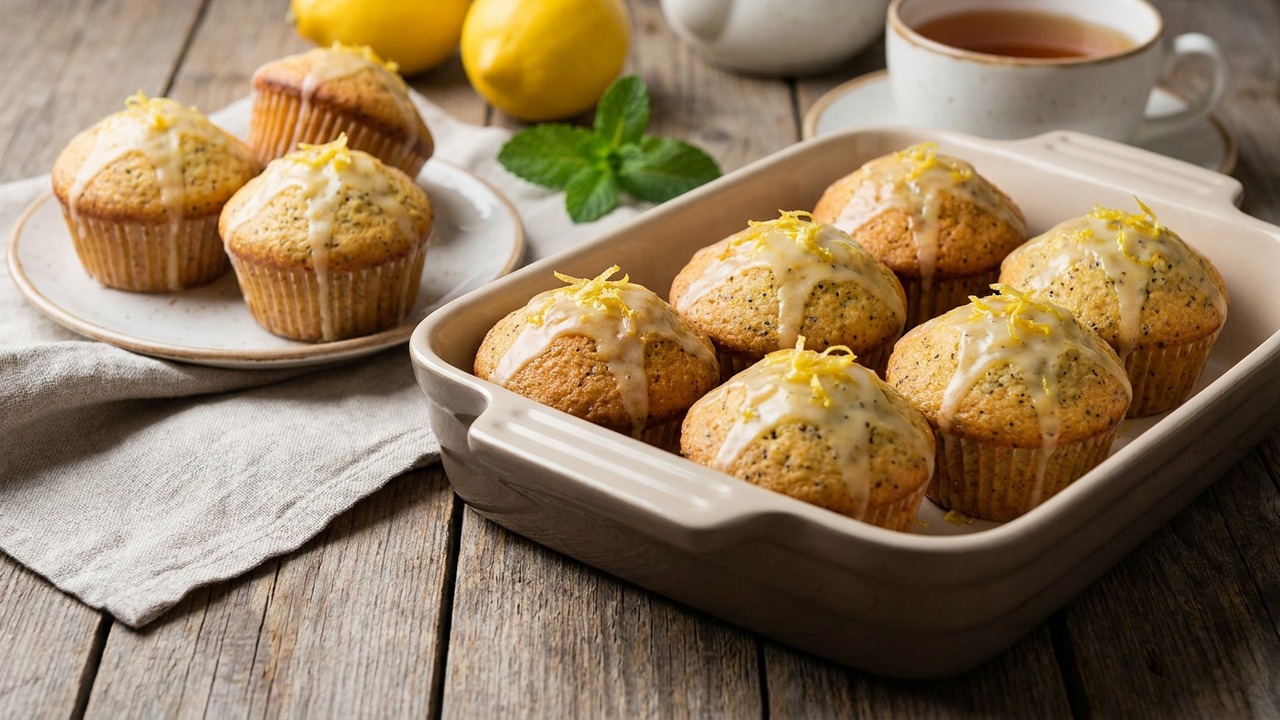
Bright, tender lemon poppy seed muffins with a moist crumb and a lively citrus bite — perfect for breakfast or weekend brunch. Simple to make, they balance zesty lemon with a gentle crunch from poppy seeds for a classic, crowd-pleasing bake.
Jake Woods's note
"These muffins come together quickly and taste like a bakery treat at home — they’re great for a sunny morning or a brunch spread. Expect a light, moist crumb and a bright lemon aroma that fills the kitchen."
About This Recipe
These lemon poppy seed muffins are built for mornings that need a little lift: bright citrus, a tender, moist crumb, and the satisfying little crunch of poppy seeds in every bite. They’re intentionally scaled to six generous muffins so each one feels like a proper treat rather than a dainty nibble — perfect for a slow weekend breakfast, a brunch platter, or tucked into a lunchbox with a crisp apple. The crumb stays moist from buttermilk and a modest amount of melted butter, while a single egg and just enough baking powder give the tops a gentle rise without creating overly bready interiors.
What distinguishes this version is attention to balance and technique rather than fancy ingredients. Zest and fresh lemon juice drive the flavor — not too sweet, so the citrus brightness comes through — and the poppy seeds are added sparingly so they punctuate the texture without weighing the batter down. The recipe is forgiving for beginner bakers: mix wet and dry until just combined, keep the butter warm but not hot when combined with the egg, and you’ll finish with muffins that are tender, lively, and reliably crowd-pleasing.
Ingredients for Lemon Poppy Seed Muffins
- 1 1/2 cups All-purpose flour
- 2/3 cup Granulated sugar
- 2 teaspoons Baking powder
- 1/4 teaspoon Salt
- 2 tablespoons Poppy seeds
- 1 item Large egg
- 3/4 cup Buttermilk
- 1/3 cup Unsalted butter, melted
- 1 large lemon (zest + ~2 tbsp juice) Lemons (zest + juice)
- 1 teaspoon Pure vanilla extract
How to Make Lemon Poppy Seed Muffins
Step 1: Preheat and prepare pan
Preheat the oven to 375°F (190°C). Line a 6-cup muffin tin with liners or lightly grease the cups, and set aside to warm while you mix the batter.Step 2: Whisk dry ingredients
In a large bowl, whisk together the all-purpose flour, granulated sugar, baking powder, salt, and poppy seeds until evenly combined. Breaking up any clumps ensures an even distribution of poppy seeds and rising agents.For this step
- 1 1/2 cupsAll-purpose flour
- 2/3 cupGranulated sugar
- 2 teaspoonsBaking powder
- 1/4 teaspoonSalt
- 2 tablespoonsPoppy seeds
Step 3: Mix wet ingredients
In a separate bowl, whisk the egg, buttermilk, melted (and slightly cooled) butter, lemon zest and juice, and vanilla until smooth. Make sure the butter has cooled enough that it won't cook the egg when combined.For this step
- 1 itemLarge egg
- 3/4 cupButtermilk
- 1/3 cupUnsalted butter, melted
- 1 large lemon (zest + ~2 tbsp juice)Lemons (zest + juice)
- 1 teaspoonPure vanilla extract
Step 4: Combine wet and dry
Pour the wet mixture into the dry ingredients and gently fold with a spatula until just combined; a few streaks of flour are fine. Avoid overmixing to keep the muffins tender — the batter should be thick but spoonable.Step 5: Fill tins and bake
Divide the batter evenly among the 6 prepared muffin cups, filling each about two-thirds full. Bake for 18–22 minutes, or until a toothpick inserted in the center comes out clean and the tops are lightly golden.Step 6: Cool and serve
Let the muffins cool in the pan for 5 minutes, then transfer to a wire rack to cool slightly before serving. They’re best the day they’re made but keep well stored airtight at room temperature for 2 days or freeze for longer storage.


- Preheat the oven to 375°F (190°C). Line a 6-cup muffin tin with liners or lightly grease the cups, and set aside to warm while you mix the batter.
- In a large bowl, whisk together the all-purpose flour, granulated sugar, baking powder, salt, and poppy seeds until evenly combined. Breaking up any clumps ensures an even distribution of poppy seeds and rising agents.
- In a separate bowl, whisk the egg, buttermilk, melted (and slightly cooled) butter, lemon zest and juice, and vanilla until smooth. Make sure the butter has cooled enough that it won't cook the egg when combined.
- Pour the wet mixture into the dry ingredients and gently fold with a spatula until just combined; a few streaks of flour are fine. Avoid overmixing to keep the muffins tender — the batter should be thick but spoonable.
- Divide the batter evenly among the 6 prepared muffin cups, filling each about two-thirds full. Bake for 18–22 minutes, or until a toothpick inserted in the center comes out clean and the tops are lightly golden.
- Let the muffins cool in the pan for 5 minutes, then transfer to a wire rack to cool slightly before serving. They’re best the day they’re made but keep well stored airtight at room temperature for 2 days or freeze for longer storage.
Lemon Poppy Seed Muffins Tips
Measure flour correctly
Spoon flour into the measuring cup and level it off rather than scooping to avoid a dense muffin caused by too much flour.
Cool butter before mixing
Let melted butter cool slightly so it doesn’t scramble the egg when you whisk the wet ingredients together.
Fold, don’t beat
Gently fold wet into dry until just combined; a few streaks of flour are fine to keep the crumb tender and light.
Distribute batter evenly
Use an ice cream scoop to portion the batter so all muffins bake uniformly and finish at the same time.
Zest before juicing
Grate the lemon zest first over the bowl, then juice — zest disappears into the batter but carries concentrated citrus oils for brightness.
Lemon Poppy Seed Muffins Variations and Substitutions
Lemon glaze finish
Whisk 1/2 cup powdered sugar with 1–2 teaspoons lemon juice and drizzle over cooled muffins for extra shine and tang.
Blueberry lemon combo
Fold 3/4 cup fresh or frozen blueberries into the batter for a classic flavor pairing; reduce stirring to prevent color streaking.
Greek yogurt swap
Replace buttermilk with an equal amount of Greek yogurt thinned with 1–2 tablespoons milk for a richer tang and sturdier crumb.
Vegan dairy-free option
Use a flax egg (1 tbsp ground flax + 3 tbsp water), replace butter with melted coconut oil, and use non-dairy milk with 1 tsp vinegar as the buttermilk substitute.
How to Store and Make Lemon Poppy Seed Muffins Ahead
Cool completely before storing to prevent condensation. Keep muffins in an airtight container at room temperature for up to 2 days, or freeze individually wrapped in plastic and sealed in a freezer bag for up to 3 months; reheat from frozen in a 325°F oven for 10–12 minutes or microwave for 20–30 seconds to serve warm.
What to Serve With Lemon Poppy Seed Muffins
Serve warm with a smear of ricotta or lemon curd and a scattering of extra zest for elegance. These muffins pair beautifully with bright coffees (think cortado or lemony Earl Grey tea) and a side of fresh berries or a yogurt-parfait for a balanced brunch spread.
Lemon Poppy Seed Muffins FAQs
Can I make mini muffins instead?
Yes — reduce baking time to about 10–12 minutes and watch for lightly golden tops; the batter makes roughly 12–18 mini muffins depending on size.
What if I don’t have buttermilk?
Stir 1 tablespoon of lemon juice or vinegar into enough milk to make 3/4 cup and let sit 5 minutes to thicken; this mimics buttermilk’s acidity and tenderizing effect.
Why are my muffins dense?
Common causes are overmixing (which develops gluten) or using old baking powder; mix just until combined and make sure your leavening is fresh for a lighter crumb.
Can I toast the poppy seeds?
Yes — briefly toast in a dry skillet over medium for 1–2 minutes until fragrant to deepen their nutty aroma, then cool before adding to the batter.
Is it okay to add more lemon?
You can increase zest for more lemon oil brightness, but add juice sparingly because additional liquid can alter batter consistency and require a slight flour adjustment.
About the author
Jake WoodsHello, I'm Jake. I started this recipe site with the idea that I hated recipe websites that overwhelm you with long stories and ads just to see plain content that's not helpful. My goal is to provide you with quality recipes, simple ideas and a fun cooking experience. There's lots of fun things to cook, and I think as you browse the site you'll find that TopShelf.Recipes is the place for quality recipes on the web.
See all recipes by Jake Woods →Ratings & Reviews
Did you make this recipe?
Be the first to share your experience.
Nutrition Facts
Per serving: 1 muffin (95g)
Nutrition values are estimated from USDA ingredient data and may vary based on preparation, brands, and portion sizes. Values are provided for informational purposes only.
Keep Reading
Guides & articles for this recipe

Tips & Techniques
Baking Soda and Tenderized Beef
Learn how baking soda can tenderize, boost browning, and improve moisture for ground beef and other meats. This practical guide covers the science, step-by-step techniques, common mistakes, and recipes to try.

Healthy Eating
Gluten-Free Weeknight Grilling Plan
A 7-day gluten-free weeknight grilling plan with quick, family-friendly recipes, prep-ahead timelines, and a printable shopping list that spotlights late-summer produce and pantry staples. Includes clear cross-contamination safety tips and simple swaps to keep dinners fast and crowd-pleasing.

Healthy Eating
Low-Fat Grill Swaps for Big Flavor
A practical guide to trimming fat from grilled meals without losing juiciness or char. Learn yogurt- and citrus-based marinades, lean protein picks, searing and indirect-heat tricks, plus 5 quick low-fat marinades and a simple weeknight plan.
More from Baking
View all Baking recipes →
Cloud Bread Sandwiches

Honey Mustard Chicken Nuggets

Cheddar Jalapeño Corn Muffins

Basque Burnt Cheesecake

30-Minute Sticky Baked Honey Garlic Chicken Thighs with Crisp Edges

Lemon Butter Salmon

Spritz Cookies

Brown Butter Vanilla Syrup

Honey Glazed Easter Ham
Ask me anything about this recipe — substitutions, scaling, techniques, timing.
Powered by AI · 6 questions per 5 minutes, 30 per day