Low-Carb Beef Stew
A comforting, stovetop low-carb beef stew that swaps potatoes for turnips to keep carbs down while preserving rich, beefy depth. Built for keto and low-carb eaters, it uses simple techniques—browning, gentle simmering, and reduction—to deliver a hearty bowl with bright, savory notes.
Jake Woods's note
"This stew shines on cool evenings and makes excellent leftovers — flavors deepen overnight. Home cooks will appreciate the straightforward stovetop method and the turnip swap that keeps the texture hearty without the carbs."
About This Recipe
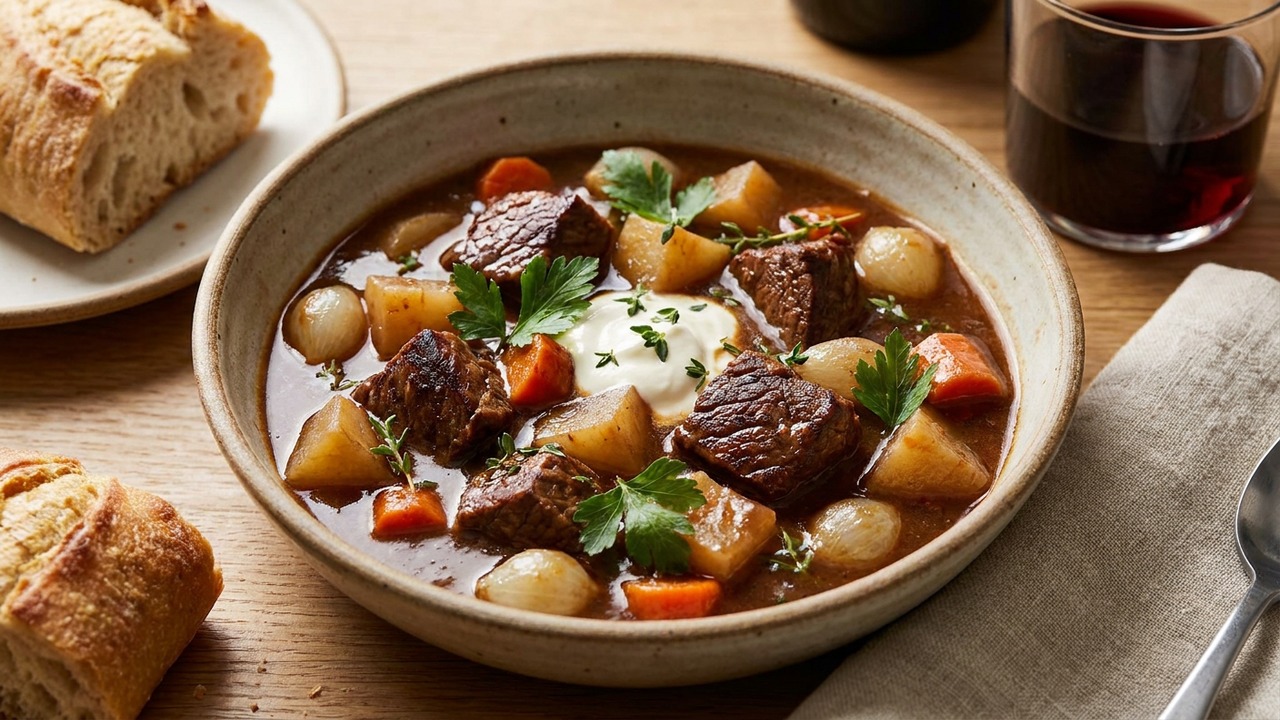
This low-carb beef stew leans into the things that make a stew feel like a meal rather than a bowl of broth: deeply caramelized beef, a glossy, reduced cooking liquid, and chunky, fork-tender vegetables that stand up to long cooking. Replacing potatoes with turnips keeps the carbohydrate count down but retains the familiar comfort — turnips soften and absorb the beefy braise while keeping a faint peppery note and a firmer texture so each spoonful has shape and contrast. Tomato paste and fond-sticky browned bits anchor the savory backbone, while fresh thyme lifts the weighty flavors with a subtle herbal brightness.
What makes this particular version work is technique: sear the chuck in batches to build fond, sweat the aromatics so they sweeten rather than burn, and simmer low until collagen melts into silk. A final reduction concentrates flavor without masking the meat’s richness, and the minimalist ingredient list keeps the profile clean and adaptable for keto or general low-carb eating. It’s a great weeknight stew you can start early and leave to cook, or a small-batch Sunday braise for two that reheats beautifully without losing depth.
Ingredients for Low-Carb Beef Stew
- 2 lb Beef chuck, cut into 1-inch cubes
- 2 tbsp Olive oil
- 1 tsp (to taste) Salt and freshly ground black pepper
- 1 medium Yellow onion, medium, diced
- 3 clove(s) Garlic, minced
- 1 tbsp Tomato paste
- 4 cups Low-sodium beef broth
- 2 cups Turnips, peeled and cut into 1-inch cubes
- 1 cup Celery, sliced
- 3 sprig(s) Fresh thyme sprigs (or 1 tsp dried thyme)
How to Make Low-Carb Beef Stew
Step 1: Brown the beef in batches
Pat the beef cubes dry and season generously with salt and pepper. Heat the olive oil in a heavy-bottomed pot or Dutch oven over medium-high heat, then sear the beef in a single layer in batches until well browned on all sides, about 3–4 minutes per side; transfer browned pieces to a plate and repeat.For this step
- 2 lbBeef chuck, cut into 1-inch cubes
- 2 tbspOlive oil
- 1 tsp (to taste)Salt and freshly ground black pepper
Step 2: Sweat aromatics and develop flavor
Reduce heat to medium and add the diced onion to the same pot, stirring and scraping up browned bits; cook until translucent, about 5 minutes. Add the garlic and tomato paste, cook 1–2 minutes until fragrant and the paste darkens slightly to deepen the stew's flavor.For this step
- 1 mediumYellow onion, medium, diced
- 3 clove(s)Garlic, minced
- 1 tbspTomato paste
Step 3: Combine liquids, vegetables, and herbs
Pour in the beef broth to deglaze, using a wooden spoon to loosen any fond on the bottom. Return the browned beef to the pot, then add the turnips, celery, and thyme; stir to combine and bring to a gentle simmer.For this step
- 4 cupsLow-sodium beef broth
- 2 cupsTurnips, peeled and cut into 1-inch cubes
- 1 cupCelery, sliced
- 3 sprig(s)Fresh thyme sprigs (or 1 tsp dried thyme)
Step 4: Simmer gently until tender
Lower heat so the stew barely bubbles, cover partially, and simmer for 70–90 minutes until beef is very tender and turnips are fork-tender. Check every 20–25 minutes, skimming any excess fat and stirring gently so nothing sticks.Step 5: Reduce and adjust seasoning
If the broth is thin, remove the lid and simmer 8–12 minutes to reduce and concentrate flavors, stirring occasionally. Taste and adjust with salt and pepper as needed; remove thyme sprigs before serving.Step 6: Serve warm
Ladle the stew into bowls and garnish with a small thyme sprig if desired. This stew pairs well with a simple green salad or steamed low-carb vegetables for a filling, keto-friendly meal.


- Pat the beef cubes dry and season generously with salt and pepper. Heat the olive oil in a heavy-bottomed pot or Dutch oven over medium-high heat, then sear the beef in a single layer in batches until well browned on all sides, about 3–4 minutes per side; transfer browned pieces to a plate and repeat.
- Reduce heat to medium and add the diced onion to the same pot, stirring and scraping up browned bits; cook until translucent, about 5 minutes. Add the garlic and tomato paste, cook 1–2 minutes until fragrant and the paste darkens slightly to deepen the stew's flavor.
- Pour in the beef broth to deglaze, using a wooden spoon to loosen any fond on the bottom. Return the browned beef to the pot, then add the turnips, celery, and thyme; stir to combine and bring to a gentle simmer.
- Lower heat so the stew barely bubbles, cover partially, and simmer for 70–90 minutes until beef is very tender and turnips are fork-tender. Check every 20–25 minutes, skimming any excess fat and stirring gently so nothing sticks.
- If the broth is thin, remove the lid and simmer 8–12 minutes to reduce and concentrate flavors, stirring occasionally. Taste and adjust with salt and pepper as needed; remove thyme sprigs before serving.
- Ladle the stew into bowls and garnish with a small thyme sprig if desired. This stew pairs well with a simple green salad or steamed low-carb vegetables for a filling, keto-friendly meal.
Low-Carb Beef Stew Tips
Pat and season well
Dry the beef thoroughly before salting and searing; moisture inhibits browning and prevents the fond that flavors the stew.
Brown in batches
Overcrowding the pot steams meat instead of browning it, so sear in small batches to get that deep mahogany crust.
Don’t rush the simmer
Keep the liquid at a barely audible bubble so connective tissue breaks down slowly and the broth becomes silky rather than cloudy.
Use low-sodium broth
Starting with low-sodium beef broth gives you control over the final seasoning and prevents an overly salty stew after reduction.
Finish with a reduction
Uncover the pot near the end and simmer until slightly reduced; it concentrates flavor and gives the sauce a clingy, stew-like body.
Low-Carb Beef Stew Variations and Substitutions
Red wine and mushrooms
Add 1 cup dry red wine with the broth and 8 ounces sliced cremini mushrooms for earthiness and extra umami; reduce wine by half before returning the beef.
Herby Mediterranean twist
Swap thyme for a tablespoon of chopped fresh rosemary and finish with a teaspoon of lemon zest to brighten the stew’s profile.
Turnip substitutes
If you don’t like turnips, use rutabaga for a sweeter, denser bite or cauliflower florets added in the last 20 minutes for a softer, lower-carb alternative.
Instant Pot adaptation
Sear on Sauté mode, deglaze with broth, then pressure-cook on high for 35–40 minutes with a natural release; add delicate vegetables after pressure to avoid disintegration.
How to Store and Make Low-Carb Beef Stew Ahead
Cool the stew to room temperature within two hours and refrigerate in airtight containers for up to 3–4 days. For longer storage, freeze in portions for up to 3 months; thaw overnight in the fridge before reheating. Reheat gently on the stovetop over low heat with a splash of broth or water to loosen the sauce and prevent drying out.
What to Serve With Low-Carb Beef Stew
Serve in wide shallow bowls so the stew’s reduced sauce can be spooned over each bite; a spoonful of herbed mascarpone or a pat of butter stirred in just before serving adds silkiness. Pair it with a crisp green salad dressed with lemon and olive oil, or cauliflower mash to keep things low-carb; for drinks, a medium-bodied red like Merlot or a dry rosé complements the beef without overpowering the turnips.
Low-Carb Beef Stew FAQs
Can I use a different cut of beef?
Yes — chuck is ideal for its collagen, but short ribs or a blade roast will also yield excellent results when cooked low and slow; lean cuts like sirloin will become dry unless braised for a shorter time.
How do I thicken the stew without flour?
Long simmering reduces the liquid naturally; for extra body, mash a few cooked turnip cubes against the pot wall and stir them in, or whisk in a tablespoon of xanthan gum very slowly if you need a gluten-free thickener.
My beef is still tough after 90 minutes — what happened?
Either the heat was too high (causing tight, elastic muscle fibers) or the cut lacked enough connective tissue; continue simmering at a lower temperature and test every 15–20 minutes — tenderization can take up to two hours depending on size and cut.
Can I prepare this ahead of time?
Absolutely — stew flavors often improve after a day; cool and refrigerate, then gently reheat and reduce to serving consistency before eating.
Should I peel the turnips?
Peeling is optional; thin-skinned young turnips can be left unpeeled for texture and color, but peeling is recommended for larger, woodier roots to avoid any toughness or bitter edges.
About the author
Jake WoodsHello, I'm Jake. I started this recipe site with the idea that I hated recipe websites that overwhelm you with long stories and ads just to see plain content that's not helpful. My goal is to provide you with quality recipes, simple ideas and a fun cooking experience. There's lots of fun things to cook, and I think as you browse the site you'll find that TopShelf.Recipes is the place for quality recipes on the web.
See all recipes by Jake Woods →Ratings & Reviews
Did you make this recipe?
Be the first to share your experience.
Nutrition Facts
Per serving: about 1 cup
Nutrition values are estimated from USDA ingredient data and may vary based on preparation, brands, and portion sizes. Values are provided for informational purposes only.
Keep Reading
Guides & articles for this recipe

Healthy Eating
Gluten-Free Weeknight Grilling Plan
A 7-day gluten-free weeknight grilling plan with quick, family-friendly recipes, prep-ahead timelines, and a printable shopping list that spotlights late-summer produce and pantry staples. Includes clear cross-contamination safety tips and simple swaps to keep dinners fast and crowd-pleasing.

Healthy Eating
Low-Fat Grill Swaps for Big Flavor
A practical guide to trimming fat from grilled meals without losing juiciness or char. Learn yogurt- and citrus-based marinades, lean protein picks, searing and indirect-heat tricks, plus 5 quick low-fat marinades and a simple weeknight plan.

Recipes
DIY Edible Monster Eyes Candy
Make safe, fun edible monster eyes for cupcakes, cookies, and candy trays. Step-by-step recipes show baking-soda balls, chocolate and fondant eyes, wafer-print options, plus assembly, storage, and kid-friendly safety tips.
More from Stovetop
View all Stovetop recipes →
One-Pot Beef Bolognese

Stovetop Dutch-Oven Herb-Crusted Beef Roast with Pan Gravy

Dubai Tacos

Italian-Style Pot Roast with Tomatoes Olives and Fresh Herbs

Labor Day Grilled Lobster Rolls with Charred Scallion Brown Butter & Lemon‑Herb Aioli

Hainanese Chicken Rice

Pad Krapow Pork

Twice-Fried Restaurant Style Crispy Sweet Potato Fries (Stovetop Deep Fry)

Xiao Long Bao Soup Dumplings
Ask me anything about this recipe — substitutions, scaling, techniques, timing.
Powered by AI · 6 questions per 5 minutes, 30 per day