Lupin Flour Tagliatelle (High-Protein, Low-Carb Homemade Pasta)
A high-protein, low‑carb homemade tagliatelle made primarily from lupin flour for a firm, nutritious pasta. This recipe includes practical texture and cooking tips so you can shape and cook delicate legume-based noodles with reliable results.
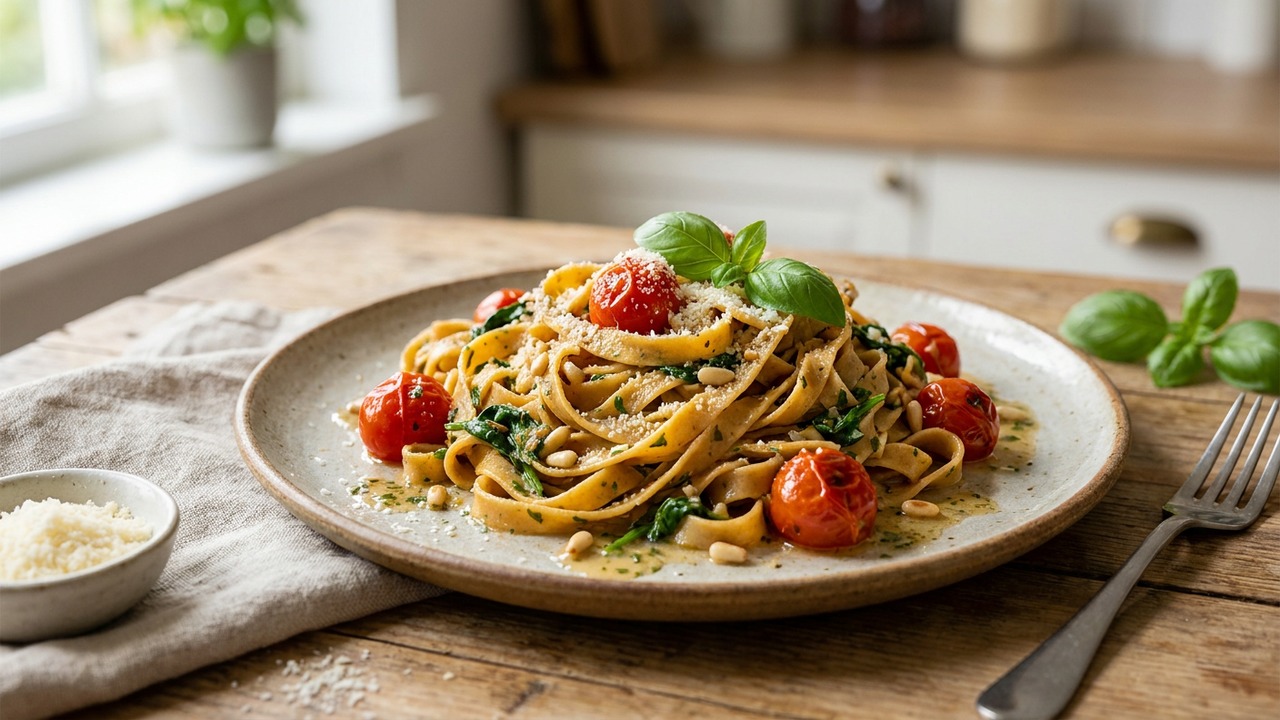
About This Recipe
Lupin Flour Tagliatelle turns an unfamiliar legume flour into something reliably pasta-like: firm, snappy ribbons that hold up to sauce while giving a pronounced protein boost and lower net carbs than wheat-based noodles. Lupin flour has a mild, toasted-bean character and a subtle almond note; paired with eggs and a touch of olive oil it produces a pasta that feels substantial rather than delicate, with a clean, savory backbone that complements both bright herb sauces and richer cream or mushroom preparations.
What makes this version work is intentional simplicity — xanthan gum supplies the missing stretch gluten would normally provide, brief kneading prevents gummy overworking, and a short rest lets the lupin hydrate so sheets roll without tearing. Dusting with lupin flour or semolina and letting the cut nests dry slightly prevents sticking and helps the strands keep their shape in the pot. This recipe is for cooks who want homemade texture and a protein-forward, lower-carb alternative to wheat pasta, but also for anyone curious to work with a legume flour that rewards careful handling with sturdy, flavorful tagliatelle.
Ingredients for Lupin Flour Tagliatelle (High-Protein, Low-Carb Homemade Pasta)
- 1 1/2 cups Lupin flour
- 1 teaspoon Xanthan gum
- 3 large Large eggs
- 1 tablespoon Extra-virgin olive oil
- 1 teaspoon Fine salt
- 2 tablespoons Cold water (add gradually only if needed)
- 1/4 cup Lupin flour or semolina for dusting
How to Make Lupin Flour Tagliatelle (High-Protein, Low-Carb Homemade Pasta)
Step 1: Combine dry ingredients and make the well
Whisk lupin flour, xanthan gum, and salt together in a large bowl to ensure even distribution of the binder and seasoning. Create a wide well in the center so the wet ingredients can be added without spilling.For this step
- 1 1/2 cupsLupin flour
- 1 teaspoonXanthan gum
- 3 largeLarge eggs
- 1 tablespoonExtra-virgin olive oil
- 1 teaspoonFine salt
Step 2: Add eggs and oil, form initial dough
Crack the eggs into the well, add the olive oil, and use a fork to slowly incorporate the flour from the inner edge until a shaggy dough forms. If the mixture feels overly dry and crumbly, add cold water 1 teaspoon at a time (up to the indicated amount) until the dough just comes together.For this step
- 2 tablespoonsCold water (add gradually only if needed)
Step 3: Knead briefly and rest
Turn the dough out onto a lightly dusted surface and knead gently for 2–3 minutes until smooth and cohesive — lupin dough requires far less kneading than wheat dough. Wrap tightly in plastic or place under a bowl and rest for 15–20 minutes to allow the flour to hydrate and the xanthan to relax, which improves rollability.Step 4: Roll and cut into tagliatelle
Divide the rested dough into 2 or 3 pieces and roll each piece out on a lightly dusted surface (with lupin flour or semolina) to about 1.5–2 mm thickness; keep unused pieces covered. Dust with additional flour, loosely roll up and slice into 6–8 mm ribbons, then unroll and toss gently to separate; alternatively use a pasta machine on a low setting to avoid tearing.For this step
- 1/4 cupLupin flour or semolina for dusting
Step 5: Dry slightly before cooking
Let the cut tagliatelle rest on trays or a floured board for 10–15 minutes to firm up — this reduces the chance of sticking and loss of shape when added to boiling water. If not cooking immediately, hang strands briefly or lay them in nested nests on parchment and refrigerate for up to 2 hours.Step 6: Cook in rapidly boiling salted water and serve
Bring a large pot of well-salted water to a vigorous boil and add the tagliatelle in small batches; fresh lupin pasta cooks quickly, about 2–4 minutes depending on thickness — test a strand for desired bite. Drain well, reserve a little pasta water to adjust sauce if needed, and finish the noodles in your sauce over low heat for 30–60 seconds before serving.


- Whisk lupin flour, xanthan gum, and salt together in a large bowl to ensure even distribution of the binder and seasoning. Create a wide well in the center so the wet ingredients can be added without spilling.
- Crack the eggs into the well, add the olive oil, and use a fork to slowly incorporate the flour from the inner edge until a shaggy dough forms. If the mixture feels overly dry and crumbly, add cold water 1 teaspoon at a time (up to the indicated amount) until the dough just comes together.
- Turn the dough out onto a lightly dusted surface and knead gently for 2–3 minutes until smooth and cohesive — lupin dough requires far less kneading than wheat dough. Wrap tightly in plastic or place under a bowl and rest for 15–20 minutes to allow the flour to hydrate and the xanthan to relax, which improves rollability.
- Divide the rested dough into 2 or 3 pieces and roll each piece out on a lightly dusted surface (with lupin flour or semolina) to about 1.5–2 mm thickness; keep unused pieces covered. Dust with additional flour, loosely roll up and slice into 6–8 mm ribbons, then unroll and toss gently to separate; alternatively use a pasta machine on a low setting to avoid tearing.
- Let the cut tagliatelle rest on trays or a floured board for 10–15 minutes to firm up — this reduces the chance of sticking and loss of shape when added to boiling water. If not cooking immediately, hang strands briefly or lay them in nested nests on parchment and refrigerate for up to 2 hours.
- Bring a large pot of well-salted water to a vigorous boil and add the tagliatelle in small batches; fresh lupin pasta cooks quickly, about 2–4 minutes depending on thickness — test a strand for desired bite. Drain well, reserve a little pasta water to adjust sauce if needed, and finish the noodles in your sauce over low heat for 30–60 seconds before serving.
Lupin Flour Tagliatelle (High-Protein, Low-Carb Homemade Pasta) Tips
Weigh your flour
Lupin flour compacts differently than wheat; use a scale or spoon-and-level the cup to keep hydration consistent and avoid a dry, crumbly dough.
Distribute xanthan evenly
Whisk xanthan with the flour before adding eggs so it hydrates uniformly and prevents gummy spots that make rolling difficult.
Short knead, longer rest
Knead just until cohesive — 2–3 minutes — then rest 15–20 minutes to let the lupin fully hydrate and the xanthan relax for easier rolling.
Dust with semolina
Use semolina or extra lupin flour when rolling and cutting to reduce sticking; semolina’s coarse texture gives strands a toothy surface that sauces cling to.
Cook in small batches
Fresh lupin pasta releases starch quickly; add a few nests at a time to a roaring boil and test at 2 minutes for doneness to avoid overcooking.
Lupin Flour Tagliatelle (High-Protein, Low-Carb Homemade Pasta) Variations and Substitutions
Blend with chickpea flour
Replace up to 25% of the lupin flour with chickpea flour to mellow lupin’s bean note and increase elasticity while keeping protein content high.
Spinach or herb tagliatelle
Puree 1 packed cup of blanched spinach or basil with the eggs and use the same wet weight to add color and a fresh herb flavor without altering hydration much.
Semolina-amplified dough
For a firmer, more pasta-like bite, replace 20–30% of lupin flour with durum semolina; this adds structure and a familiar chew while keeping lupin prominent.
Vegan adaptation
Whisk 1/4 cup aquafaba plus 3 tbsp olive oil and increase xanthan to 1 1/4 teaspoons as a starting point; expect a different texture and slightly longer resting time.
How to Store and Make Lupin Flour Tagliatelle (High-Protein, Low-Carb Homemade Pasta) Ahead
Cooked lupin tagliatelle keeps in an airtight container in the refrigerator for up to 3 days; toss with a little olive oil to prevent sticking and store sauce separately if possible. Uncooked cut nests can be refrigerated for 24 hours or frozen on a tray for up to 2 months, then transferred to a bag; cook from frozen adding an extra 30–60 seconds to the boiling time. Reheat cooked pasta by gently finishing it in a warm sauce for 30–60 seconds or plunge briefly into boiling water to refresh before saucing.
What to Serve With Lupin Flour Tagliatelle (High-Protein, Low-Carb Homemade Pasta)
Lupin tagliatelle shines with both bright and hearty accompaniments — try it tossed with lemon, garlic, anchovy and plenty of chopped parsley for a lively contrast, or finish it with a mushroom and crème fraîche sauce for a more substantial plate. Serve with a simple green salad (arugula with shaved fennel and lemon vinaigrette) and crusty bread if you like; pair with a crisp white like Vermentino or a light-bodied red such as Barbera for meatier sauces.
Lupin Flour Tagliatelle (High-Protein, Low-Carb Homemade Pasta) FAQs
Is lupin flour gluten-free?
Yes, lupin flour is naturally gluten-free, but it’s a legume and often milled on shared equipment, so check packaging if you need certified gluten-free for celiac disease.
Can I omit the xanthan gum?
Xanthan replaces the elastic properties of gluten and helps lupin dough hold together; omitting it will likely produce a crumbly, fragile pasta unless you substitute with another binder like psyllium husk or increase egg yolks.
Why is my dough crumbly or falls apart?
Crumbly dough usually means under-hydration — add cold water 1 teaspoon at a time until it comes together, and ensure you mixed the xanthan evenly so it can bind properly.
How long should I cook the noodles?
Fresh lupin tagliatelle cooks quickly, typically 2–4 minutes depending on thickness; test a strand at 2 minutes and remember they’ll finish in the sauce for best texture.
Are there allergy concerns with lupin?
Yes — lupin can cause allergic reactions in people with peanut or other legume allergies, so avoid if you have those sensitivities and clearly note it when serving others.
About the author
Jake WoodsHello, I'm Jake. I started this recipe site with the idea that I hated recipe websites that overwhelm you with long stories and ads just to see plain content that's not helpful. My goal is to provide you with quality recipes, simple ideas and a fun cooking experience. There's lots of fun things to cook, and I think as you browse the site you'll find that TopShelf.Recipes is the place for quality recipes on the web.
See all recipes by Jake Woods →Ratings & Reviews
Did you make this recipe?
Be the first to share your experience.
Nutrition Facts
Per serving: about ¾ cup
Nutrition values are estimated from USDA ingredient data and may vary based on preparation, brands, and portion sizes. Values are provided for informational purposes only.
Keep Reading
Guides & articles for this recipe

Healthy Eating
Gluten-Free Weeknight Grilling Plan
A 7-day gluten-free weeknight grilling plan with quick, family-friendly recipes, prep-ahead timelines, and a printable shopping list that spotlights late-summer produce and pantry staples. Includes clear cross-contamination safety tips and simple swaps to keep dinners fast and crowd-pleasing.

Healthy Eating
Low-Fat Grill Swaps for Big Flavor
A practical guide to trimming fat from grilled meals without losing juiciness or char. Learn yogurt- and citrus-based marinades, lean protein picks, searing and indirect-heat tricks, plus 5 quick low-fat marinades and a simple weeknight plan.

Recipes
DIY Edible Monster Eyes Candy
Make safe, fun edible monster eyes for cupcakes, cookies, and candy trays. Step-by-step recipes show baking-soda balls, chocolate and fondant eyes, wafer-print options, plus assembly, storage, and kid-friendly safety tips.
More from Stovetop
View all Stovetop recipes →
One-Pot Beef Bolognese

Stovetop Dutch-Oven Herb-Crusted Beef Roast with Pan Gravy

Dubai Tacos

Italian-Style Pot Roast with Tomatoes Olives and Fresh Herbs

Labor Day Grilled Lobster Rolls with Charred Scallion Brown Butter & Lemon‑Herb Aioli

Hainanese Chicken Rice

Pad Krapow Pork

Twice-Fried Restaurant Style Crispy Sweet Potato Fries (Stovetop Deep Fry)

Xiao Long Bao Soup Dumplings
Ask me anything about this recipe — substitutions, scaling, techniques, timing.
Powered by AI · 6 questions per 5 minutes, 30 per day