Mediterranean Braised Cod
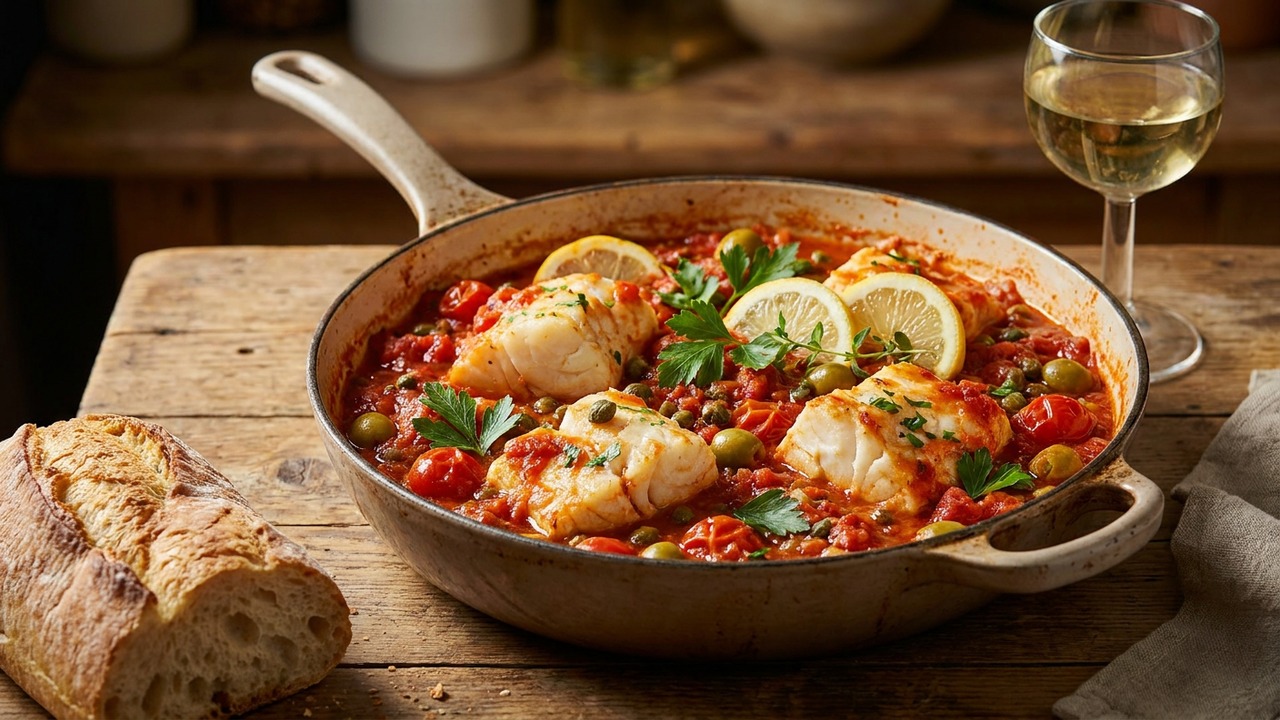
A bright, one-pan stovetop braise of flaky cod in a tangy tomato, white wine, caper sauce — finished with lemon and parsley. Quick to make and full of Mediterranean flavor, it’s perfect for a healthy weeknight dinner that feels special.
Ingredient Spotlight
capers
Capers are the pickled unopened flower buds of the caper bush, commonly used in Mediterranean (especially Italian, Greek, and Provençal) cooking. They have a sharp, tangy, salty, and slightly floral flavor that brightens sauces, fish, and salads. You can find them jarred in brine in the international or condiment aisle of most supermarkets (near olives and pickles) or in specialty Mediterranean markets; good substitutes include chopped green olives, chopped cornichons with a squeeze of lemon, or a mix of lemon zest and a pinch of salt to mimic their briny, citrusy pop.
Jake Woods's note
"This braise is great for busy evenings when you want something light but flavorful; the sauce also pairs beautifully with crusty bread or couscous. Home cooks will love how little hands-on time is required and how forgiving the dish is."
About This Recipe
There’s something quietly celebratory about braising delicate white fish in a sauce that’s equal parts bright and briny. This Mediterranean Braised Cod is built from pantry-friendly ingredients—olive oil, sweet cherry tomatoes, a splash of dry white wine, and capers—so you get a dinner that tastes layered without fuss. The tomatoes break down into a glossy, slightly chunky jus; the capers and lemon cut through the richness, while parsley at the end keeps it fresh. Using skinless cod lets the sauce cling to the flakes, creating a mouthful that is both silky and tangy.
This version works because it balances quick technique with gentle heat: sauté aromatics, reduce the wine, and nest the fish to finish through steaming rather than searing—preserving moisture and texture. It’s ideal for a weeknight when you want something healthy and fast but also for small gatherings; one pan, minimal cleanup, and generous sauce mean you can serve it straight from the skillet to the table. Serve with crusty bread, couscous, or creamy polenta to capture every last drop.
Ingredients for Mediterranean Braised Cod
- 2 tbsp extra-virgin olive oil
- 1 medium small yellow onion, finely chopped
- 3 cloves garlic cloves, minced
- 1 pint cherry tomatoes, halved (or 14 oz diced tomatoes, drained)
- 1/2 cup dry white wine (or low-sodium chicken/vegetable broth)
- 1 tsp sea salt and freshly ground black pepper
- 1 tbsp capers, drained
- 1 each fresh lemon (juice and optional wedges)
- 1 lb cod fillets (about 6 oz / 170 g each), skinless
- 2 tbsp fresh flat-leaf parsley, chopped
How to Make Mediterranean Braised Cod
Step 1: Sauté the aromatics
Heat the olive oil in a large, deep skillet over medium heat until shimmering. Add the chopped onion and sauté for 4–5 minutes until soft and translucent, then add the minced garlic and cook 30–45 seconds until fragrant, taking care not to brown.For this step
- 2 tbspextra-virgin olive oil
- 1 mediumsmall yellow onion, finely chopped
- 3 clovesgarlic cloves, minced
Step 2: Build the tomato-wine base
Add the halved cherry tomatoes to the pan and toss to coat, then pour in the white wine (or broth). Season with salt and pepper and use a wooden spoon to gently crush some tomatoes to release their juices. Bring to a simmer and cook 5–7 minutes until the liquid reduces slightly and the tomatoes start to break down into a chunky sauce.For this step
- 1 pintcherry tomatoes, halved (or 14 oz diced tomatoes, drained)
- 1/2 cupdry white wine (or low-sodium chicken/vegetable broth)
- 1 tspsea salt and freshly ground black pepper
Step 3: Brighten the sauce
Stir in the drained capers and squeeze the lemon juice into the sauce, reserving optional wedges for serving. Simmer 1–2 minutes more to marry the flavors; taste and adjust seasoning with more salt, pepper, or lemon if desired.For this step
- 1 tbspcapers, drained
- 1 eachfresh lemon (juice and optional wedges)
Step 4: Nest and braise the cod
Push the sauce aside slightly and nest the cod fillets into the pan in a single layer, spooning a little sauce over each piece. Reduce heat to low, cover the skillet, and cook 6–8 minutes (depending on thickness) until the fish is opaque and flakes easily with a fork.For this step
- 1 lbcod fillets (about 6 oz / 170 g each), skinless
Step 5: Finish and serve
Uncover and simmer 1 minute more if you want the sauce thicker, then remove from the heat. Sprinkle chopped parsley over the fish, add lemon wedges, and serve immediately with crusty bread, rice, or couscous to soak up the sauce.For this step
- 2 tbspfresh flat-leaf parsley, chopped


- Heat the olive oil in a large, deep skillet over medium heat until shimmering. Add the chopped onion and sauté for 4–5 minutes until soft and translucent, then add the minced garlic and cook 30–45 seconds until fragrant, taking care not to brown.
- Add the halved cherry tomatoes to the pan and toss to coat, then pour in the white wine (or broth). Season with salt and pepper and use a wooden spoon to gently crush some tomatoes to release their juices. Bring to a simmer and cook 5–7 minutes until the liquid reduces slightly and the tomatoes start to break down into a chunky sauce.
- Stir in the drained capers and squeeze the lemon juice into the sauce, reserving optional wedges for serving. Simmer 1–2 minutes more to marry the flavors; taste and adjust seasoning with more salt, pepper, or lemon if desired.
- Push the sauce aside slightly and nest the cod fillets into the pan in a single layer, spooning a little sauce over each piece. Reduce heat to low, cover the skillet, and cook 6–8 minutes (depending on thickness) until the fish is opaque and flakes easily with a fork.
- Uncover and simmer 1 minute more if you want the sauce thicker, then remove from the heat. Sprinkle chopped parsley over the fish, add lemon wedges, and serve immediately with crusty bread, rice, or couscous to soak up the sauce.
Mediterranean Braised Cod Tips
Pat fish dry
Blot cod thoroughly with paper towels before seasoning so the sauce adheres and the fillets don’t steam immediately when they hit the pan.
Don’t rush the wine
Let the wine simmer and reduce for 3–5 minutes so the alcohol cooks off and the flavor concentrates, avoiding a sharp or boozy finish.
Crush some tomatoes
Use the back of a wooden spoon to gently crush a portion of the cherry tomatoes while simmering — that releases juices and gives the sauce body without needing added tomatoes.
Rinse capers if needed
If your capers are on the saltier side, give them a quick rinse and pat dry before adding to control overall saltiness.
Nest and spoon sauce
Tuck the fillets into little wells in the sauce and spoon hot liquid over them once or twice during cooking to promote even, gentle cooking.
Watch for doneness
Check after 6 minutes: cod should be opaque and flake with a fork; remove when slightly underdone to allow for residual carryover heat.
Mediterranean Braised Cod Variations and Substitutions
Swap the fish
Use halibut or sea bass for thicker, meatier fillets that tolerate a few extra minutes of cooking, or try salmon for a richer, fattier finish.
Make it vegan
Replace cod with thick slices of firm tofu or chickpea ‘steaks’ and use vegetable broth instead of wine; reduce gently until the tofu absorbs the tomato-caper flavors.
Add briny depth
Stir in a handful of chopped Kalamata or Castelvetrano olives with the capers for a saltier, more pronounced Mediterranean character.
Spicy & smoky twist
Add 1/2–1 tsp red pepper flakes or a pinch of smoked paprika with the garlic for warm heat and a subtle smoky backbone.
How to Store and Make Mediterranean Braised Cod Ahead
Leftovers keep well in an airtight container in the refrigerator for up to 3 days; the sauce stores better than the fish, which can become firmer once chilled. For best texture, store the sauce separately and gently rewarm it on the stovetop with a splash of water or wine, then add the reheated fish just to warm through. Freezing is possible for the sauce only, but the texture of thawed cod will be watery and less pleasant.
What to Serve With Mediterranean Braised Cod
Serve this braised cod in shallow bowls so each portion gets plenty of sauce, with crusty bread or creamy polenta to sop up the juices. Light, lemony sides—such as a parsley-cucumber salad or blanched green beans tossed with olive oil—keep the plate bright. For drinks, choose a crisp white like Vermentino or Albariño, or a dry rosé to complement the tomato and caper acidity.
Mediterranean Braised Cod FAQs
Can I use frozen cod?
Yes—thaw completely in the refrigerator and pat very dry before cooking; frozen cod releases extra water, so drying and gentle heat help preserve texture.
How can I tell when the cod is done?
The fish is done when it turns opaque through and flakes easily with a fork; for thick fillets expect 6–8 minutes covered, and remove when just opaque to avoid overcooking.
Can I make the sauce ahead of time?
Absolutely—the tomato-caper sauce can be made a day ahead and reheated gently; add the poached cod in the last 6–8 minutes so it stays tender and fresh.
My sauce tastes too salty—what now?
Capers and wine can add salt, so balance by adding a squeeze of lemon or a small pinch of sugar to mellow saltiness, or stir in a tablespoon of unsalted tomato passata or diced fresh tomatoes.
Can I leave the skin on the fillets?
Yes, cook skin-on fillets skin-side down first until the skin firms up, then nest them skin-side down in the sauce; the skin adds flavor and keeps the fillet intact while braising.
Why did my tomatoes not break down?
If tomatoes are underripe or the heat is too low they’ll hold shape; increase the heat slightly and simmer uncovered a few extra minutes while crushing some with a spoon to encourage them to release juices.
About the author
Jake WoodsHello, I'm Jake. I started this recipe site with the idea that I hated recipe websites that overwhelm you with long stories and ads just to see plain content that's not helpful. My goal is to provide you with quality recipes, simple ideas and a fun cooking experience. There's lots of fun things to cook, and I think as you browse the site you'll find that TopShelf.Recipes is the place for quality recipes on the web.
See all recipes by Jake Woods →Ratings & Reviews
Did you make this recipe?
Be the first to share your experience.
Nutrition Facts
Per serving: 4 oz cod
Nutrition values are estimated from USDA ingredient data and may vary based on preparation, brands, and portion sizes. Values are provided for informational purposes only.
Keep Reading
Guides & articles for this recipe

Healthy Eating
Gluten-Free Weeknight Grilling Plan
A 7-day gluten-free weeknight grilling plan with quick, family-friendly recipes, prep-ahead timelines, and a printable shopping list that spotlights late-summer produce and pantry staples. Includes clear cross-contamination safety tips and simple swaps to keep dinners fast and crowd-pleasing.

Healthy Eating
Low-Fat Grill Swaps for Big Flavor
A practical guide to trimming fat from grilled meals without losing juiciness or char. Learn yogurt- and citrus-based marinades, lean protein picks, searing and indirect-heat tricks, plus 5 quick low-fat marinades and a simple weeknight plan.

Recipes
DIY Edible Monster Eyes Candy
Make safe, fun edible monster eyes for cupcakes, cookies, and candy trays. Step-by-step recipes show baking-soda balls, chocolate and fondant eyes, wafer-print options, plus assembly, storage, and kid-friendly safety tips.
More from Stovetop
View all Stovetop recipes →
One-Pot Beef Bolognese

Classic Marinara Sauce from Scratch

Rotisserie Chicken and Wild Rice Soup

Xiao Long Bao Soup Dumplings

Labor Day Grilled Lobster Rolls with Charred Scallion Brown Butter & Lemon‑Herb Aioli

Stovetop Dutch-Oven Herb-Crusted Beef Roast with Pan Gravy

Dubai Tacos

Italian-Style Pot Roast with Tomatoes Olives and Fresh Herbs

Hainanese Chicken Rice
Ask me anything about this recipe — substitutions, scaling, techniques, timing.
Powered by AI · 6 questions per 5 minutes, 30 per day