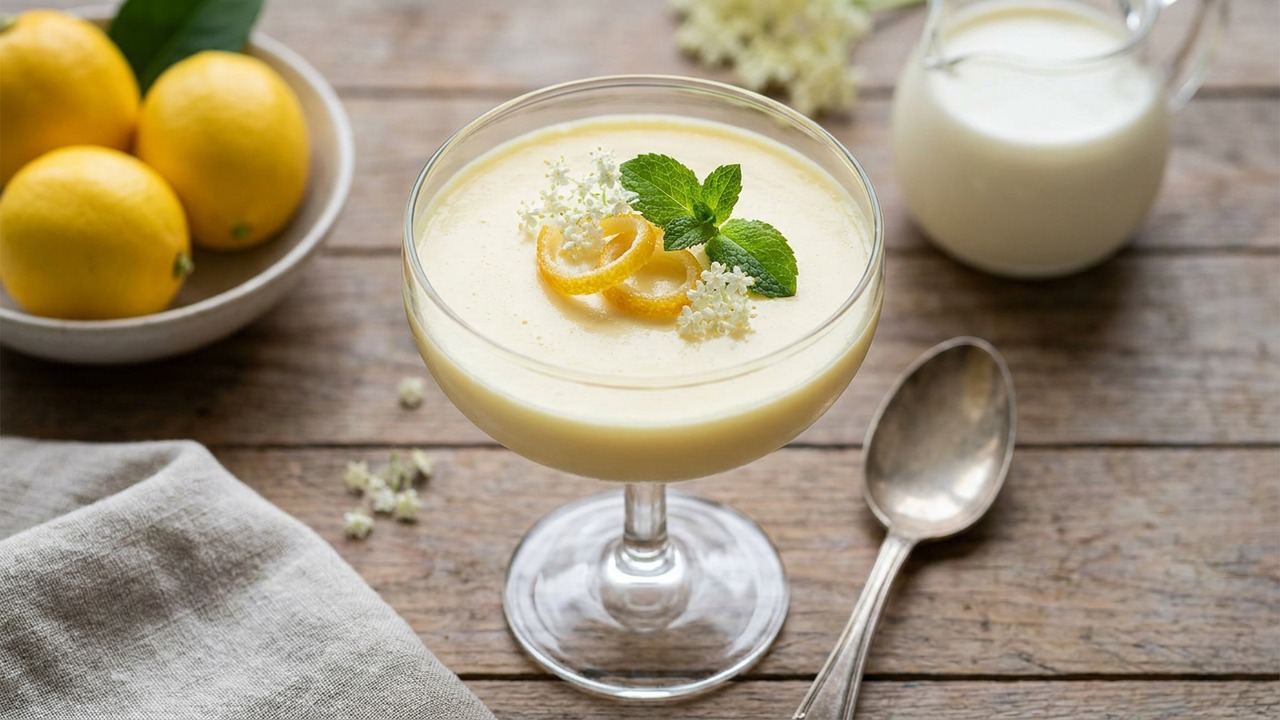
Meyer Lemon Posset
A quick, elegant stovetop citrus dessert: silky posset made from just cream, sugar and Meyer lemon. Bright, fragrant and ready in hours (mostly chilling), it’s a shortcut summer finale that looks special with minimal work.
Ingredient Spotlight
Meyer lemon juice (about 2-3 lemons)
Meyer lemons are a sweeter, less acidic hybrid citrus (likely a cross between a lemon and a mandarin) that originated in China and are prized for their floral aroma. Their juice is less tart and slightly sweeter than common lemons, with a more perfumed citrus note. They’re seasonal but often available at farmers’ markets, Asian groceries, and well‑stocked supermarkets; if unavailable, substitute regular lemon juice mixed with a little orange or mandarin juice (about 3 parts lemon to 1 part orange) or add a pinch of sugar to mimic the Meyer’s sweetness and roundness.
Ingredient Spotlight
Meyer lemon zest
The zest is the fragrant outer peel of the Meyer lemon and carries the fruit’s distinctive floral, sweet citrus aroma more so than ordinary lemon zest. It adds bright, perfumed citrus notes to desserts and sauces. If you can’t find Meyer lemons, use regular lemon zest plus a little orange or mandarin zest (or a tiny bit of orange zest or juice) to approximate the sweeter, floral character.
Jake Woods's note
"This posset shines when Meyers are in season — the floral, sweeter lemon keeps the cream taste bright rather than sharp. It’s a perfect make-ahead, elegant dessert for warm evenings or casual dinner parties."
About This Recipe
Posset is one of those rare desserts that feels luxurious while being disarmingly simple: cream, sugar and acid that coagulate into a silk-smooth, spoonable custard with no eggs and almost no hands-on time. Meyer lemons make this version sing — their floral, slightly honeyed character softens the high citrus notes and gives the posset an aromatic perfume rather than sharp snap. A touch of vanilla and a tiny pinch of salt round the edges so the lemon never tastes one-dimensional, and a light zest finish preserves the bright top note and adds a fresh, textured contrast.
This recipe is built for weeknight elegance and easy entertaining: you can do the stovetop work in 10 minutes and hand the rest to the fridge, where the posset firms into a cool, creamy finale over a few hours. Serve it in small ramekins or jars, and add a crunchy counterpoint — shortbread, toasted nuts or candied peel — for contrast. If you want an ultra-silky restaurant finish, strain after you add the lemon; if you prefer a bit more rustic charm, leave the tiniest coagulated flecks in for extra body and flavor.
Ingredients for Meyer Lemon Posset
- 2 cups Heavy cream (36% fat)
- 1/2 cup Granulated sugar
- 3 tbsp Meyer lemon juice (about 2-3 lemons)
- 1 tsp Meyer lemon zest
- 1 tsp Pure vanilla extract
- a pinch Kosher salt
- 4 pieces Shortbread cookies or toasted nuts, for serving (optional)
How to Make Meyer Lemon Posset
Step 1: Combine cream and sugar
Pour the heavy cream and granulated sugar into a small to medium saucepan and whisk briefly to combine. Set over medium heat and warm gently, whisking occasionally so the sugar begins to dissolve and the cream heats evenly.For this step
- 2 cupsHeavy cream (36% fat)
- 1/2 cupGranulated sugar
Step 2: Bring to a gentle simmer
Continue to heat the cream mixture until it just reaches a gentle simmer and small bubbles appear at the edges, about 2–3 minutes after steaming begins. Stir constantly for 1 minute to ensure the sugar is fully dissolved, then remove the pan from the heat.Step 3: Add Meyer lemon, vanilla and salt
Off the heat, whisk in the Meyer lemon juice, lemon zest, vanilla extract and the pinch of kosher salt. The acidic lemon will cause the cream to thicken and slightly curdle — whisk until smooth and glossy; if you prefer an ultra-silky texture strain the mixture through a fine-mesh sieve into a bowl to remove any coagulated bits and excess zest.For this step
- 3 tbspMeyer lemon juice (about 2-3 lemons)
- 1 tspMeyer lemon zest
- 1 tspPure vanilla extract
- a pinchKosher salt
Step 4: Portion and chill to set
Divide the posset evenly among four small ramekins or jars and let cool to room temperature, then cover and refrigerate until fully set, at least 4 hours or overnight. The posset will firm up to a spoonable custard-like texture as it chills.Step 5: Garnish and serve
Just before serving, top each posset with a light dusting of extra lemon zest, a candied peel, fresh berries or toasted nuts and serve with a shortbread cookie on the side. The contrast of crisp cookies and silky posset makes a simple but elegant presentation.For this step
- 4 piecesShortbread cookies or toasted nuts, for serving (optional)


- Pour the heavy cream and granulated sugar into a small to medium saucepan and whisk briefly to combine. Set over medium heat and warm gently, whisking occasionally so the sugar begins to dissolve and the cream heats evenly.
- Continue to heat the cream mixture until it just reaches a gentle simmer and small bubbles appear at the edges, about 2–3 minutes after steaming begins. Stir constantly for 1 minute to ensure the sugar is fully dissolved, then remove the pan from the heat.
- Off the heat, whisk in the Meyer lemon juice, lemon zest, vanilla extract and the pinch of kosher salt. The acidic lemon will cause the cream to thicken and slightly curdle — whisk until smooth and glossy; if you prefer an ultra-silky texture strain the mixture through a fine-mesh sieve into a bowl to remove any coagulated bits and excess zest.
- Divide the posset evenly among four small ramekins or jars and let cool to room temperature, then cover and refrigerate until fully set, at least 4 hours or overnight. The posset will firm up to a spoonable custard-like texture as it chills.
- Just before serving, top each posset with a light dusting of extra lemon zest, a candied peel, fresh berries or toasted nuts and serve with a shortbread cookie on the side. The contrast of crisp cookies and silky posset makes a simple but elegant presentation.
Meyer Lemon Posset Tips
Use full-fat cream
36% heavy cream gives the richest texture and best mouthfeel; lower-fat creams won’t set the same and can yield grainy curds.
Watch for a gentle simmer
Heat until small bubbles form at the edges — avoid a rolling boil, which can scorch the cream and alter the flavor.
Add lemon off heat
Whisk the lemon juice into the cream after removing from the stove so the acid thickens rather than aggressively curdles the mixture.
Strain for silkiness
If you want an ultra-smooth posset, pass the mixture through a fine-mesh sieve after whisking to remove any coagulated bits and excess zest.
Zest before juicing
Grate the Meyer zest before cutting and juicing the lemons to preserve the bright oils and prevent contaminating the juice with bitter pith.
Chill fully to set
Let the ramekins cool to room temperature before refrigerating and give them at least 4 hours, preferably overnight, for the ideal spoonable texture.
Meyer Lemon Posset Variations and Substitutions
Regular lemon substitute
Use regular lemons if Meyers aren’t available but reduce the juice to 2 tablespoons at first and taste — you may need less acid to avoid an overly sharp finish.
Coconut milk posset
Swap one cup of heavy cream for full-fat canned coconut milk and reduce sugar by a tablespoon for a dairy-free version with a tropical aroma.
Herb-infused posset
Steep a sprig of thyme, basil or lavender in the warmed cream for 10 minutes, strain and proceed for a subtle savory or floral note that complements Meyer lemon.
Boozy lemon posset
Stir 1 tablespoon of Limoncello, orange liqueur or a citrusy dry vermouth into the mixture off the heat for an adult, aromatic lift.
How to Store and Make Meyer Lemon Posset Ahead
Store covered in the refrigerator for up to 3 days; the texture remains best within the first 48 hours. Possets do not freeze well because the cream separates on thawing, and reheating is unnecessary — serve chilled straight from the fridge. If you make them ahead, keep any crunchy garnishes separate until serving to preserve contrast.
What to Serve With Meyer Lemon Posset
Serve in small ramekins or clear jars to showcase the glossy top, and add a shortbread cookie, toasted almonds or a smear of marmalade for texture. Pair with a glass of sparkling wine, a floral Muscat or a lightly honeyed tea to echo the Meyer lemon’s perfume; a small bowl of mixed berries also makes a fresh, colorful accompaniment.
Meyer Lemon Posset FAQs
Why did my posset look curdled — is it ruined?
A little curdling is normal when the acid hits the hot cream; whisking smooths most of it out. If you dislike the texture, strain the mixture through a fine sieve to remove coagulated bits and achieve a silky finish.
Can I use bottled lemon juice instead of Meyer lemons?
You can in a pinch, but bottled juice lacks the floral oils of fresh Meyer zest and will taste sharper; reduce the amount slightly and add a teaspoon of orange juice or a touch more sugar to mimic Meyer sweetness.
How do I know when the posset is set and ready to eat?
It will be glossy and slightly wobbly when chilled but hold its shape on a spoon; a 4-hour chill usually yields a spoonable custard, while overnight yields firmer texture.
Can I halve or double the recipe easily?
Yes, possets scale well because the thickening is chemical, not dependent on oven time; maintain the same proportions of cream, sugar and acid and monitor chilling time if using very shallow or very deep containers.
Is there a low-sugar option?
You can reduce the sugar by 1–2 tablespoons and compensate with a splash of honey or agave to taste, but be cautious — sweetness affects perceived acidity and texture, so don’t cut too much or the flavor may taste overly sharp.
About the author
Jake WoodsHello, I'm Jake. I started this recipe site with the idea that I hated recipe websites that overwhelm you with long stories and ads just to see plain content that's not helpful. My goal is to provide you with quality recipes, simple ideas and a fun cooking experience. There's lots of fun things to cook, and I think as you browse the site you'll find that TopShelf.Recipes is the place for quality recipes on the web.
See all recipes by Jake Woods →Ratings & Reviews
Did you make this recipe?
Be the first to share your experience.
Nutrition Facts
Per serving: about ¾ cup
Nutrition values are estimated from USDA ingredient data and may vary based on preparation, brands, and portion sizes. Values are provided for informational purposes only.
Keep Reading
Guides & articles for this recipe

Healthy Eating
Gluten-Free Weeknight Grilling Plan
A 7-day gluten-free weeknight grilling plan with quick, family-friendly recipes, prep-ahead timelines, and a printable shopping list that spotlights late-summer produce and pantry staples. Includes clear cross-contamination safety tips and simple swaps to keep dinners fast and crowd-pleasing.

Healthy Eating
Low-Fat Grill Swaps for Big Flavor
A practical guide to trimming fat from grilled meals without losing juiciness or char. Learn yogurt- and citrus-based marinades, lean protein picks, searing and indirect-heat tricks, plus 5 quick low-fat marinades and a simple weeknight plan.

Recipes
DIY Edible Monster Eyes Candy
Make safe, fun edible monster eyes for cupcakes, cookies, and candy trays. Step-by-step recipes show baking-soda balls, chocolate and fondant eyes, wafer-print options, plus assembly, storage, and kid-friendly safety tips.
More from Stovetop
View all Stovetop recipes →
One-Pot Beef Bolognese

Classic Marinara Sauce from Scratch

Rotisserie Chicken and Wild Rice Soup

Xiao Long Bao Soup Dumplings

Labor Day Grilled Lobster Rolls with Charred Scallion Brown Butter & Lemon‑Herb Aioli

Stovetop Dutch-Oven Herb-Crusted Beef Roast with Pan Gravy

Dubai Tacos

Italian-Style Pot Roast with Tomatoes Olives and Fresh Herbs

Hainanese Chicken Rice
Ask me anything about this recipe — substitutions, scaling, techniques, timing.
Powered by AI · 6 questions per 5 minutes, 30 per day