Peach Upside‑Down Cake
A summer-ready peach upside-down cake featuring nutty brown butter in both the caramel topping and the tender cake batter. Bright slices of ripe peach baked under a golden, caramelized top make this an elegant yet easy dessert for warm-weather gatherings.
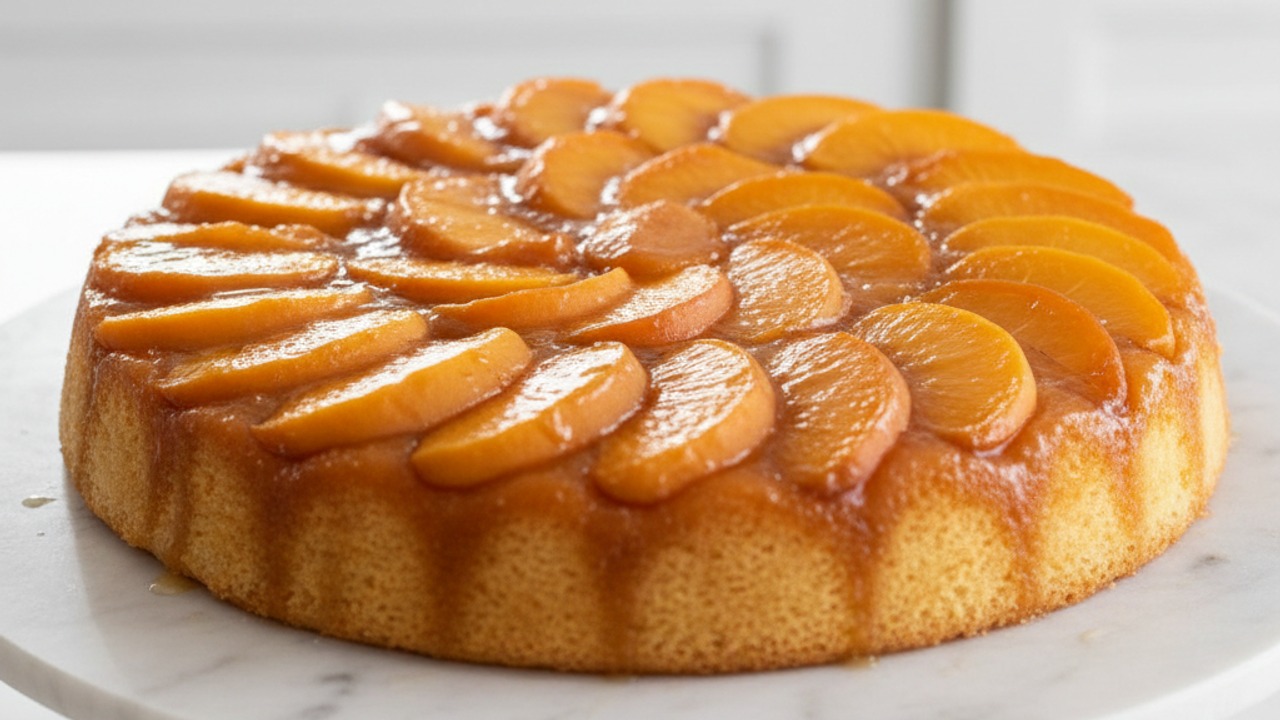
Jake Woods's note
"This peach upside-down cake shines when peaches are at their peak — the brown butter adds a toasty, caramel-like depth that lifts a classic summer dessert. Serve warm with a scoop of vanilla ice cream for an easy showstopper."
About This Recipe
This peach upside-down cake is the kind of dessert that looks like you spent hours fussing but comes together with straightforward technique and a couple of flavor-minded shortcuts. Browning all the butter at the start and splitting it between the caramel topping and the batter gives the whole cake a warm, nutty backbone: the caramel melts into a glossy, amber layer while the reserved browned butter in the batter keeps the crumb tender and rich without feeling heavy. Arranging thin, even slices of ripe peach on top of the hot caramel creates a showstopping, jewel-like face on the cake once it is inverted, and the contrast between sticky, caramelized fruit and a soft, springy cake is exactly what makes this worthy of summer gatherings.
Pay attention to peach ripeness and juice management—ripe peaches supply perfume and sweetness but also extra juice, which is why the recipe asks you to briefly toss and blot the slices before arranging them. The method is forgiving: a standard 9-inch round pan yields even baking and pretty proportions, and the cake slices beautifully straight from warm to slightly cooled. Serve it warm with something cold and creamy to cut through the caramel—this version works for home bakers who want an elegant centerpiece without complicated techniques.
Ingredients for Peach Upside‑Down Cake
- 12 tbsp Unsalted butter, divided (for browning, topping and batter)
- 1/2 cup Light brown sugar (for topping)
- 4 medium peaches Ripe peaches, halved, pitted and sliced 1/4-inch thick
- 3/4 cup Granulated sugar (for batter)
- 1 1/2 cups All-purpose flour
- 1 1/2 tsp Baking powder
- 1/2 tsp Salt
- 2 large Large eggs
- 1/2 cup Whole milk
- 1 tsp Pure vanilla extract
How to Make Peach Upside‑Down Cake
Step 1: Brown the butter and make the caramel
In a medium saucepan over medium heat, melt all the butter and continue cooking, swirling occasionally, until the butter foams and solids turn deep golden brown and smell nutty (about 5–7 minutes). Reserve about 6 tablespoons of the browned butter in a small bowl for the cake batter; stir the remaining browned butter together with the light brown sugar in the pan until the sugar dissolves and the mixture is glossy and caramel-like. Immediately pour the caramel into a 9-inch round cake pan and spread evenly.For this step
- 12 tbspUnsalted butter, divided (for browning, topping and batter)
- 1/2 cupLight brown sugar (for topping)
Step 2: Arrange the peaches
Toss the sliced peaches briefly to remove excess juice, then neatly arrange them in concentric circles over the hot caramel in the pan, overlapping slightly to create a pretty pattern. Set the pan aside while you make the cake batter.For this step
- 4 medium peachesRipe peaches, halved, pitted and sliced 1/4-inch thick
Step 3: Prepare the cake batter
In a large bowl whisk the reserved browned butter (cooled slightly), granulated sugar, and eggs until pale and combined. Stir in the milk and vanilla. In a separate bowl whisk together the flour, baking powder, and salt, then fold the dry ingredients into the wet mixture just until no large streaks of flour remain—do not overmix.For this step
- 3/4 cupGranulated sugar (for batter)
- 1 1/2 cupsAll-purpose flour
- 1 1/2 tspBaking powder
- 1/2 tspSalt
- 2 largeLarge eggs
- 1/2 cupWhole milk
- 1 tspPure vanilla extract
Step 4: Assemble and bake
Pour the batter gently over the arranged peaches and smooth the top with an offset spatula so the batter settles evenly. Bake in a preheated 350°F (175°C) oven until the top is golden and a toothpick inserted into the center comes out clean, 35–45 minutes.Step 5: Cool briefly and invert
Let the cake cool in the pan on a rack for 10–15 minutes (this helps the caramel set), then run a thin knife around the edge and invert the pan onto a serving platter. Lift the pan off to reveal the caramelized peaches. Slice into 8 wedges to serve warm.Step 6: Serve and store
Serve warm with whipped cream or vanilla ice cream if desired. Store any leftovers covered at room temperature for up to 1 day or refrigerate for up to 3 days; rewarm gently before serving.


- In a medium saucepan over medium heat, melt all the butter and continue cooking, swirling occasionally, until the butter foams and solids turn deep golden brown and smell nutty (about 5–7 minutes). Reserve about 6 tablespoons of the browned butter in a small bowl for the cake batter; stir the remaining browned butter together with the light brown sugar in the pan until the sugar dissolves and the mixture is glossy and caramel-like. Immediately pour the caramel into a 9-inch round cake pan and spread evenly.
- Toss the sliced peaches briefly to remove excess juice, then neatly arrange them in concentric circles over the hot caramel in the pan, overlapping slightly to create a pretty pattern. Set the pan aside while you make the cake batter.
- In a large bowl whisk the reserved browned butter (cooled slightly), granulated sugar, and eggs until pale and combined. Stir in the milk and vanilla. In a separate bowl whisk together the flour, baking powder, and salt, then fold the dry ingredients into the wet mixture just until no large streaks of flour remain—do not overmix.
- Pour the batter gently over the arranged peaches and smooth the top with an offset spatula so the batter settles evenly. Bake in a preheated 350°F (175°C) oven until the top is golden and a toothpick inserted into the center comes out clean, 35–45 minutes.
- Let the cake cool in the pan on a rack for 10–15 minutes (this helps the caramel set), then run a thin knife around the edge and invert the pan onto a serving platter. Lift the pan off to reveal the caramelized peaches. Slice into 8 wedges to serve warm.
- Serve warm with whipped cream or vanilla ice cream if desired. Store any leftovers covered at room temperature for up to 1 day or refrigerate for up to 3 days; rewarm gently before serving.
Peach Upside‑Down Cake Tips
Browned Butter Timing
Watch the color and smell rather than time: remove from heat when the solids are deep golden and aromatic to avoid bitterness, and let the reserved 6 tablespoons cool slightly before adding to eggs to prevent scrambling.
Dry Peach Slices
Pat slices lightly on paper towels and give them a quick toss to shed excess juice so the caramel doesn't become too runny and the cake doesn't turn soggy.
Even Peach Arrangement
Start with an outer ring and overlap slices slightly; pressing them gently into the hot caramel helps them adhere and prevents gaps when inverted.
Loosen Before Inverting
Let the pan rest 10–15 minutes, then run a thin knife around the edge and under the fruit center before flipping to ensure the caramel releases cleanly without tearing the cake.
Watch Cake Browning
If the top browns too fast while the center is underdone, tent loosely with foil for the last 10–15 minutes of baking to allow the interior to finish without overcoloring.
Peach Upside‑Down Cake Variations and Substitutions
Mixed Stone Fruit
Combine peaches with nectarines or halved plums for a tart-sweet contrast; slice each fruit to a similar thickness so they caramelize uniformly.
Gluten-Free Swap
Use a 1:1 gluten-free all-purpose flour blend that contains xanthan gum and keep the rest of the recipe unchanged, checking doneness at the lower end of the bake time to avoid drying.
Vegan Version
Substitute vegan stick butter for browning, replace eggs with two flax 'eggs' and use a full-fat plant milk; brown the vegan butter carefully as it browns more quickly.
Boozy Caramel
Stir 1 tablespoon bourbon or amaretto into the warm caramel off the heat for a boozy lift—add it after the pan is removed from the burner to preserve the alcohol aromatics.
How to Store and Make Peach Upside‑Down Cake Ahead
Store leftovers covered at room temperature for up to 24 hours or in the refrigerator for up to 3 days to keep the crumb from over-softening. To reheat, warm individual slices in a 300°F oven for 8–10 minutes (or microwave for 20–30 seconds) to revive the caramel gloss; let refrigerated slices sit 10–15 minutes at room temperature before warming to reduce condensation.
What to Serve With Peach Upside‑Down Cake
Serve warm slices with a scoop of vanilla bean ice cream, softly whipped cream, or a dollop of crème fraîche to balance the caramel's sweetness. Finish with a sprinkle of flaky sea salt or toasted slivered almonds and pair with a light, slightly effervescent wine like Prosecco or a chilled late-harvest Riesling, or keep it simple with iced tea for daytime gatherings.
Peach Upside‑Down Cake FAQs
Can I use underripe or overripe peaches?
Ripe but firm peaches are ideal—too underripe and they lack sweetness and aroma; too soft and they release excess juice that can make the cake soggy. If your peaches are very juicy, pat them dry and toss with a teaspoon of flour or cornstarch to help absorb extra liquid.
My caramel tightened up in the pan—how do I fix it?
Caramel will firm as it cools; if it becomes too stiff to spread evenly, return the pan to very low heat or place it briefly over a warm burner and swirl until it loosens, then pour and arrange the fruit immediately.
Can I use frozen peaches instead of fresh?
Yes—thaw them completely, drain and pat very dry, then toss with a little cornstarch to bind juices; expect a slightly looser topping and possibly an extra 5–10 minutes bake time to evaporate moisture.
Why did my cake stick when I inverted it?
You may not have loosened the edges or allowed the caramel to set slightly; always run a thin knife around the sides and center and let the pan rest 10–15 minutes before flipping so the caramel forms a cohesive layer that releases cleanly.
Can I change pan size or scale the recipe?
Yes, but adjust bake time: an 8-inch pan will make a thicker cake and likely need additional time, while a 10-inch pan will be thinner and bake faster—fill pans no more than two-thirds full and begin checking doneness at the earlier end of the time range.
About the author
Jake WoodsHello, I'm Jake. I started this recipe site with the idea that I hated recipe websites that overwhelm you with long stories and ads just to see plain content that's not helpful. My goal is to provide you with quality recipes, simple ideas and a fun cooking experience. There's lots of fun things to cook, and I think as you browse the site you'll find that TopShelf.Recipes is the place for quality recipes on the web.
See all recipes by Jake Woods →Ratings & Reviews
Did you make this recipe?
Be the first to share your experience.
Nutrition Facts
Per serving: 1 slice (167g)
Nutrition values are estimated from USDA ingredient data and may vary based on preparation, brands, and portion sizes. Values are provided for informational purposes only.
Keep Reading
Guides & articles for this recipe
Tips & Techniques
Baking Soda and Tenderized Beef
Learn how baking soda can tenderize, boost browning, and improve moisture for ground beef and other meats. This practical guide covers the science, step-by-step techniques, common mistakes, and recipes to try.

Healthy Eating
Gluten-Free Weeknight Grilling Plan
A 7-day gluten-free weeknight grilling plan with quick, family-friendly recipes, prep-ahead timelines, and a printable shopping list that spotlights late-summer produce and pantry staples. Includes clear cross-contamination safety tips and simple swaps to keep dinners fast and crowd-pleasing.

Healthy Eating
Low-Fat Grill Swaps for Big Flavor
A practical guide to trimming fat from grilled meals without losing juiciness or char. Learn yogurt- and citrus-based marinades, lean protein picks, searing and indirect-heat tricks, plus 5 quick low-fat marinades and a simple weeknight plan.
More from Baking
View all Baking recipes →
Cloud Bread Sandwiches

Honey Mustard Chicken Nuggets

Cheddar Jalapeño Corn Muffins

Basque Burnt Cheesecake

30-Minute Sticky Baked Honey Garlic Chicken Thighs with Crisp Edges

Lemon Butter Salmon

Spritz Cookies

Brown Butter Vanilla Syrup

Honey Glazed Easter Ham
Ask me anything about this recipe — substitutions, scaling, techniques, timing.
Powered by AI · 6 questions per 5 minutes, 30 per day