Pilsner Poached Clams with Garlic and White Wine
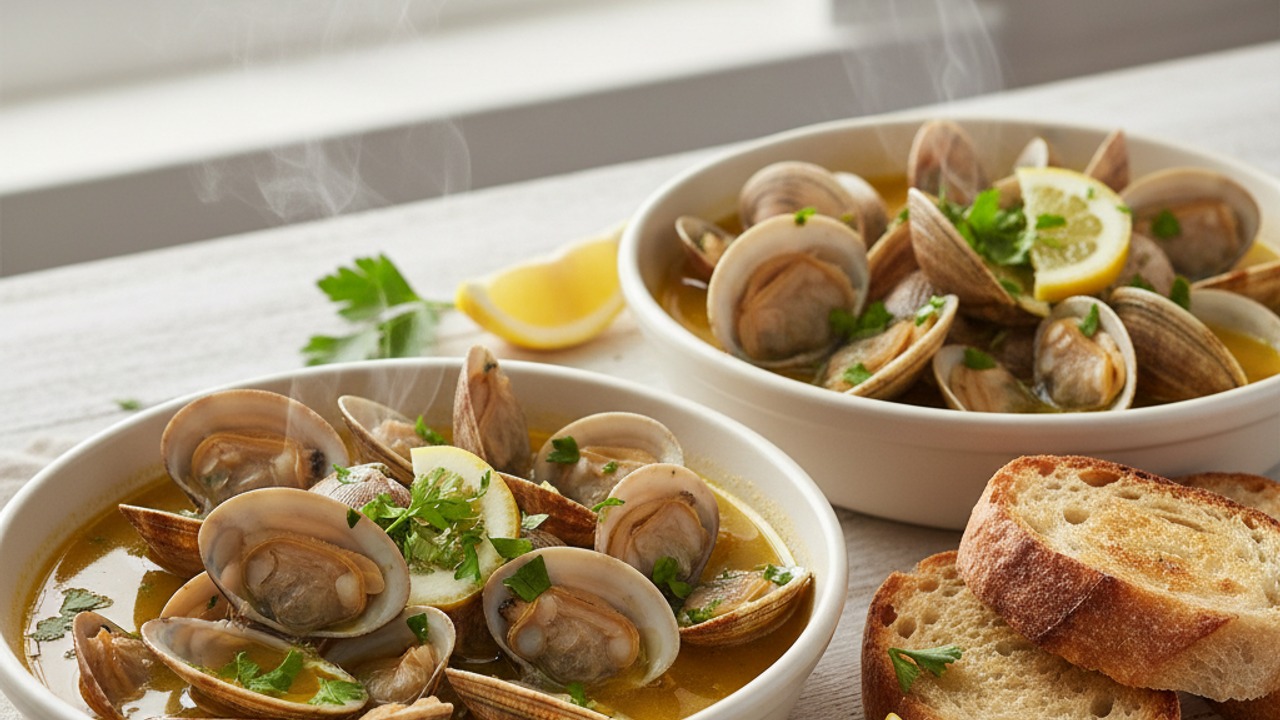
Tender littleneck clams are gently poached in a fragrant bath of West Coast Pilsner, dry white wine, garlic and shallot, finished with butter, lemon and parsley. This quick stovetop dish makes a bright, briny starter or light main and highlights how a West Coast Pilsner can both flavor and pair beautifully with shellfish.
Ingredient Spotlight
Littleneck clams, scrubbed
Littleneck clams are a small size class of hard-shell clams prized for their sweet, briny meat and tender chew; they’re commonly used in coastal North American and European seafood dishes like steamed clams and pasta alle vongole. They taste mildly salty and sweet with a fresh sea aroma rather than a strong fishiness. You’ll find them at seafood counters, fish markets, or well-stocked grocery stores; good substitutes are Manila clams, small cherrystone clams, or cockles.
Ingredient Spotlight
West Coast Pilsner (see note)
A West Coast Pilsner is a modern American craft-beer take on the traditional pilsner developed on the U.S. West Coast—crisp and dry like a pilsner but finished with pronounced American/West Coast hop character (citrus, pine, resin) and a bit more bitterness. Its aroma and flavor bring bright, hoppy citrus and resin notes over a light malt backbone, which can change the profile of a braising liquid or broth. Look for it at craft breweries, bottle shops, or well-stocked liquor stores; if you don’t have one, substitute a dry pilsner or pale lager, or use dry white wine or clam juice with a squeeze of lemon for a non-beer option.
Jake Woods's note
"This is a speedy, elegant seafood dish that shines as an appetizer for dinner parties or a relaxed weeknight main served with crusty bread. Home cooks will love how the West Coast Pilsner adds bright malt and hop notes that complement the clams and make a great beverage pairing."
About This Recipe
This is a dish about contrast: the mineral, briny pop of littleneck clams against a bright, slightly bitter West Coast Pilsner broth scented with garlic, shallot and a splash of dry white wine. The clams stay tender because they’re steamed briefly in a liquid that’s been concentrated just enough to carry flavor without masking the sea; butter and lemon at the finish add silk and lift so each shell feels like a tiny, self-contained course. Using a West Coast Pilsner—crisper, more hop-forward than continental pilsners—adds a citrusy, resinous note that plays well with shellfish rather than competing with it.
This version works for home cooks who want dinner in under 40 minutes that still feels thoughtful enough for guests. The technique is deliberately simple: purge carefully to avoid grit, sweat aromatics to build a clean base, reduce the liquid slightly so the beer and wine harmonize, and steam briefly so clams open but remain succulent. Serve with good bread to soak up the broth, and consider pouring the same pilsner alongside the bowls so the flavor thread runs from pot to glass.
Ingredients for Pilsner Poached Clams with Garlic and White Wine
- 2 lb Littleneck clams, scrubbed
- 2 tsp Kosher salt
- 1 tbsp Extra-virgin olive oil
- 1 medium Shallot, minced
- 4 cloves Garlic, minced
- 2 tbsp Unsalted butter
- 12 fl oz West Coast Pilsner (see note)
- 1/2 cup Dry white wine
- 2 tbsp Fresh lemon juice (about 1 lemon)
- 1/4 cup Fresh flat-leaf parsley, chopped
How to Make Pilsner Poached Clams with Garlic and White Wine
Step 1: Purge and prep the clams
Rinse clams under cold running water and discard any with cracked shells. In a large bowl, combine the clams with cold water and the kosher salt; stir and let sit 20 minutes to purge grit. After soaking, lift clams from the water (do not pour the bowl through a colander) and give them one final rinse; discard any that remain open when tapped.For this step
- 2 lbLittleneck clams, scrubbed
- 2 tspKosher salt
Step 2: Sweat the aromatics
Heat a large, heavy-bottomed pot over medium heat and add the olive oil. Add the minced shallot and cook until softened and translucent, about 2 minutes, then add the garlic and cook 30–45 seconds until fragrant. Stir in the butter and let it melt, coating the aromatics.For this step
- 1 tbspExtra-virgin olive oil
- 1 mediumShallot, minced
- 4 clovesGarlic, minced
- 2 tbspUnsalted butter
Step 3: Build the poaching liquid
Raise the heat to medium-high and pour in the West Coast Pilsner and the dry white wine; add the lemon juice. Bring the liquid to a lively simmer and let it reduce slightly for 2–3 minutes to concentrate the aromatics. Taste and adjust with a small pinch of salt or freshly ground black pepper if desired.For this step
- 12 fl ozWest Coast Pilsner (see note)
- 1/2 cupDry white wine
- 2 tbspFresh lemon juice (about 1 lemon)
Step 4: Poach the clams
Add the prepared clams to the simmering liquid, cover the pot, and steam until shells open, 5–7 minutes. Shake the pot gently once or twice while cooking to redistribute heat. Discard any clams that remain closed after cooking.Step 5: Finish and serve
Remove from heat, stir in the chopped parsley and a squeeze of lemon if desired. Spoon clams and plenty of the aromatic broth into warmed bowls and serve immediately with crusty bread to soak up the broth. Note: a West Coast Pilsner used in the recipe also pairs wonderfully alongside the finished dish.For this step
- 1/4 cupFresh flat-leaf parsley, chopped


- Rinse clams under cold running water and discard any with cracked shells. In a large bowl, combine the clams with cold water and the kosher salt; stir and let sit 20 minutes to purge grit. After soaking, lift clams from the water (do not pour the bowl through a colander) and give them one final rinse; discard any that remain open when tapped.
- Heat a large, heavy-bottomed pot over medium heat and add the olive oil. Add the minced shallot and cook until softened and translucent, about 2 minutes, then add the garlic and cook 30–45 seconds until fragrant. Stir in the butter and let it melt, coating the aromatics.
- Raise the heat to medium-high and pour in the West Coast Pilsner and the dry white wine; add the lemon juice. Bring the liquid to a lively simmer and let it reduce slightly for 2–3 minutes to concentrate the aromatics. Taste and adjust with a small pinch of salt or freshly ground black pepper if desired.
- Add the prepared clams to the simmering liquid, cover the pot, and steam until shells open, 5–7 minutes. Shake the pot gently once or twice while cooking to redistribute heat. Discard any clams that remain closed after cooking.
- Remove from heat, stir in the chopped parsley and a squeeze of lemon if desired. Spoon clams and plenty of the aromatic broth into warmed bowls and serve immediately with crusty bread to soak up the broth. Note: a West Coast Pilsner used in the recipe also pairs wonderfully alongside the finished dish.
Pilsner Poached Clams with Garlic and White Wine Tips
Purge without pouring
When soaking clams, lift them out instead of pouring the bowl through a colander to avoid returning settled grit to the shells.
Tap any stubborn clams
If a clam stays open after the purge, tap it sharply; if it closes, it’s alive and good to cook, but discard any that remain open after cooking.
Keep a lively simmer
Bring the beer and wine to a lively simmer before adding clams so the alcohol aromas reduce quickly and the poaching liquid concentrates in 2–3 minutes.
Don’t overcook seafood
Steam the clams just until shells open (5–7 minutes); prolonged cooking makes them tough and rubbery.
Taste the broth
Before adding clams, taste and adjust salt or pepper—beer and wine mute salt, so a small pinch can brighten the final bowl.
Pilsner Poached Clams with Garlic and White Wine Variations and Substitutions
Swap the beer
If you don’t have a West Coast Pilsner, use a dry lager or a crisp saison—avoid malty or heavily spiced beers that can overwhelm the clams.
Make it spicy
Add 1 small minced chile or 1/2 tsp red pepper flakes with the garlic for a warm heat that pairs nicely with the pilsner's citrusy bite.
Dairy-free finish
Omit the butter and finish with a slick of high-quality extra-virgin olive oil and a little more lemon for the same richness without dairy.
Use mussels instead
Swap littlenecks for mussels (in equal weight); scrub and debeard them and shorten the cooking to 4–5 minutes since mussels open quickly.
How to Store and Make Pilsner Poached Clams with Garlic and White Wine Ahead
This dish is best eaten the day it’s made; clams become rubbery when reheated repeatedly. Store clams and broth together in an airtight container in the refrigerator for up to 48 hours and reheat gently over low heat until just warm—avoid boiling. You can freeze strained broth (without clams) for up to two months and add freshly steamed clams when serving.
What to Serve With Pilsner Poached Clams with Garlic and White Wine
Serve with thick slices of crusty sourdough or grilled bread rubbed with garlic to soak up the broth, and a simple green salad tossed with lemon and olive oil to lighten the meal. For drinks, pour the same West Coast Pilsner used in the recipe or a crisp Albariño or Sauvignon Blanc to echo the dish’s citrus and mineral notes.
Pilsner Poached Clams with Garlic and White Wine FAQs
Can I use other clams or shellfish?
Yes—topnecks, cherrystones or Manila clams work similarly, though larger varieties may need an extra minute or two of steam; mussels are an excellent substitute but debeard them first.
Do I need to worry about grit in the broth?
If you follow the soak and lift method (don’t pour the soaking water through a colander) and rinse the clams after purging, grit should be minimal; if you’re concerned, strain the finished broth through a fine-mesh sieve before serving.
Can I cook the clams from frozen?
No—do not cook frozen clams; buy fresh or fully thawed shellfish and use live clams that close when tapped, discarding any that don’t respond or remain open after cooking.
Why use both beer and wine?
The wine adds acidity and familiar aromatic structure while the West Coast Pilsner contributes bright hop and malt notes that lift the broth; together they create a more layered, savory poaching liquid than either alone.
How can I tell when clams are done?
Clams are done when most shells have opened and the meat looks plump and opaque; any that remain tightly closed after 7 minutes should be discarded.
About the author
Jake WoodsHello, I'm Jake. I started this recipe site with the idea that I hated recipe websites that overwhelm you with long stories and ads just to see plain content that's not helpful. My goal is to provide you with quality recipes, simple ideas and a fun cooking experience. There's lots of fun things to cook, and I think as you browse the site you'll find that TopShelf.Recipes is the place for quality recipes on the web.
See all recipes by Jake Woods →Ratings & Reviews
Did you make this recipe?
Be the first to share your experience.
Nutrition Facts
Per serving: 3 oz clam
Nutrition values are estimated from USDA ingredient data and may vary based on preparation, brands, and portion sizes. Values are provided for informational purposes only.
Keep Reading
Guides & articles for this recipe

Healthy Eating
Gluten-Free Weeknight Grilling Plan
A 7-day gluten-free weeknight grilling plan with quick, family-friendly recipes, prep-ahead timelines, and a printable shopping list that spotlights late-summer produce and pantry staples. Includes clear cross-contamination safety tips and simple swaps to keep dinners fast and crowd-pleasing.

Healthy Eating
Low-Fat Grill Swaps for Big Flavor
A practical guide to trimming fat from grilled meals without losing juiciness or char. Learn yogurt- and citrus-based marinades, lean protein picks, searing and indirect-heat tricks, plus 5 quick low-fat marinades and a simple weeknight plan.

Recipes
DIY Edible Monster Eyes Candy
Make safe, fun edible monster eyes for cupcakes, cookies, and candy trays. Step-by-step recipes show baking-soda balls, chocolate and fondant eyes, wafer-print options, plus assembly, storage, and kid-friendly safety tips.
More from Stovetop
View all Stovetop recipes →
One-Pot Beef Bolognese

Stovetop Dutch-Oven Herb-Crusted Beef Roast with Pan Gravy

Dubai Tacos

Italian-Style Pot Roast with Tomatoes Olives and Fresh Herbs

Labor Day Grilled Lobster Rolls with Charred Scallion Brown Butter & Lemon‑Herb Aioli

Hainanese Chicken Rice

Pad Krapow Pork

Twice-Fried Restaurant Style Crispy Sweet Potato Fries (Stovetop Deep Fry)

Xiao Long Bao Soup Dumplings
Ask me anything about this recipe — substitutions, scaling, techniques, timing.
Powered by AI · 6 questions per 5 minutes, 30 per day