Pistachio Basbousa
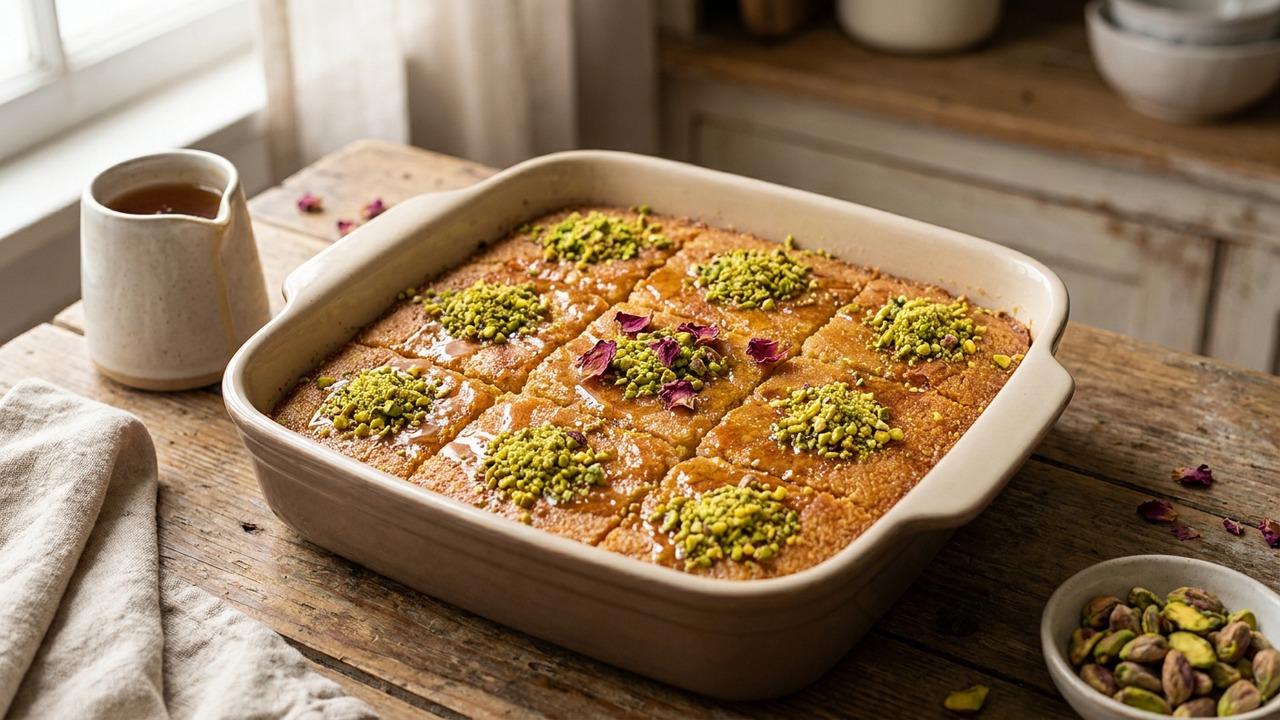
Pistachio Basbousa is a moist Middle Eastern semolina cake soaked in a fragrant rose-scented syrup and finished with crushed pistachios. It's an elegant, easy-to-make dessert that bridges traditional regional flavors with a contemporary pistachio-rose twist.
Ingredient Spotlight
Fine semolina (suji)
Fine semolina, called suji or rava in South Asia, is the finely ground durum wheat used for pastas, puddings, and many Indian sweets and puddings; it has a slightly gritty texture and a mild, wheaty, nutty flavor. It’s common in Mediterranean and South Asian cooking but less familiar to some U.S. cooks who only use all-purpose flour. Find it in the flour or ethnic/Indian aisle of supermarkets, at Indian grocery stores, or online. If you can’t get fine semolina, use regular durum semolina from the pasta section or cream-of-wheat as the closest textural substitute; all-purpose flour will work in a pinch but will give a smoother, less granular texture.
Ingredient Spotlight
Rose water (for syrup)
Rose water is a floral distillate made from rose petals widely used in Middle Eastern, South Asian, and Mediterranean desserts to add a fragrant, perfumey floral note. The aroma is intensely floral—use very sparingly, as a little goes a long way. It’s sold in Middle Eastern or Indian groceries and many supermarkets or online. Substitute with orange blossom water for a similar floral-citrus profile, or use a tiny amount of vanilla extract if you need a more pantry-friendly alternative (but the flavor will be different).
Jake Woods's note
"This basbousa shines when you want a make-ahead showstopper for gatherings — the syruped semolina gets better as it rests. Home bakers will love how forgiving the batter is and how little hands-on time it requires."
About This Recipe
Basbousa is one of those desserts that wears its simplicity proudly: a coarse semolina crumb transformed into a lusciously syrupy cake. This pistachio version leans into two complementary flavors—the nutty, slightly floral richness of lightly toasted pistachios and the delicate perfume of rose water folded into a lemon-bright syrup. The result is textural contrast—an almost grainy, tender crumb that soaks up a glossy, fragrant syrup—finished with crunchy pistachio that signals you’re eating something made with intention.
What makes this rendition work is restraint: modest sugar in the batter, a syrup that’s reduced just enough to cling without turning rock-hard, and a resting period that lets the semolina hydrate so the interior never feels dry. It’s easy to scale up for a party, slice into neat diamonds for serving, and the flavors suit both a casual tea and a festive table. If you like contrasts of syrup and nutty crumb, and a dessert that improves if you make it a few hours ahead, this pistachio basbousa will quickly become a go-to for gatherings and weeknight indulgence alike.
Ingredients for Pistachio Basbousa
- 2 cups Fine semolina (suji)
- 1 3/4 cups Granulated sugar (total for batter + syrup)
- 1 tbsp Baking powder
- 1/4 tsp Salt
- 1 cup Plain yogurt
- 1/2 cup Unsalted butter, melted
- 1/2 cup Pistachios, shelled and coarsely chopped
- 3/4 cup Water (for syrup)
- 1 tbsp Fresh lemon juice (for syrup)
- 1 tbsp Rose water (for syrup)
How to Make Pistachio Basbousa
Step 1: Combine dry ingredients
Preheat the oven to 350°F (175°C). In a large bowl whisk together the semolina, 3/4 cup (150 g) of the granulated sugar (reserve 1 cup/200 g for the syrup), baking powder, and salt until evenly distributed.For this step
- 2 cupsFine semolina (suji)
- 1 3/4 cupsGranulated sugar (total for batter + syrup)
- 1 tbspBaking powder
- 1/4 tspSalt
Step 2: Add wet ingredients and rest
Stir in the plain yogurt and melted butter until the mixture forms a thick, uniform batter. Let the batter rest uncovered for 20–30 minutes so the semolina hydrates and the texture evens out.For this step
- 1 cupPlain yogurt
- 1/2 cupUnsalted butter, melted
Step 3: Assemble in pan and top
Transfer the batter to a greased 9x13-inch (23x33 cm) baking pan and smooth the surface. Score the top into diamond or square pieces with a sharp knife and press a few chopped pistachios into each piece for garnish.For this step
- 1/2 cupPistachios, shelled and coarsely chopped
Step 4: Bake until golden
Bake for 30–35 minutes, or until the top is deep golden and a toothpick inserted in the center comes out mostly clean. Remove from the oven and keep hot while you prepare the syrup.Step 5: Make rose syrup
Combine the reserved 1 cup (200 g) sugar, water, and lemon juice in a saucepan. Bring to a boil over medium heat, reduce to a simmer and cook 7–10 minutes until slightly thickened. Remove from heat and stir in the rose water, then let the syrup cool slightly (warm is fine).For this step
- 3/4 cupWater (for syrup)
- 1 tbspFresh lemon juice (for syrup)
- 1 tbspRose water (for syrup)
Step 6: Syrup the cake and serve
Slowly pour the warm syrup evenly over the hot cake, making sure it soaks into the scored pieces. Allow the basbousa to cool and absorb syrup for at least 1 hour before serving; serve warm or at room temperature, garnished with extra pistachios if desired.


- Preheat the oven to 350°F (175°C). In a large bowl whisk together the semolina, 3/4 cup (150 g) of the granulated sugar (reserve 1 cup/200 g for the syrup), baking powder, and salt until evenly distributed.
- Stir in the plain yogurt and melted butter until the mixture forms a thick, uniform batter. Let the batter rest uncovered for 20–30 minutes so the semolina hydrates and the texture evens out.
- Transfer the batter to a greased 9x13-inch (23x33 cm) baking pan and smooth the surface. Score the top into diamond or square pieces with a sharp knife and press a few chopped pistachios into each piece for garnish.
- Bake for 30–35 minutes, or until the top is deep golden and a toothpick inserted in the center comes out mostly clean. Remove from the oven and keep hot while you prepare the syrup.
- Combine the reserved 1 cup (200 g) sugar, water, and lemon juice in a saucepan. Bring to a boil over medium heat, reduce to a simmer and cook 7–10 minutes until slightly thickened. Remove from heat and stir in the rose water, then let the syrup cool slightly (warm is fine).
- Slowly pour the warm syrup evenly over the hot cake, making sure it soaks into the scored pieces. Allow the basbousa to cool and absorb syrup for at least 1 hour before serving; serve warm or at room temperature, garnished with extra pistachios if desired.
Pistachio Basbousa Tips
Hydrate the semolina
Letting the batter rest 20–30 minutes is crucial so the semolina absorbs moisture from the yogurt and butter, preventing a gritty, undercooked center.
Keep syrup warm
Pour warm syrup over hot cake so it soaks deeply; cold syrup will sit on top and won’t integrate properly with the crumb.
Score before baking
Scoring the cake into diamonds before it goes into the oven prevents large cracks and gives the syrup predefined channels to penetrate each piece evenly.
Test doneness carefully
A toothpick should come out mostly clean—slightly tacky is fine because the cake finishes cooking as it cools and absorbs syrup.
Use fine pistachio pieces
Pressing coarsely chopped pistachios into the top before baking keeps them from burning while toasting lightly in the oven improves their aroma.
Pistachio Basbousa Variations and Substitutions
Coconut-Pistachio Basbousa
Stir 3/4 cup shredded unsweetened coconut into the batter for a chewier texture and tropical aroma that pairs beautifully with pistachios.
Orange Blossom Twist
Replace the rose water with equal orange blossom water and add a teaspoon of orange zest to the batter for a brighter, citrus-forward profile.
Dairy-Free Version
Use full-fat coconut yogurt and melted coconut oil in place of butter and yogurt to keep richness and ensure proper hydration of the semolina.
Individual Servings
Bake the batter in a muffin tin or small ramekins for handheld portions; reduce baking time by about 8–12 minutes and pour syrup while still hot.
How to Store and Make Pistachio Basbousa Ahead
Store basbousa in an airtight container at room temperature for up to 2 days, or refrigerate for up to 5 days; the syrup keeps it moist, but refrigeration firms the crumb. To reheat, warm individual pieces in a 300°F oven for 8–10 minutes or microwave briefly to return some softness, and brush with a little warmed syrup if they seem dry.
What to Serve With Pistachio Basbousa
Serve basbousa warm or at room temperature with a small spoonful of unsweetened yogurt or a dollop of lightly sweetened whipped cream to cut the syrupy sweetness. Pair with strong Turkish or Arabic coffee, cardamom tea, or a bright mint tea—the bitter, herbal notes make a nice counterpoint to the cake's richness.
Pistachio Basbousa FAQs
Can I use coarse semolina instead of fine?
Coarse semolina will give a more pronounced grainy texture and may require a bit more resting time to hydrate fully; for a tender crumb stick to fine semolina if you can.
What if my batter feels too thick?
A fairly thick batter is normal, but if it seems dry after resting, stir in a tablespoon or two of milk or yogurt to achieve a spreadable consistency before baking.
Can I make the syrup ahead of time?
Yes—syrup can be made a day ahead and kept at room temperature; reheat it until warm before pouring over the hot cake for best absorption.
Why did my basbousa get soggy?
Sogginess usually comes from pouring syrup that’s too hot or too much syrup relative to the cake; use warm (not boiling) syrup and pour gradually, allowing it to absorb before adding more.
Is it OK to freeze basbousa?
You can freeze unfrosted, unsyruped pieces for up to 2 months; thaw and bake for a few minutes to refresh the texture, then prepare and pour the syrup fresh after warming.
About the author
Jake WoodsHello, I'm Jake. I started this recipe site with the idea that I hated recipe websites that overwhelm you with long stories and ads just to see plain content that's not helpful. My goal is to provide you with quality recipes, simple ideas and a fun cooking experience. There's lots of fun things to cook, and I think as you browse the site you'll find that TopShelf.Recipes is the place for quality recipes on the web.
See all recipes by Jake Woods →Ratings & Reviews
Did you make this recipe?
Be the first to share your experience.
Nutrition Facts
Per serving: about ¾ cup
Nutrition values are estimated from USDA ingredient data and may vary based on preparation, brands, and portion sizes. Values are provided for informational purposes only.
Keep Reading
Guides & articles for this recipe
Tips & Techniques
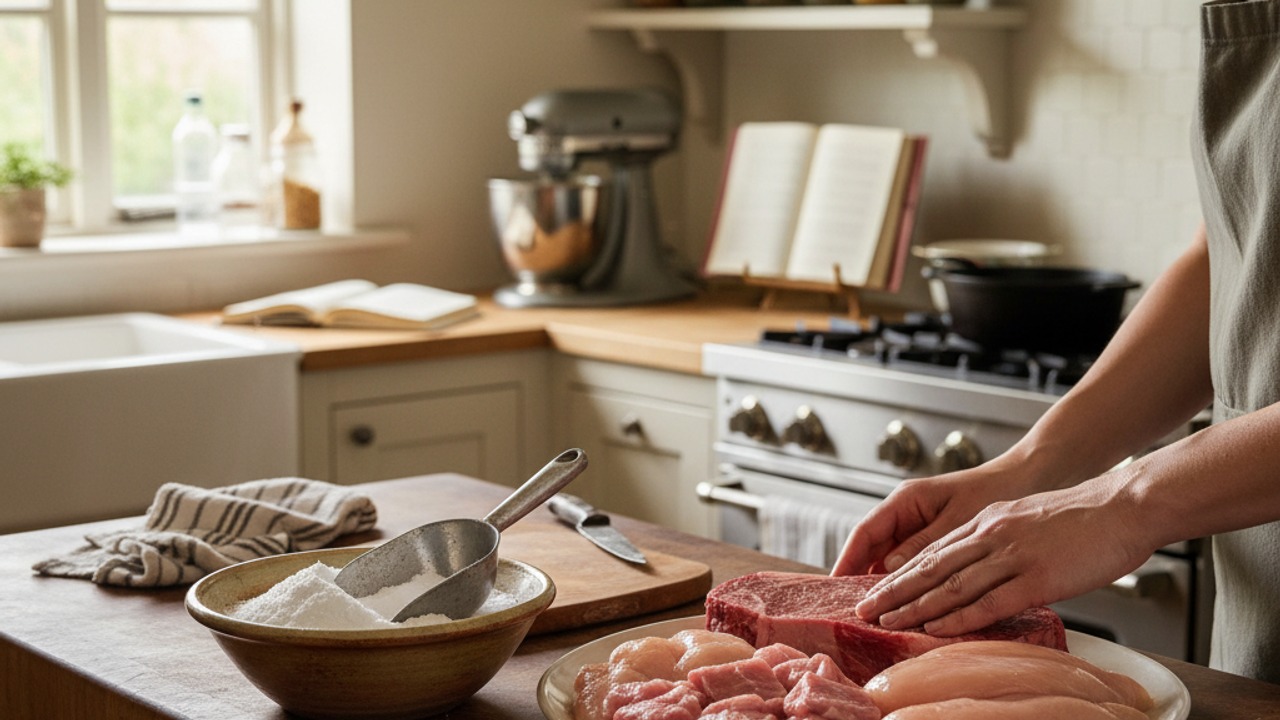
Baking Soda and Tenderized Beef
Learn how baking soda can tenderize, boost browning, and improve moisture for ground beef and other meats. This practical guide covers the science, step-by-step techniques, common mistakes, and recipes to try.

Healthy Eating
Gluten-Free Weeknight Grilling Plan
A 7-day gluten-free weeknight grilling plan with quick, family-friendly recipes, prep-ahead timelines, and a printable shopping list that spotlights late-summer produce and pantry staples. Includes clear cross-contamination safety tips and simple swaps to keep dinners fast and crowd-pleasing.

Healthy Eating
Low-Fat Grill Swaps for Big Flavor
A practical guide to trimming fat from grilled meals without losing juiciness or char. Learn yogurt- and citrus-based marinades, lean protein picks, searing and indirect-heat tricks, plus 5 quick low-fat marinades and a simple weeknight plan.
More from Baking
View all Baking recipes →
Gluten-Free Soft Pretzels

Sticky Gochujang Spare Ribs (Oven-Baked Korean-Inspired)

Apple Cider Muffins

Baked Buffalo Chicken Wings with Blue Cheese Dip (Crispy Oven Method)

Gluten-Free Honey Garlic Chicken Thighs with Tamari and Toasted Sesame

Sheet Pan Baked Honey Garlic Chicken Breasts with Roasted Vegetables

Juicy Oven-Baked Chicken Breasts (No-Dryness Method)

Cloud Bread Sandwiches

Honey Mustard Chicken Nuggets
Ask me anything about this recipe — substitutions, scaling, techniques, timing.
Powered by AI · 6 questions per 5 minutes, 30 per day