Porchetta-Style Rolled Pork Belly with Crispy Crackling and Sage-Pancetta Herb Filling
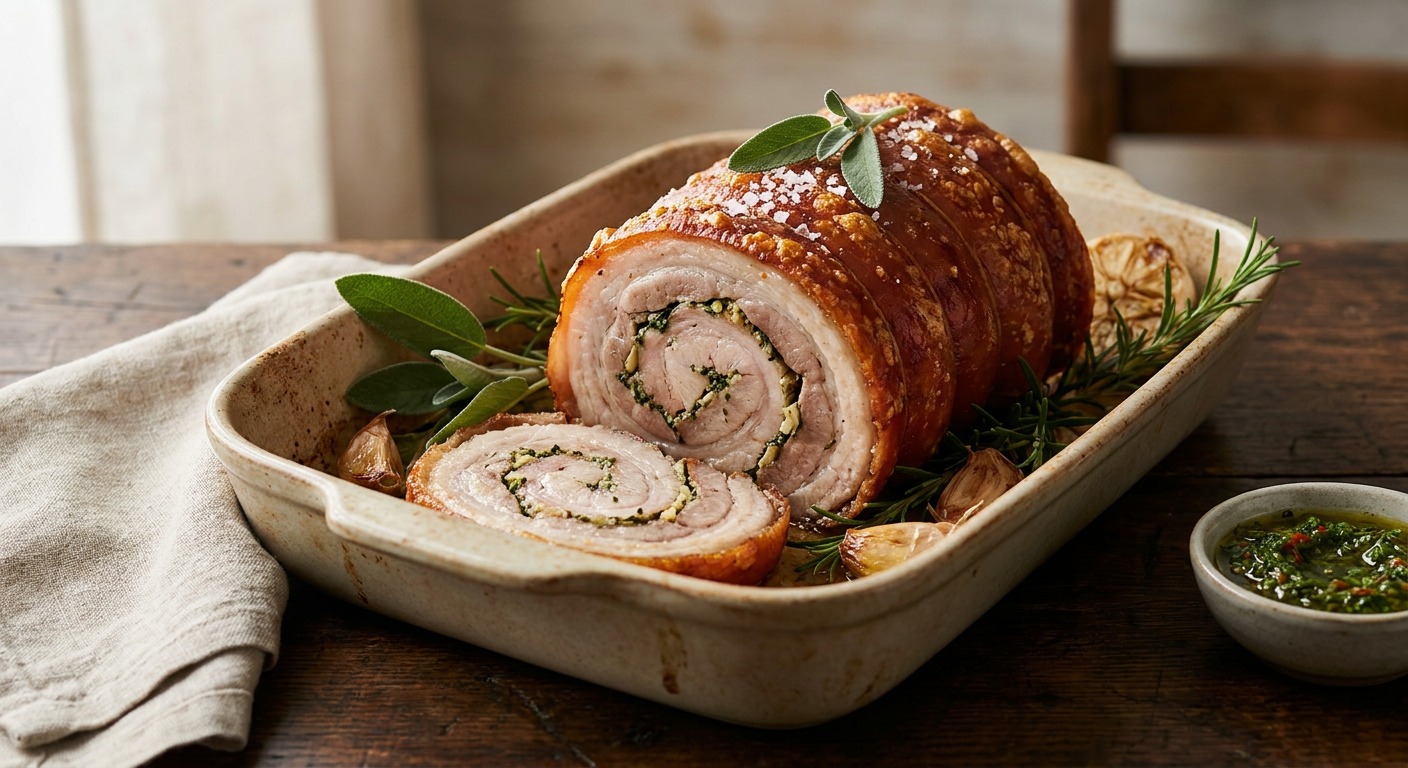
Porchetta-style rolled pork belly — a butterflied pork belly wrapped around a herb-and-pancetta filling — roasted to ultra-crispy crackling with aromatic sage, rosemary and garlic. Serve thick slices with roasted root vegetables and a garlicky pan sauce for an impressive dinner centerpiece.
Ingredient Spotlight
Boneless pork belly with center pork loin (butterflied)
This is a composite pork cut where the fatty pork belly is butterflied/opened flat and a lean center pork loin is laid into it, commonly used for rolled roasts like porchetta. It blends the rich, gelatinous flavor and mouthfeel of belly with the lean meat of the loin, yielding both succulence and sliceable texture. You’ll typically find it from a butcher or specialty meat counter (or you can ask a butcher to butterfly and assemble it); if unavailable, substitute by rolling a separate pork belly around a boneless pork loin or use a well-marbled pork shoulder for roasting.
Ingredient Spotlight
Pancetta, diced
Pancetta is an Italian cured pork belly, salt-cured and seasoned but usually not smoked, used for building savory flavor in many Italian dishes. It tastes rich, salty, and porky with a silky fat render rather than the smoky note of bacon. Buy it at delis, Italian markets, or the butcher counter; a good substitute is unsmoked bacon (or smoked bacon if unsmoked is unavailable), or diced prosciutto for a closer cured pork flavor without the same fat content.
Jake Woods's note
"This porchetta-style roll pairs the silky richness of belly with a bright sage‑pancetta stuffing and showstopping crackling. It’s great for a weekend dinner or special occasion — plan ahead to dry the skin for the crispiest results."
About This Recipe
This porchetta-style rolled pork belly takes the best of two worlds: the unctuous richness of pork belly and the firm, sliceable roastability of a centered pork loin. The salty, rendered pancetta and bright lemon-sage filling threads through the roll, cutting through the fat with herbaceous perfume while the exterior skin puffs and shatters into deeply savory crackling. The result is a contrast of textures — creamy fat and tender loin inside, sharp herb pockets, and a brittle, salty crust outside — that reads like a celebratory roast rather than a heavy weekday meal.
This version leans on small details that make a big difference: rendering the pancetta first concentrates flavor without over-salting, drying and salting the skin ahead guarantees reliable crackle, and resting the joint long enough lets juices redistribute so slices hold together. It’s ideal for a dinner party where you want a showstopping centerpiece that can be mostly prepped in advance, and it rewards a bit of patience with spectacular slices and a garlicky pan sauce that ties everything together.
Ingredients for Porchetta-Style Rolled Pork Belly with Crispy Crackling and Sage-Pancetta Herb Filling
- 5 lb Boneless pork belly with center pork loin (butterflied)
- 6 oz Pancetta, diced
- 1/2 cup (packed) Fresh sage leaves, chopped
- 2 tbsp Fresh rosemary, leaves chopped
- 6 cloves Garlic cloves, minced
- 1 tbsp Lemon zest (from 1 lemon)
- 3 tbsp Extra-virgin olive oil
- 2 tbsp Kosher salt
- 1 tbsp Freshly ground black pepper
- 1/2 cup Low-sodium chicken stock (for pan sauce)
How to Make Porchetta-Style Rolled Pork Belly with Crispy Crackling and Sage-Pancetta Herb Filling
Step 1: Make the sage–pancetta herb filling
In a skillet set over medium heat, render the diced pancetta until it's golden and most of the fat has released, about 5–7 minutes, then transfer to a bowl and let cool slightly. Stir in the minced garlic, chopped sage and rosemary, lemon zest and olive oil to form a loose, spreadable filling; adjust seasoning sparingly since pancetta is salty.For this step
- 6 ozPancetta, diced
- 1/2 cup (packed)Fresh sage leaves, chopped
- 2 tbspFresh rosemary, leaves chopped
- 6 clovesGarlic cloves, minced
- 1 tbspLemon zest (from 1 lemon)
- 3 tbspExtra-virgin olive oil
Step 2: Prepare and lay out the pork belly
Place the butterflied pork belly skin-side down on a large cutting board with the center loin roughly centered. Trim any thin ragged edges so the roll will be even, and pat the meat thoroughly dry with paper towels to help the filling adhere.For this step
- 5 lbBoneless pork belly with center pork loin (butterflied)
Step 3: Spread filling, roll and season
Evenly spread the cooled pancetta-herb mixture over the meat portion, leaving a 1-inch border around edges; roll the belly tightly so the skin becomes the outside shell. Tie the roll at 1½-inch intervals with kitchen twine, then season the exposed meat and ends lightly with kosher salt and freshly cracked black pepper, taking care not to mound salt on the already-salty filling.For this step
- 2 tbspKosher salt
- 1 tbspFreshly ground black pepper
Step 4: Score and dry the skin for crackling
Using a very sharp knife, score the skin in parallel 1/2-inch apart lines (or a cross-hatched pattern), cutting just through the skin and fat but not into the meat, and pat the skin repeatedly with paper towels to remove moisture. For best results, place the rolled porchetta uncovered in the refrigerator for at least 1 hour or overnight to dry the skin; before roasting, rub a little extra kosher salt into the scores to draw moisture and aid crisping.Step 5: Roast (oven or grill) to crisp the crackling and finish cooking
Preheat the oven to 475°F (245°C). Roast the porchetta on a rack set in a roasting pan for 25–35 minutes to blister and begin crisping the skin, then reduce the oven to 325°F (165°C) and roast until an instant-read thermometer inserted into the center loin reads 145–150°F (63–66°C), about 60–90 more minutes depending on size; if the skin hasn’t crisped to your liking, finish 2–4 minutes under a very hot broiler or over direct heat on a grill. For grilling, start over direct high heat (or a searing zone) to crisp the skin, then move to indirect heat to finish to temp; tent with foil if the skin is browning too fast.Step 6: Rest, carve, make garlicky pan sauce and serve
Transfer the roast to a cutting board and rest, covered loosely with foil, for 20–30 minutes before slicing into rounds; this keeps juices locked in and makes carving clean. Meanwhile, pour off most of the rendered fat from the roasting pan, return the pan to medium heat, add any reserved minced garlic and the chicken stock to deglaze, scraping up fond and reducing until slightly thickened to a glossy pan sauce; taste and adjust with salt and pepper, then strain if desired. Serve thick slices of porchetta with roasted root vegetables and spoon the garlicky pan sauce over each portion for a rich, savory finish.For this step
- 1/2 cupLow-sodium chicken stock (for pan sauce)


- In a skillet set over medium heat, render the diced pancetta until it's golden and most of the fat has released, about 5–7 minutes, then transfer to a bowl and let cool slightly. Stir in the minced garlic, chopped sage and rosemary, lemon zest and olive oil to form a loose, spreadable filling; adjust seasoning sparingly since pancetta is salty.
- Place the butterflied pork belly skin-side down on a large cutting board with the center loin roughly centered. Trim any thin ragged edges so the roll will be even, and pat the meat thoroughly dry with paper towels to help the filling adhere.
- Evenly spread the cooled pancetta-herb mixture over the meat portion, leaving a 1-inch border around edges; roll the belly tightly so the skin becomes the outside shell. Tie the roll at 1½-inch intervals with kitchen twine, then season the exposed meat and ends lightly with kosher salt and freshly cracked black pepper, taking care not to mound salt on the already-salty filling.
- Using a very sharp knife, score the skin in parallel 1/2-inch apart lines (or a cross-hatched pattern), cutting just through the skin and fat but not into the meat, and pat the skin repeatedly with paper towels to remove moisture. For best results, place the rolled porchetta uncovered in the refrigerator for at least 1 hour or overnight to dry the skin; before roasting, rub a little extra kosher salt into the scores to draw moisture and aid crisping.
- Preheat the oven to 475°F (245°C). Roast the porchetta on a rack set in a roasting pan for 25–35 minutes to blister and begin crisping the skin, then reduce the oven to 325°F (165°C) and roast until an instant-read thermometer inserted into the center loin reads 145–150°F (63–66°C), about 60–90 more minutes depending on size; if the skin hasn’t crisped to your liking, finish 2–4 minutes under a very hot broiler or over direct heat on a grill. For grilling, start over direct high heat (or a searing zone) to crisp the skin, then move to indirect heat to finish to temp; tent with foil if the skin is browning too fast.
- Transfer the roast to a cutting board and rest, covered loosely with foil, for 20–30 minutes before slicing into rounds; this keeps juices locked in and makes carving clean. Meanwhile, pour off most of the rendered fat from the roasting pan, return the pan to medium heat, add any reserved minced garlic and the chicken stock to deglaze, scraping up fond and reducing until slightly thickened to a glossy pan sauce; taste and adjust with salt and pepper, then strain if desired. Serve thick slices of porchetta with roasted root vegetables and spoon the garlicky pan sauce over each portion for a rich, savory finish.
Porchetta-Style Rolled Pork Belly with Crispy Crackling and Sage-Pancetta Herb Filling Tips
Trim for even rolling
Remove thin ragged edges so the roll is uniform; uneven thickness causes thin parts to overcook and thick parts to undercook.
Render pancetta fully
Cook the pancetta until golden and most fat has rendered; this concentrates flavor and prevents the filling from becoming greasy inside the roll.
Dry the skin thoroughly
Pat the skin dry and refrigerate uncovered for at least an hour (or overnight) to remove surface moisture, which is essential for crisp crackling.
Score shallow, consistent lines
Cut only through skin and fat, not into the meat, and keep scoring even to encourage uniform blistering and make carving easier.
Use a thermometer
Cook to 145–150°F (63–66°C) in the center loin to keep the meat juicy while ensuring the belly fat has rendered.
Porchetta-Style Rolled Pork Belly with Crispy Crackling and Sage-Pancetta Herb Filling Variations and Substitutions
Porchetta with fennel pollen
Swap half the rosemary for crushed fennel seeds or a pinch of fennel pollen to give a classic Italian anise note that pairs beautifully with pork.
Citrus-herb twist
Increase lemon zest to 2 tablespoons and add a tablespoon of orange zest for a brighter, slightly sweeter herb filling that cuts through richness.
Pork loin only
If you can’t source a belly-with-loin, butterflying a boneless pork loin and using a separate slab of pork belly wrapped around it gives similar results, though cook time will differ.
Lower-sodium option
Reduce added kosher salt by half and use unsalted or reduced-sodium pancetta (or par-cook and drain more fat) to control overall saltiness.
How to Store and Make Porchetta-Style Rolled Pork Belly with Crispy Crackling and Sage-Pancetta Herb Filling Ahead
Cool leftover slices to room temperature, then refrigerate in an airtight container for up to 3–4 days. Reheat gently in a low oven (275–300°F / 135–150°C) wrapped loosely in foil to preserve moisture and finish under the broiler for a minute to refresh the crackling. You can also freeze sliced portions for up to 3 months; thaw overnight in the refrigerator before reheating.
What to Serve With Porchetta-Style Rolled Pork Belly with Crispy Crackling and Sage-Pancetta Herb Filling
Serve thick slices on a warm platter with roasted root vegetables (carrots, parsnips, and baby potatoes) tossed in olive oil and thyme to complement the pork’s sweetness. Spoon the garlicky pan sauce over the meat and offer whole-grain mustard or a sharp cherry-mostarda on the side for acidity. Pair with a medium-bodied red like a Sangiovese or an earthy Chardonnay to balance the herb and fat.
Porchetta-Style Rolled Pork Belly with Crispy Crackling and Sage-Pancetta Herb Filling FAQs
Can I make the filling ahead of time?
Yes — you can prepare the pancetta-sage filling a day ahead and store it in the refrigerator; bring it to near room temperature before spreading so it spreads easily and evenly.
What if my crackling doesn’t get crispy?
If the skin remains soft, finish under a very hot broiler for 2–4 minutes watching closely, or transfer briefly to direct heat on a hot grill; ensuring the skin is very dry and well-salted beforehand helps prevent this problem.
How tight should I roll and tie it?
Roll as tightly as you can without forcing filling out, and tie at 1½-inch intervals snugly so the roll holds shape during cooking and slices cleanly.
Can I use prosciutto instead of pancetta?
You can substitute prosciutto for a leaner, less fatty cure, but it won’t render the same fat; if using prosciutto, consider adding a tablespoon of olive oil to the filling to compensate.
How long to rest before carving?
Rest the roast 20–30 minutes loosely tented with foil; this allows juices to redistribute and makes for neater, straighter slices.
About the author
Jake WoodsHello, I'm Jake. I started this recipe site with the idea that I hated recipe websites that overwhelm you with long stories and ads just to see plain content that's not helpful. My goal is to provide you with quality recipes, simple ideas and a fun cooking experience. There's lots of fun things to cook, and I think as you browse the site you'll find that TopShelf.Recipes is the place for quality recipes on the web.
See all recipes by Jake Woods →Ratings & Reviews
Did you make this recipe?
Be the first to share your experience.
Nutrition Facts
Per serving: 1 serving
Nutrition values are estimated from USDA ingredient data and may vary based on preparation, brands, and portion sizes. Values are provided for informational purposes only.
Keep Reading
Guides & articles for this recipe
Guides
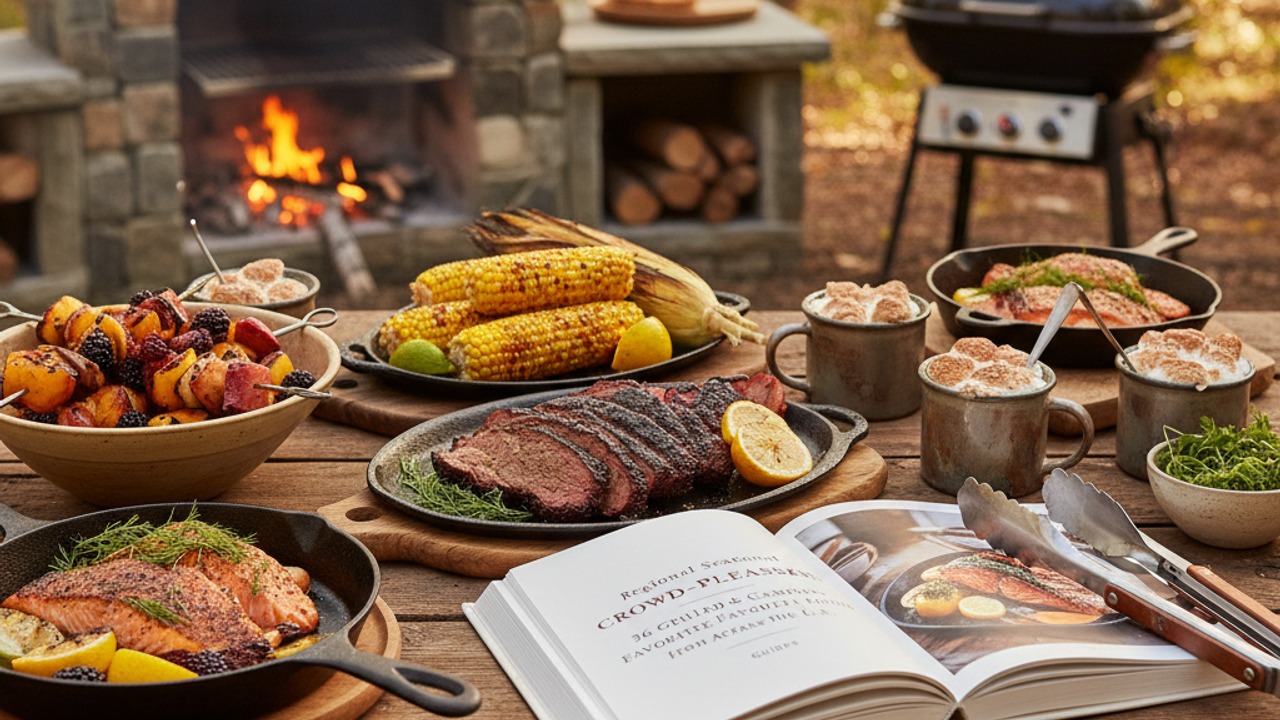
Regional Seasonal Crowd‑Pleasers: 36 Grilled & Campfire Favorites from Across the U.S.
A region-by-region guide to 36 seasonal grilled and campfire recipes Americans actually cook. Includes spring–summer–fall picks for four U.S. regions, plus grill/campfire adaptations, local-produce swaps, hosting shortcuts and quick scale-up formulas for gatherings.
Tips & Techniques
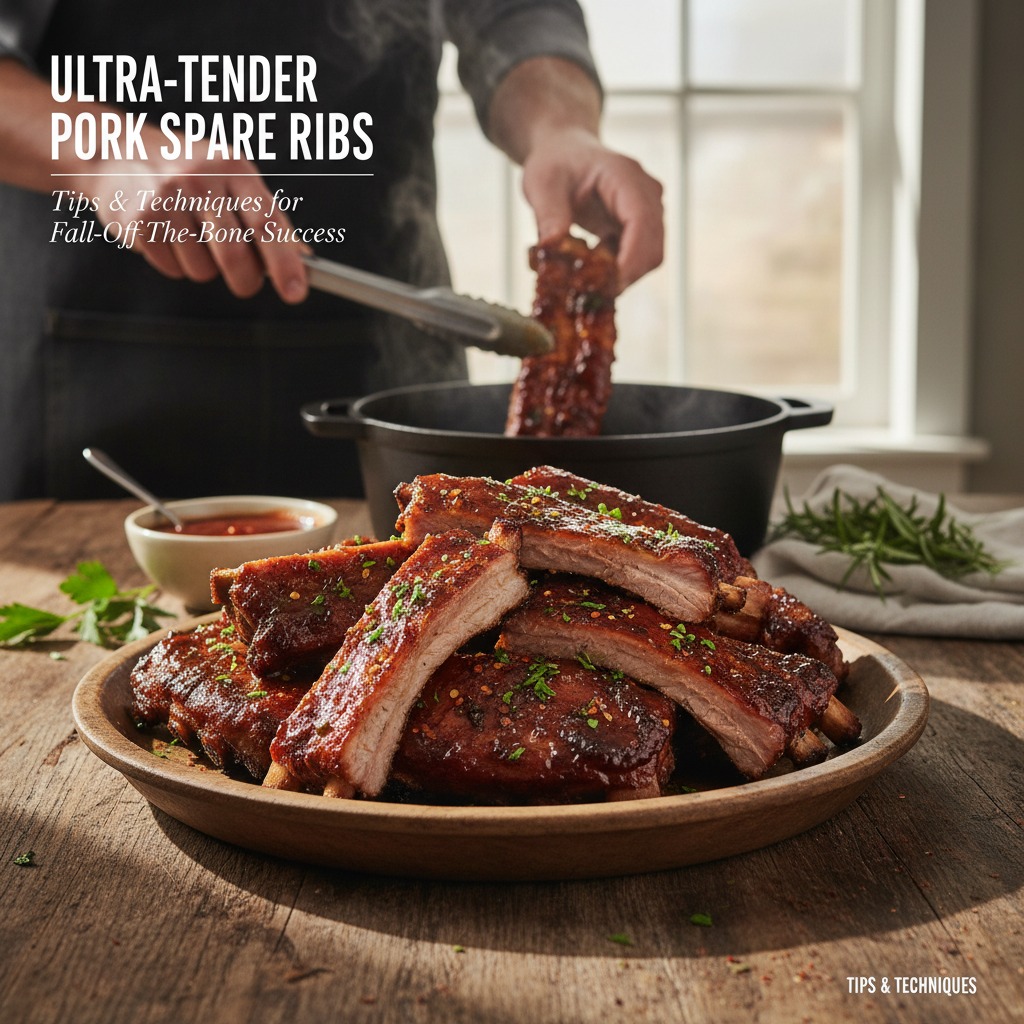
Ultra-Tender Pork Spare Ribs: Tips & Techniques for Fall-Off-the-Bone Success
Master the craft of ultra-tender pork spare ribs with practical, no-nonsense techniques for selecting, prepping, smoking, and finishing. This guide focuses on what matters—temperature control, testing for doneness, wrapping choices, and common fixes—so your next rack comes out juicy, tender, and perfectly sauced.

Healthy Eating
Gluten-Free Weeknight Grilling Plan
A 7-day gluten-free weeknight grilling plan with quick, family-friendly recipes, prep-ahead timelines, and a printable shopping list that spotlights late-summer produce and pantry staples. Includes clear cross-contamination safety tips and simple swaps to keep dinners fast and crowd-pleasing.
More from Pork
View all Pork recipes →
Slow-Braised Pork Shoulder Ragu with Pappardelle and Crispy Sage

Coffee-Chile Rubbed Pork Tenderloin with Charred Peach Salsa and Cilantro-Lime Rice

Sheet-Pan Mustard-Herb Pork Tenderloin with Roasted Sweet Potatoes and Garlic-Parmesan Pan Sauce

Smoked Pork Tenderloin with White-Bean Mash

Potato-Chip-Crusted Pork Schnitzel Bowl

Grilled Pineapple and Rum-Glazed Pork Tenderloin

Korean Grilled Pork Collar Steaks (Moksal) with Gochujang-Honey Glaze and Quick Cucumber Kimchi

Cider-Braised Pork Shoulder with Apples

Hickory-Smoked Pork Shoulder Burnt Ends with Bourbon-Maple Glaze
Ask me anything about this recipe — substitutions, scaling, techniques, timing.
Powered by AI · 6 questions per 5 minutes, 30 per day