Snake River Farms Beef Tallow Twice-Fried French Fries
Classic restaurant-style twice-fried French fries rendered in Snake River Farms Beef Tallow for an unmistakable depth of flavor and superior crispness. These stovetop fries are golden and crunchy on the outside, fluffy inside — an elevated side or snack that’s simple to make at home.
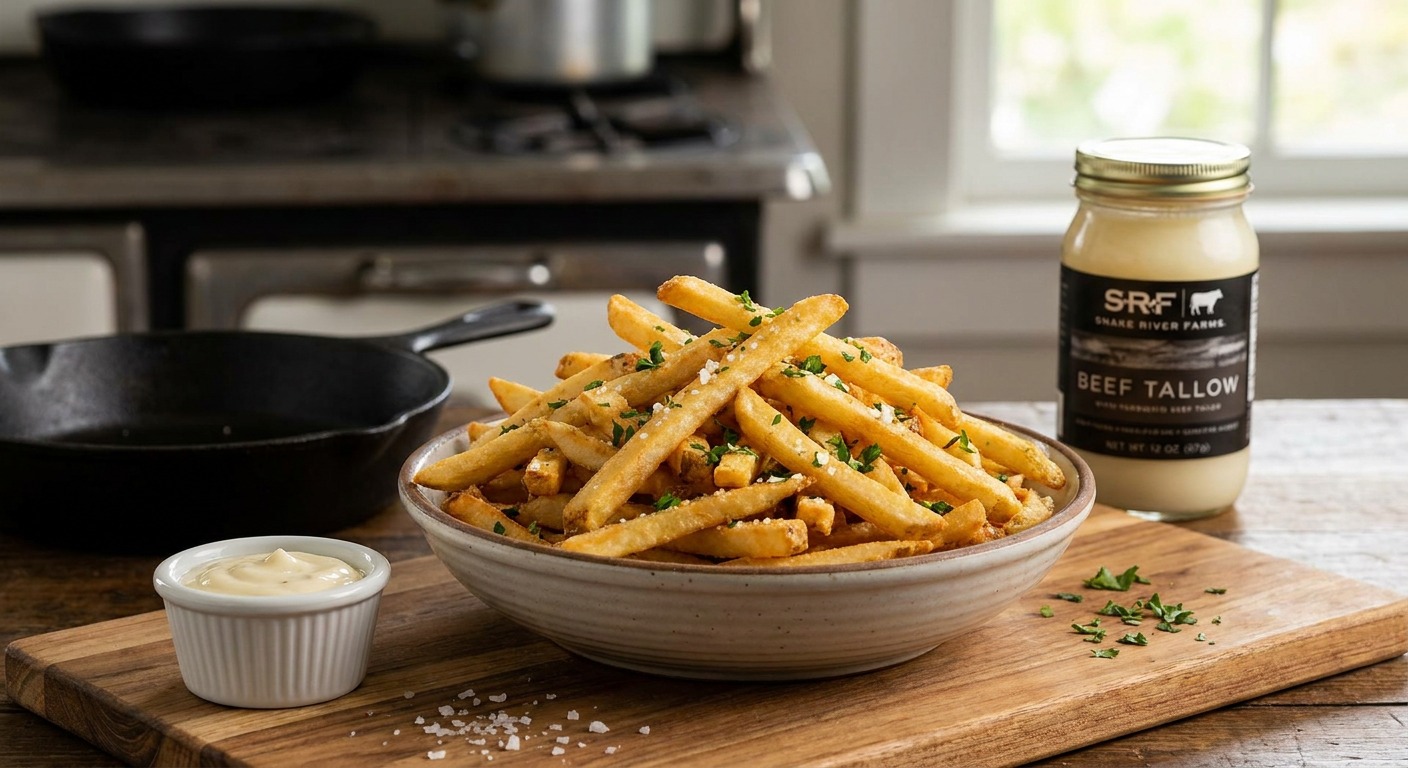
Ingredient Spotlight
Snake River Farms Beef Tallow
Rendered beef fat (tallow) from the premium U.S. meat brand Snake River Farms; many home cooks may not routinely keep branded tallow on hand. It has a high smoke point and a rich, savory, meaty aroma and flavor that’s excellent for frying, roasting, and adding depth to potatoes and other dishes. You can find it at specialty butchers, gourmet grocery stores, or ordered online from the producer, or render your own from beef trimmings. Good substitutes are lard or duck fat for similar richness, ghee/clarified butter for fat stability with a buttery note, or a high‑heat neutral oil (canola/peanut) if you want a milder flavor.
(paid link) — as an Amazon Associate we earn from qualifying purchases.
Jake Woods's note
"Using Snake River Farms Beef Tallow gives these fries a rich, beefy aroma and unbeatable crunch — perfect for a special weeknight or game-day snack. Follow the soak-and-dry steps and the two-temperature fry method for the best texture."
About This Recipe
These twice-fried fries use Snake River Farms Beef Tallow to deliver something closer to steakhouse fries than the greasy diner version you grew up with: the exterior shatters into shards of crisp, the interior is cottony and fully cooked, and there’s a faint beefy umami that anchors every bite. The tallow rounds out the potato’s sweetness and gives the fries a glossy, golden sheen that neutral oils can’t match. When served hot from the pan they cut through rich sauces and stand up next to bold mains without vanishing into the background.
What makes this method work is specificity: starchy Russets, a long cold soak to leach surface starch, a whisper-light dusting of cornstarch for extra crunch, and the two-stage fry that first cooks then crisps. It’s a stove-top technique that rewards patience and paying attention to temperature, ideal for home cooks who want restaurant texture without professional equipment. Make a double batch for company—the aroma alone elevates a weeknight burger into something worth talking about.
Ingredients for Snake River Farms Beef Tallow Twice-Fried French Fries
How to Make Snake River Farms Beef Tallow Twice-Fried French Fries
Step 1: Cut and soak the potatoes
Peel (optional) and cut the Russet potatoes into 1/3–1/2-inch batons for classic fries. Place the cut potatoes in a large bowl and cover with cold water (add ice if your tap water isn’t cold) and refrigerate for at least 30 minutes and up to 2 hours to remove surface starch.For this step
- 2 lbRusset potatoes
- 6 cupsCold water
- 6 piecesIce (optional, to keep soak cold)
Step 2: Dry and toss with cornstarch
Drain the potatoes and spread them in a single layer on clean towels or a rack; pat thoroughly dry — moisture prevents crisping. Transfer to a bowl and sprinkle with cornstarch, tossing gently to coat each fry in a light, even dusting; this helps create an extra-crispy crust.For this step
- 2 tbspCornstarch
Step 3: Heat the Snake River Farms Beef Tallow
In a heavy, deep pot or Dutch oven, add Snake River Farms Beef Tallow and heat over medium until the fat reaches 325°F (163°C) on a candy or deep-fry thermometer. Use enough tallow to submerge the fries (about 1–1.5 cups for a medium pot) and adjust heat to maintain the temperature.For this step
- 1 1/2 cupsSnake River Farms Beef Tallow
Step 4: First fry (blanch) at lower temperature
Working in batches, add fries to the 325°F tallow and blanch until they are cooked through but not colored, about 4–6 minutes per batch. Remove with a slotted spoon to a wire rack or paper towels to drain and cool; this step cooks the interior.Step 5: Second fry at high heat and season
Raise the tallow temperature to 375°F (190°C). Fry the cooled potatoes in batches until deeply golden and crisp, about 2–4 minutes. Transfer fries to a rack or paper towel, immediately season with kosher salt and freshly ground black pepper, and toss gently to coat.For this step
- 1 1/2 tspKosher salt
- 1/2 tspFreshly ground black pepper
Step 6: Serve and store
Serve hot for best texture with your favorite dipping sauce or as a side. Leftover fries can be reheated in a 425°F (220°C) oven or in a skillet to re-crisp; store cooled fries in an airtight container in the refrigerator for up to 2 days.


- Peel (optional) and cut the Russet potatoes into 1/3–1/2-inch batons for classic fries. Place the cut potatoes in a large bowl and cover with cold water (add ice if your tap water isn’t cold) and refrigerate for at least 30 minutes and up to 2 hours to remove surface starch.
- Drain the potatoes and spread them in a single layer on clean towels or a rack; pat thoroughly dry — moisture prevents crisping. Transfer to a bowl and sprinkle with cornstarch, tossing gently to coat each fry in a light, even dusting; this helps create an extra-crispy crust.
- In a heavy, deep pot or Dutch oven, add Snake River Farms Beef Tallow and heat over medium until the fat reaches 325°F (163°C) on a candy or deep-fry thermometer. Use enough tallow to submerge the fries (about 1–1.5 cups for a medium pot) and adjust heat to maintain the temperature.
- Working in batches, add fries to the 325°F tallow and blanch until they are cooked through but not colored, about 4–6 minutes per batch. Remove with a slotted spoon to a wire rack or paper towels to drain and cool; this step cooks the interior.
- Raise the tallow temperature to 375°F (190°C). Fry the cooled potatoes in batches until deeply golden and crisp, about 2–4 minutes. Transfer fries to a rack or paper towel, immediately season with kosher salt and freshly ground black pepper, and toss gently to coat.
- Serve hot for best texture with your favorite dipping sauce or as a side. Leftover fries can be reheated in a 425°F (220°C) oven or in a skillet to re-crisp; store cooled fries in an airtight container in the refrigerator for up to 2 days.
Snake River Farms Beef Tallow Twice-Fried French Fries Tips
Keep Soak Ice-Cold
Use ice or very cold tap water and refrigerate while soaking; colder water reduces surface starch release and keeps potatoes firmer for frying.
Pat Dry Thoroughly
Any surface moisture will spit and steam in the hot tallow—dry each fry on towels or a rack until completely dry before tossing with cornstarch.
Use a Candy Thermometer
Maintain 325°F for the blanch and 375°F for the final fry; erratic temperatures make greasy or under-crisp fries, so monitor and adjust the burner between batches.
Blanch, Don’t Color
Cook the fries through at the lower temperature only until tender and pale—if they brown now you’ll end up with burnt interiors after the second fry.
Fry in Small Batches
Overcrowding drops the fat temperature and produces soggy fries; cook in single layers that can move freely for the crispiest result.
Snake River Farms Beef Tallow Twice-Fried French Fries Variations and Substitutions
Skin-On Rustic Fries
Leave the skins on for more texture and nutrients, just scrub clean and soak slightly longer; the cornstarch will still help form a crisp crust.
Sweet Potato Twist
Use sweet potatoes cut slightly thicker and reduce blanch time to avoid turning mushy, then finish at the same high temperature for a caramelized edge.
Vegetarian-Friendly Oil
If you avoid animal fats, use refined peanut or high-oleic sunflower oil for a neutral, high-smoke-point option—expect less beefy depth but the same crisping power.
Truffle and Herb Finish
Toss fries immediately after frying with a small drizzle of truffle oil, chopped chives, and flaky sea salt for a decadent finishing touch.
How to Store and Make Snake River Farms Beef Tallow Twice-Fried French Fries Ahead
Store cooled fries in an airtight container in the refrigerator for up to 2 days; avoid sealing while still warm to prevent sogginess. To re-crisp, spread fries on a baking sheet and roast at 425°F (220°C) for 8–12 minutes, or pan-fry in a hot skillet with a teaspoon of tallow until edges snap back to life. You can also freeze blanched (first-fry) fries in a single layer on a tray, then transfer to a bag and finish-fry from frozen at 375°F (190°C).
What to Serve With Snake River Farms Beef Tallow Twice-Fried French Fries
These fries are at home beside a generously seasoned Snake River Farms burger or a simply grilled ribeye, where the tallow flavor will echo the meat. Offer dipping sauces that cut through fat—sharp malt vinegar, lemony garlic aioli, or a mustard-fennel dip—plus crisp pickles or a simple shredded slaw for acid and crunch. For drinks, a clean amber ale, a dry hard cider, or an herbal iced tea will balance the richness.
Snake River Farms Beef Tallow Twice-Fried French Fries FAQs
Can I skip the cornstarch?
You can, but cornstarch creates a thin, extra-crisp shell that keeps fries crunchy longer; without it you’ll still get good texture from the two-stage fry, just slightly less snap.
Why two different fry temperatures?
The lower 325°F blanch cooks the potato through without browning, and the hotter 375°F finishing fry rapidly dehydrates and browns the surface to create a crisp exterior.
How can I tell oil temperature without a thermometer?
Drop a small piece of potato in the fat: at blanching temperature it should produce gentle, steady bubbles; at finishing temp the bubbles will be much more vigorous and the potato will brown within a few minutes.
Can I reuse the beef tallow?
Yes—strain it through cheesecloth or a fine mesh while warm, store in a sealed jar in the refrigerator, and reuse a few times for frying as long as it smells fresh and isn’t dark or foamy.
How long can I soak the potatoes?
Soak at least 30 minutes and up to 2 hours in the refrigerator; beyond that they begin to lose structure and can become waterlogged, which reduces final crispness.
About the author
Jake WoodsHello, I'm Jake. I started this recipe site with the idea that I hated recipe websites that overwhelm you with long stories and ads just to see plain content that's not helpful. My goal is to provide you with quality recipes, simple ideas and a fun cooking experience. There's lots of fun things to cook, and I think as you browse the site you'll find that TopShelf.Recipes is the place for quality recipes on the web.
See all recipes by Jake Woods →Ratings & Reviews
Did you make this recipe?
Be the first to share your experience.
Nutrition Facts
Per serving: about 1 cup
Nutrition values are estimated from USDA ingredient data and may vary based on preparation, brands, and portion sizes. Values are provided for informational purposes only.
Keep Reading
Guides & articles for this recipe

Healthy Eating
Gluten-Free Weeknight Grilling Plan
A 7-day gluten-free weeknight grilling plan with quick, family-friendly recipes, prep-ahead timelines, and a printable shopping list that spotlights late-summer produce and pantry staples. Includes clear cross-contamination safety tips and simple swaps to keep dinners fast and crowd-pleasing.

Healthy Eating
Low-Fat Grill Swaps for Big Flavor
A practical guide to trimming fat from grilled meals without losing juiciness or char. Learn yogurt- and citrus-based marinades, lean protein picks, searing and indirect-heat tricks, plus 5 quick low-fat marinades and a simple weeknight plan.

Recipes
DIY Edible Monster Eyes Candy
Make safe, fun edible monster eyes for cupcakes, cookies, and candy trays. Step-by-step recipes show baking-soda balls, chocolate and fondant eyes, wafer-print options, plus assembly, storage, and kid-friendly safety tips.
More from Stovetop
View all Stovetop recipes →
One-Pot Beef Bolognese

Stovetop Dutch-Oven Herb-Crusted Beef Roast with Pan Gravy

Dubai Tacos

Italian-Style Pot Roast with Tomatoes Olives and Fresh Herbs

Labor Day Grilled Lobster Rolls with Charred Scallion Brown Butter & Lemon‑Herb Aioli

Hainanese Chicken Rice

Pad Krapow Pork

Twice-Fried Restaurant Style Crispy Sweet Potato Fries (Stovetop Deep Fry)

Xiao Long Bao Soup Dumplings
Ask me anything about this recipe — substitutions, scaling, techniques, timing.
Powered by AI · 6 questions per 5 minutes, 30 per day