Buttercream Frosting
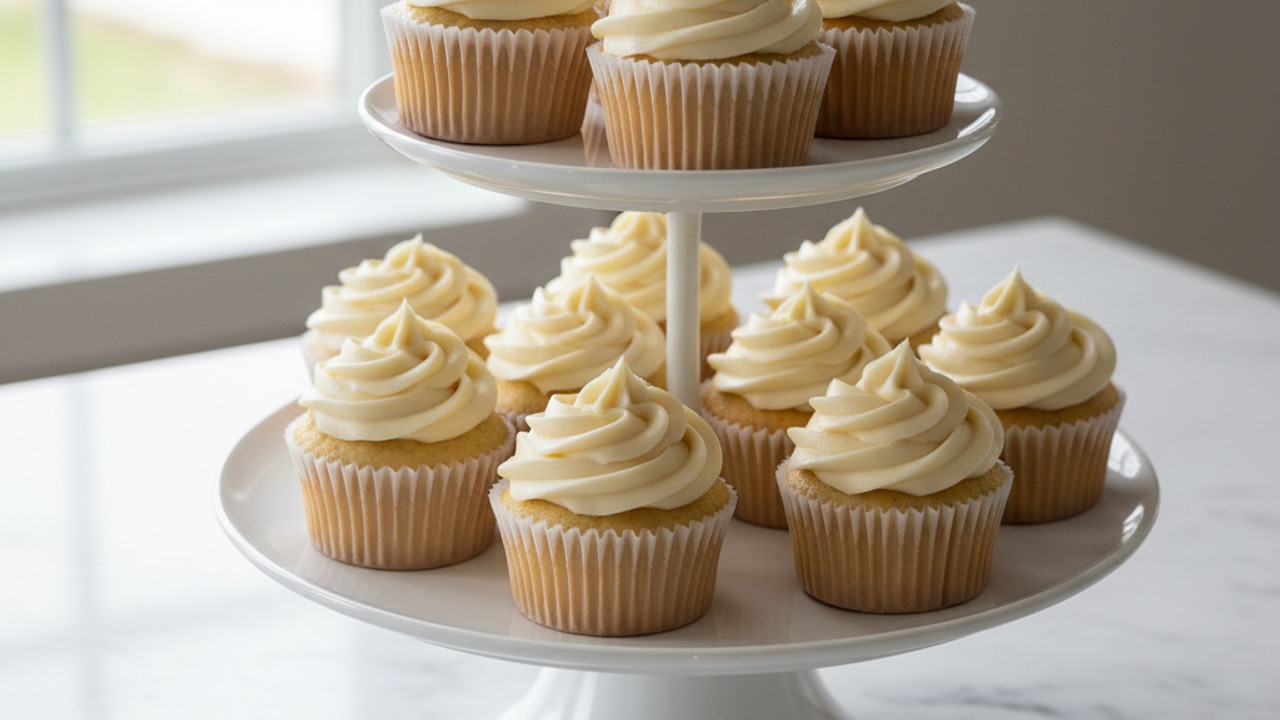
A silky, less-sweet Swiss meringue buttercream enriched with a touch of cream cheese for brightness and stability. It’s smooth, spreadable and not cloyingly sweet — ideal for frosting cakes and cupcakes when you want clean flavor and a refined finish.
Jake Woods's note
"This Swiss meringue buttercream is lighter-tasting than classic American buttercream thanks to the meringue base and a small amount of cream cheese. It’s perfect for special-occasion cakes and cupcakes when you want a smooth, elegant finish without overwhelming sweetness."
About This Recipe
This Swiss meringue buttercream skips the toothache sweetness of traditional American frosting by building flavor on silky whipped egg whites and real butter instead of mountains of confectioners' sugar. A modest addition of cream cheese sharpens the finish and gives the icing a gentle tang and extra stability, so you get a frosting that spreads beautifully, pipes cleanly, and keeps its shape without tasting cloying. The texture is satiny—think glossy peaks that melt on the tongue—making it a particularly good partner for delicate cakes where you want the cake flavor to sing through rather than be smothered.
The recipe leans on precise temperature and technique more than gimmicks: tempering the whites and sugar to 160°F both dissolves the sugar and reduces risk from raw whites, while adding butter piece by piece yields the unmistakable custardy, satin texture of a true Swiss meringue. This version is for home bakers who want a professional finish—especially wedding cake hobbyists, cupcake makers aiming for refined flavor balance, and anyone who prefers frosting that’s rich without being aggressively sweet.
Ingredients for Buttercream Frosting
- 4 large Large egg whites (room temperature)
- 1 cup Granulated sugar
- 1 1/4 cups Unsalted butter (softened, cut into tablespoons)
- 2 oz Cream cheese (room temperature)
- 2 tsp Pure vanilla extract
- 1/2 tsp Kosher salt
- 1 tsp Fresh lemon juice (optional — cuts sweetness)
- 2 tbsp Heavy cream (optional — to adjust consistency)
How to Make Buttercream Frosting
Step 1: Heat egg whites with sugar over a bain-marie
Combine the egg whites and granulated sugar in a heatproof mixing bowl set over a saucepan of barely simmering water (bain-marie). Whisk constantly until the sugar is fully dissolved and the mixture reaches 160°F (71°C) on a candy/instant-read thermometer or feels warm and no longer grainy when rubbed between your fingers, about 3–5 minutes.For this step
- 4 largeLarge egg whites (room temperature)
- 1 cupGranulated sugar
Step 2: Whip the meringue to glossy stiff peaks
Transfer the warm egg-white mixture to the bowl of a stand mixer fitted with the whisk attachment (or use a hand mixer). Whip on medium-high until the meringue is glossy and forms stiff peaks and the bowl has cooled to room temperature, about 8–10 minutes.Step 3: Incorporate butter and cream cheese in pieces
With the mixer on low, add the softened unsalted butter, one tablespoon-sized piece at a time, allowing each piece to incorporate before adding the next. If the buttercream looks separated or curdled at any point, keep mixing — it usually comes back together as the butter warms. Once the butter is mostly incorporated, add the room-temperature cream cheese in small pieces and blend until smooth and fully incorporated.For this step
- 1 1/4 cupsUnsalted butter (softened, cut into tablespoons)
- 2 ozCream cheese (room temperature)
Step 4: Flavor and adjust texture
Add the vanilla extract, kosher salt and the optional teaspoon of lemon juice; mix until combined. If the frosting is too thick, add heavy cream 1 tablespoon at a time until you reach a spreadable consistency. If it becomes too soft, chill the bowl 10–15 minutes and re-whip briefly.For this step
- 2 tspPure vanilla extract
- 1/2 tspKosher salt
- 1 tspFresh lemon juice (optional — cuts sweetness)
- 2 tbspHeavy cream (optional — to adjust consistency)
Step 5: Use or store
Use immediately to frost cakes or about 12 cupcakes (this recipe makes enough for an 8-inch two-layer cake or roughly a dozen standard cupcakes). If not using right away, store in an airtight container in the refrigerator up to 3 days; bring to room temperature and re-whip before using.


- Combine the egg whites and granulated sugar in a heatproof mixing bowl set over a saucepan of barely simmering water (bain-marie). Whisk constantly until the sugar is fully dissolved and the mixture reaches 160°F (71°C) on a candy/instant-read thermometer or feels warm and no longer grainy when rubbed between your fingers, about 3–5 minutes.
- Transfer the warm egg-white mixture to the bowl of a stand mixer fitted with the whisk attachment (or use a hand mixer). Whip on medium-high until the meringue is glossy and forms stiff peaks and the bowl has cooled to room temperature, about 8–10 minutes.
- With the mixer on low, add the softened unsalted butter, one tablespoon-sized piece at a time, allowing each piece to incorporate before adding the next. If the buttercream looks separated or curdled at any point, keep mixing — it usually comes back together as the butter warms. Once the butter is mostly incorporated, add the room-temperature cream cheese in small pieces and blend until smooth and fully incorporated.
- Add the vanilla extract, kosher salt and the optional teaspoon of lemon juice; mix until combined. If the frosting is too thick, add heavy cream 1 tablespoon at a time until you reach a spreadable consistency. If it becomes too soft, chill the bowl 10–15 minutes and re-whip briefly.
- Use immediately to frost cakes or about 12 cupcakes (this recipe makes enough for an 8-inch two-layer cake or roughly a dozen standard cupcakes). If not using right away, store in an airtight container in the refrigerator up to 3 days; bring to room temperature and re-whip before using.
Buttercream Frosting Tips
Bring ingredients to room temperature
Room-temperature egg whites, butter and cream cheese incorporate evenly and reduce the chance of a broken or curdled finish, so plan ahead and pull them out 1–2 hours before you start.
Watch the thermometer
Heat the whites and sugar to 160°F to dissolve the sugar and pasteurize the eggs; under that and the meringue can feel grainy, over that and you risk cooking the whites.
Add butter in pieces
Drop butter in tablespoon-sized pieces on low speed so each bit emulsifies into the meringue—rushing with large pieces or high speed causes separation.
Rescue curdling patiently
If the buttercream looks broken, keep whipping on medium speed; if it remains separated chill the bowl briefly for 10–15 minutes then re-whip until smooth.
Adjust texture with cream
Thin the frosting a teaspoon at a time with heavy cream for spreading, and refrigerate briefly before re-whipping if it becomes too soft to pipe.
Buttercream Frosting Variations and Substitutions
Dark chocolate swirl
Fold in 4–6 ounces of melted, cooled dark chocolate (55–70%) after the butter is incorporated for a glossy chocolate Swiss buttercream with a firmer texture.
Citrus-bright version
Replace the optional lemon juice with 1–2 teaspoons of finely grated lemon or orange zest and reduce cream cheese to 1 ounce for a brighter, zesty finish that complements vanilla or almond cakes.
Espresso mocha
Dissolve 1–2 teaspoons instant espresso powder in a tablespoon of warm water and add with the vanilla for a coffee-kissed buttercream that pairs well with chocolate cakes.
Stabilized for warm weather
Bloom 1 teaspoon unflavored gelatin in 1 tablespoon cold water, warm to dissolve, cool slightly, and whisk into the meringue just before adding the butter to help the frosting hold up in heat.
Vegan aquafaba option
For an egg-free version, use whipped aquafaba (chickpea brine) and replace butter with a vegan stick butter blend; expect a lighter, slightly different mouthfeel and shorter shelf life.
How to Store and Make Buttercream Frosting Ahead
Store leftover buttercream airtight in the refrigerator for up to 3 days or freeze in a sealed container for up to 3 months. To use, thaw overnight in the refrigerator, bring to room temperature, and re-whip briefly to restore volume and smoothness before piping or spreading. If chilled too long it may look stiff—just let it warm slightly and beat to bring it back together.
What to Serve With Buttercream Frosting
This buttercream pairs beautifully with tender sponge cakes—vanilla, lemon, almond or carrot—and is a classic companion to red velvet and chocolate. For cupcakes, pipe rosettes and finish with a sprinkle of finely chopped toasted nuts, freeze-dried fruit powder, or cocoa nibs; serve with strong coffee, Earl Grey, or a slightly sweet Moscato to balance the richness. When building layered cakes, crumb-coat and chill briefly before the final coat for the cleanest finish.
Buttercream Frosting FAQs
Is it safe to use raw egg whites in this recipe?
Yes—the egg whites and sugar are heated together to 160°F, which both dissolves the sugar and brings the mixture to a temperature that reduces food-safety risk by effectively pasteurizing the whites.
Why did my buttercream look curdled or separated?
Curdling usually means the butter was too cold, added too quickly, or the meringue was too warm; keep whipping—often it will come back together—or chill the bowl briefly and re-whip so the butter firms and re-emulsifies.
How can I make this less sweet without ruining texture?
Add a touch more cream cheese or a teaspoon of lemon juice for brightness, or introduce bitter flavors like espresso or dark chocolate; avoid cutting the sugar drastically because the meringue’s stability depends on the sugar content.
Can I color this buttercream with food coloring?
Use gel or paste colorings and add them after the butter is incorporated; liquid coloring can thin the frosting, so add sparingly and re-whip to incorporate.
What do I do if the buttercream is too soft to pipe?
Chill the bowl and piping bag for 10–20 minutes to firm the butter, then re-whip briefly; if it's persistently soft, briefly increase the ratio of chilled butter by adding a few tablespoons of softened (not melted) butter.
About the author
Jake WoodsHello, I'm Jake. I started this recipe site with the idea that I hated recipe websites that overwhelm you with long stories and ads just to see plain content that's not helpful. My goal is to provide you with quality recipes, simple ideas and a fun cooking experience. There's lots of fun things to cook, and I think as you browse the site you'll find that TopShelf.Recipes is the place for quality recipes on the web.
See all recipes by Jake Woods →Ratings & Reviews
Did you make this recipe?
Be the first to share your experience.
Nutrition Facts
Per serving: about ¾ cup
Nutrition values are estimated from USDA ingredient data and may vary based on preparation, brands, and portion sizes. Values are provided for informational purposes only.
Keep Reading
Guides & articles for this recipe

Recipes
DIY Edible Monster Eyes Candy
Make safe, fun edible monster eyes for cupcakes, cookies, and candy trays. Step-by-step recipes show baking-soda balls, chocolate and fondant eyes, wafer-print options, plus assembly, storage, and kid-friendly safety tips.

Recipes
No-Bake Funny Halloween Treats: 15 Quick Recipes
15 no-bake, funny Halloween treats that busy hosts can assemble in minutes — kid-friendly sweets, savory bites, and easy cocktails that don’t need an oven. Built for last-minute parties, with pantry-staple shortcuts and quick decoration ideas.

Guides
Nutrition for Youth Athletes
Practical, age- and sport-specific nutrition guidance for kids and teens who play sports. Covers calories, macronutrients, hydration, male/female differences, and easy meals and snacks.
More from General
View all General recipes →
Fresh Raspberry Sugar Cookies

Fresh Strawberry Cheesecake Bites

Ermine Frosting

Perfect Scrambled Eggs

Dragon Fruit Salsa

Teriyaki Chicken

Panera Dupe Chicken Caprese Bowl

Authentic Mai Tai

Low-Fat Beef Bourguignon
Ask me anything about this recipe — substitutions, scaling, techniques, timing.
Powered by AI · 6 questions per 5 minutes, 30 per day