Tempura Vegetable Platter
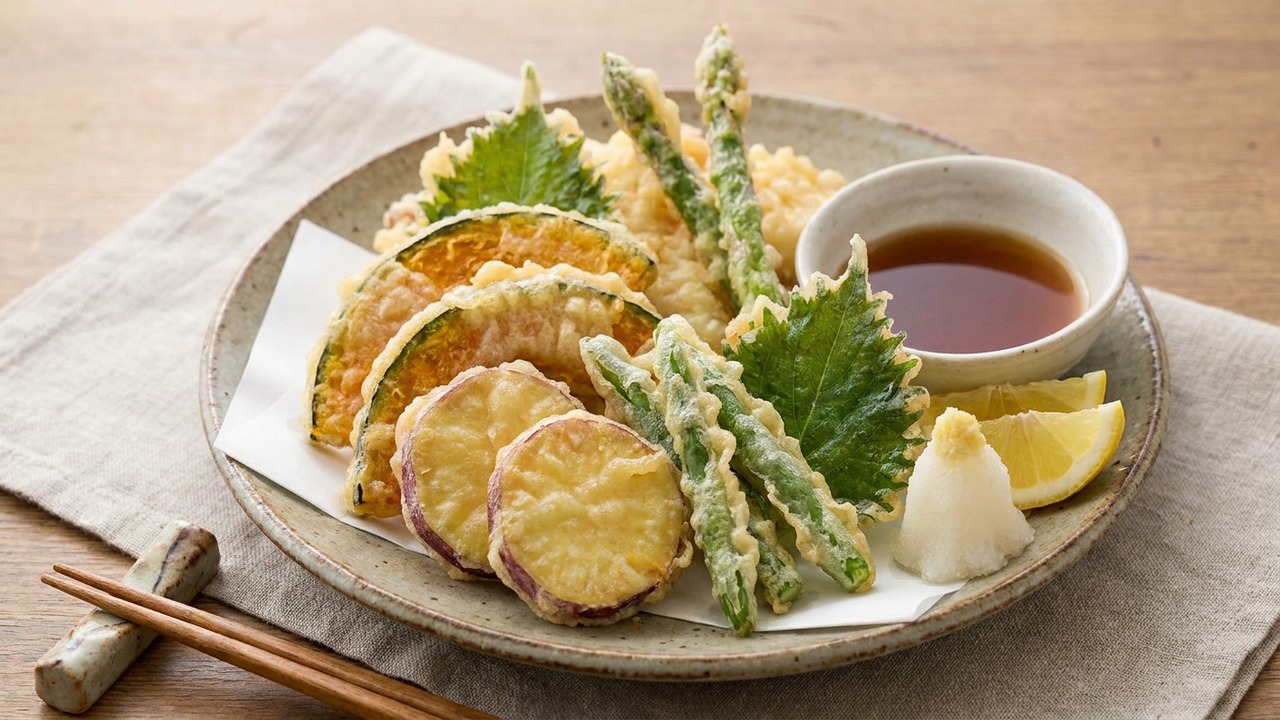
A light, crisp assortment of battered and fried seasonal vegetables using a cold, minimal tempura batter. This platter delivers delicate crunch and bright vegetable flavor — perfect as an appetizer, party plate, or vegetable-forward side.
Ingredient Spotlight
Mirin (sweet rice wine) or sweet white wine
Mirin is a sweet Japanese rice wine used commonly in Japanese cooking to add sweetness and glossy umami depth to sauces and glazes. It has a mild, syrupy sweetness with a faint alcoholic aroma and balances salty flavors like soy sauce. Find mirin in the Asian/International aisle of most supermarkets or at Asian markets; if you don’t have it, substitute a sweet white wine or use 1 tablespoon sake (or dry sherry) plus about 1 teaspoon sugar to mimic mirin’s sweetness and body.
Jake Woods's note
"This tempura batter is intentionally simple and cold for a feather-light crust that home cooks can achieve without special ingredients. It shines at casual dinner parties or as a crunchy vegetable side to a rice bowl."
About This Recipe
Tempura is all about contrast: a near-weightless, shatteringly crisp shell that gives way to bright, simply seasoned vegetables. This Tempura Vegetable Platter leans into that contrast by using a very small, cold batter — just an egg, ice water, flour and cornstarch — so the vegetables’ flavors come forward instead of being buried under a thick coating. Sweet potato and shiitake add a bit of starch and savory umami, bell pepper and green beans bring sweetness and snap, and a quick warm soy-mirin dip ties the plate together without overwhelming the light crust.
What makes this version work is the discipline around temperature and texture: an ice-cold, slightly lumpy batter forms airy pockets; cornstarch lightens the crumb for extra crispness; and frying in small batches preserves oil temperature so each piece fries quickly and evenly. It’s an ideal party platter for people who want a vegetable-forward appetizer that still feels indulgent — serve it straight from the fryer while it’s hot and fragile, and you’ll notice how much more expressive the produce tastes beneath that whisper-thin crust.
Ingredients for Tempura Vegetable Platter
- 4 cups Mixed vegetables (sweet potato, bell pepper, green beans, shiitake mushrooms), sliced for frying
- 1 cup All-purpose flour
- 1/3 cup Cornstarch
- 1 large Large egg
- 3/4 cup Ice water
- 4 cups Vegetable oil (for deep frying)
- 1/4 cup Soy sauce (for dipping)
- 2 tablespoons Mirin (sweet rice wine) or sweet white wine
- 1/2 teaspoon Kosher salt
How to Make Tempura Vegetable Platter
Step 1: Prep the vegetables
Slice any firm vegetables (sweet potato, bell pepper) into 1/8–1/4-inch pieces or rounds so they cook evenly; leave thin items like green beans whole and trim mushroom stems. Pat everything thoroughly dry with paper towels — moisture prevents the batter from sticking and causes oil to splatter.For this step
- 4 cupsMixed vegetables (sweet potato, bell pepper, green beans, shiitake mushrooms), sliced for frying
Step 2: Make the cold tempura batter
Whisk the egg lightly in a bowl, then add the ice water and stir to combine. In a separate bowl, stir together the all-purpose flour and cornstarch; add the dry mix to the egg mixture and fold together briefly with chopsticks or a fork until just combined — small lumps are fine. Keep the batter cold (set the bowl over another bowl of ice if desired) and do not overmix; the cold, slightly lumpy batter yields the lightest crust.For this step
- 1 cupAll-purpose flour
- 1/3 cupCornstarch
- 1 largeLarge egg
- 3/4 cupIce water
Step 3: Heat oil and fry in batches
Heat the vegetable oil in a deep pot or heavy skillet to 350°F (175°C) — a thermometer or a small drop of batter (it should sizzle and rise) will confirm temperature. Working in small batches, dip vegetables into the batter to coat, shake off excess, and carefully lower into the oil; fry until pale golden and crisp, about 2–3 minutes for most pieces (slightly longer for denser sweet potato). Transfer to a rack or paper towel and season lightly with kosher salt while still hot.For this step
- 4 cupsVegetable oil (for deep frying)
Step 4: Make dipping sauce and serve
Warm the soy sauce and mirin briefly in a small saucepan or microwave and taste; adjust with a pinch of sugar or a splash of water if the sauce is too salty. Arrange the tempura on a platter so it stays crisp (use a cooling rack if possible) and serve immediately with the dipping sauce on the side.For this step
- 1/4 cupSoy sauce (for dipping)
- 2 tablespoonsMirin (sweet rice wine) or sweet white wine
- 1/2 teaspoonKosher salt


- Slice any firm vegetables (sweet potato, bell pepper) into 1/8–1/4-inch pieces or rounds so they cook evenly; leave thin items like green beans whole and trim mushroom stems. Pat everything thoroughly dry with paper towels — moisture prevents the batter from sticking and causes oil to splatter.
- Whisk the egg lightly in a bowl, then add the ice water and stir to combine. In a separate bowl, stir together the all-purpose flour and cornstarch; add the dry mix to the egg mixture and fold together briefly with chopsticks or a fork until just combined — small lumps are fine. Keep the batter cold (set the bowl over another bowl of ice if desired) and do not overmix; the cold, slightly lumpy batter yields the lightest crust.
- Heat the vegetable oil in a deep pot or heavy skillet to 350°F (175°C) — a thermometer or a small drop of batter (it should sizzle and rise) will confirm temperature. Working in small batches, dip vegetables into the batter to coat, shake off excess, and carefully lower into the oil; fry until pale golden and crisp, about 2–3 minutes for most pieces (slightly longer for denser sweet potato). Transfer to a rack or paper towel and season lightly with kosher salt while still hot.
- Warm the soy sauce and mirin briefly in a small saucepan or microwave and taste; adjust with a pinch of sugar or a splash of water if the sauce is too salty. Arrange the tempura on a platter so it stays crisp (use a cooling rack if possible) and serve immediately with the dipping sauce on the side.
Tempura Vegetable Platter Tips
Keep batter ice-cold
Set the batter bowl over a larger bowl filled with ice and work in short bursts; cold batter fritters slower and traps air, producing crisp, lacy crusts.
Dry vegetables completely
Pat each piece with paper towels and let sit a minute before battering; surface moisture causes the batter to slide off and makes the oil spit.
Maintain oil temperature
Use a thermometer and keep oil around 350°F (175°C); if it drops, fried pieces absorb oil and get greasy, if it’s too hot, exteriors burn before interiors cook.
Don’t overmix batter
Fold until the flour is just incorporated — small lumps are okay — because overworking develops gluten and yields a heavy coating.
Fry in small batches
Overcrowding lowers oil temperature and causes soggy results; give pieces room to float and rise for 2–3 minutes until just pale golden.
Tempura Vegetable Platter Variations and Substitutions
Gluten-free tempura
Replace all-purpose flour with a 1:1 blend of rice flour and tapioca starch (keeping the cornstarch) for a light, crisp gluten-free crust.
Vegan batter swap
Omit the egg and use 3/4 cup ice-cold sparkling water plus a teaspoon of rice flour to help the batter cling; keep everything very cold for best lift.
Seafood addition
Gently pat dry shrimp or small whitefish pieces and use the same batter; reduce fry time to 1–2 minutes for shrimp to avoid overcooking.
Citrus-ponzu dip
Replace warm soy-mirin with equal parts ponzu and a teaspoon of sugar, or add grated yuzu or lemon zest to brighten the dipping sauce.
How to Store and Make Tempura Vegetable Platter Ahead
Tempura is best eaten immediately; leftovers will lose their crispness fast. You can store cooled tempura in a single layer on a baking sheet loosely covered in the refrigerator for up to 24 hours, then re-crisp in a 400°F (200°C) oven or air fryer for 6–8 minutes. Avoid microwaving, which makes the coating chewy, and keep dipping sauce separate until serving.
What to Serve With Tempura Vegetable Platter
Arrange the fritters on a cooling rack over a platter so they stay crisp and serve with small bowls of warm soy-mirin, ponzu, and a lemon wedge for brightness. Pair with chilled sake, a crisp lager, or a dry sparkling wine to cut the oiliness, and offer pickled vegetables or a simple seaweed salad to add acidity and textural contrast.
Tempura Vegetable Platter FAQs
Can I make the batter ahead of time?
No — batter loses its lift and becomes gummy if it sits. Mix dry and wet components separately (flour/cornstarch and egg/ice water) ahead of time, then combine and use immediately when ready to fry.
Why use cornstarch in the batter?
Cornstarch reduces gluten formation and creates a lighter, crispier crust than flour alone, giving that delicate lattice characteristic of good tempura.
How do I stop the batter from sliding off the vegetables?
Dry vegetables thoroughly and, if needed, dust denser slices lightly with flour before dipping to give the batter something to cling to; also avoid overcoating and shake off excess batter before frying.
Can I reuse the frying oil?
Yes — strain cooled oil through a fine sieve or cheesecloth and store in a sealed container; reuse once or twice for frying vegetables, but discard if it smells rancid or has darkened considerably.
How do I tell when sweet potato pieces are cooked?
Because they’re denser, sweet potato rounds may need an extra minute or two; test by piercing the largest piece with the tip of a knife or by cutting one open — it should be tender but not mushy.
About the author
Jake WoodsHello, I'm Jake. I started this recipe site with the idea that I hated recipe websites that overwhelm you with long stories and ads just to see plain content that's not helpful. My goal is to provide you with quality recipes, simple ideas and a fun cooking experience. There's lots of fun things to cook, and I think as you browse the site you'll find that TopShelf.Recipes is the place for quality recipes on the web.
See all recipes by Jake Woods →Ratings & Reviews
Did you make this recipe?
Be the first to share your experience.
Nutrition Facts
Per serving: 1 serving
Nutrition values are estimated from USDA ingredient data and may vary based on preparation, brands, and portion sizes. Values are provided for informational purposes only.
Keep Reading
Guides & articles for this recipe

Healthy Eating
Gluten-Free Weeknight Grilling Plan
A 7-day gluten-free weeknight grilling plan with quick, family-friendly recipes, prep-ahead timelines, and a printable shopping list that spotlights late-summer produce and pantry staples. Includes clear cross-contamination safety tips and simple swaps to keep dinners fast and crowd-pleasing.

Healthy Eating
Low-Fat Grill Swaps for Big Flavor
A practical guide to trimming fat from grilled meals without losing juiciness or char. Learn yogurt- and citrus-based marinades, lean protein picks, searing and indirect-heat tricks, plus 5 quick low-fat marinades and a simple weeknight plan.

Recipes
DIY Edible Monster Eyes Candy
Make safe, fun edible monster eyes for cupcakes, cookies, and candy trays. Step-by-step recipes show baking-soda balls, chocolate and fondant eyes, wafer-print options, plus assembly, storage, and kid-friendly safety tips.
More from Stovetop
View all Stovetop recipes →
One-Pot Beef Bolognese

Labor Day Grilled Lobster Rolls with Charred Scallion Brown Butter & Lemon‑Herb Aioli

Stovetop Dutch-Oven Herb-Crusted Beef Roast with Pan Gravy

Dubai Tacos

Italian-Style Pot Roast with Tomatoes Olives and Fresh Herbs

Hainanese Chicken Rice

Pad Krapow Pork

Twice-Fried Restaurant Style Crispy Sweet Potato Fries (Stovetop Deep Fry)

Xiao Long Bao Soup Dumplings
Ask me anything about this recipe — substitutions, scaling, techniques, timing.
Powered by AI · 6 questions per 5 minutes, 30 per day