White Bean Ragù
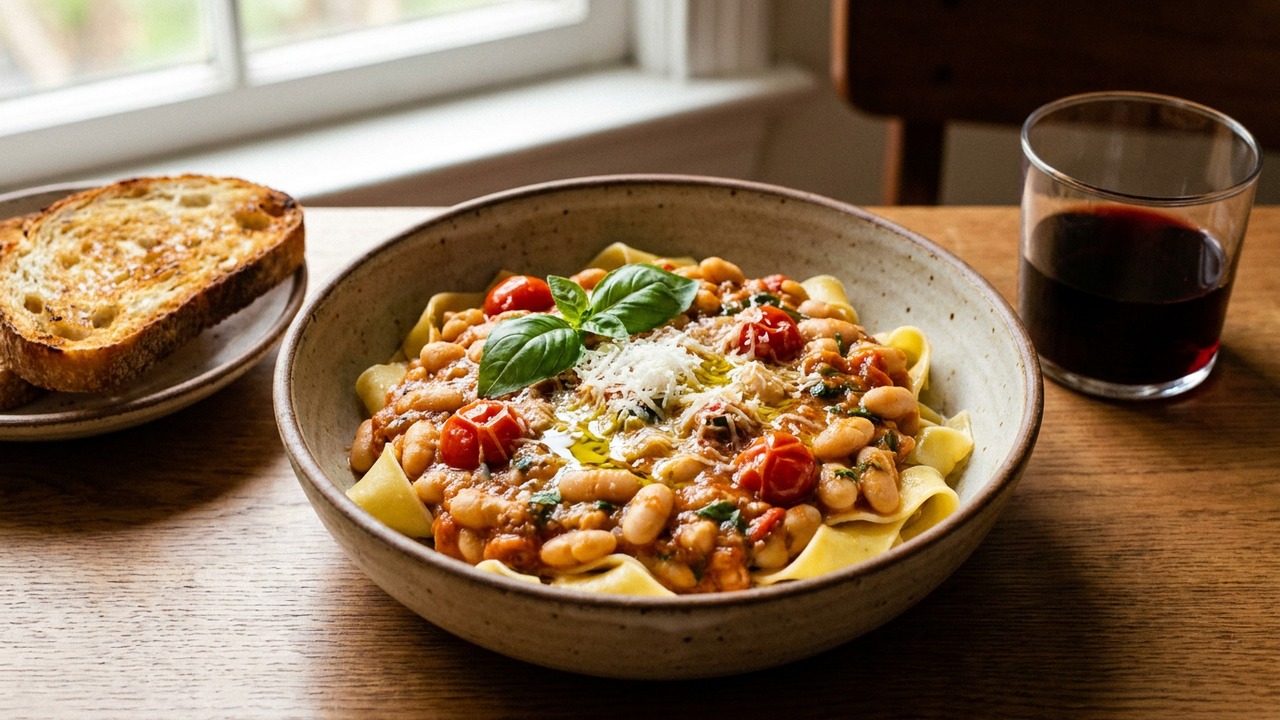
A hearty, plant-protein–forward ragù made from cannellini beans and a savory tomato base. It simmers on the stovetop for a weeknight-friendly sauce that pairs beautifully with pasta, polenta, or toasted bread.
Jake Woods's note
"This white bean ragù is comfort food that comes together quickly and keeps well for lunches or easy dinners. Home cooks will love its meaty texture without meat and the way it stretches a can of beans into multiple satisfying meals."
About This Recipe
This white bean ragù is built to do what many vegetarian sauces promise but rarely deliver: feel substantial without leaning on meat. Cannellini beans give the sauce both creaminess and intact bite—when you mash a portion of them into the pan they become the glue that thickens the tomatoes and broth into something that clings to pasta and polenta rather than sliding off. The base is simple: slow-sweated onion, carrot, and celery for sweetness, quick-toasted garlic, and tomato paste cooked long enough to caramelize and deepen the sauce’s backbone.
Where this version excels is in technique more than ingredients. Toasting the tomato paste and scraping up the browned bits builds a savory base that tricks the palate into thinking there’s more heft than the handful of pantry items would suggest. It’s a weekday-friendly recipe that rewards a little patience—simmer for 15–20 minutes and finish by mashing part of the beans for a ragù that’s both rustic and elegantly composed. Serve it for weeknight family dinners, vegetarian guests who expect satisfaction, or as a make-ahead sauce that improves after a night in the fridge.
Ingredients for White Bean Ragù
- 2 tbsp Extra-virgin olive oil
- 1 medium Yellow onion, finely chopped
- 1 large Carrot, finely diced
- 2 stalks Celery stalks, finely diced
- 3 cloves Garlic cloves, minced
- 2 tbsp Tomato paste
- 14 oz Crushed tomatoes (canned)
- 2 cups Cannellini beans, cooked and drained
- 1 cup Vegetable broth
- Kosher salt and freshly ground black pepper
How to Make White Bean Ragù
Step 1: Soften the aromatics
Heat the olive oil in a wide, heavy-bottomed skillet or sauté pan over medium heat. Add the chopped onion, carrot, and celery and cook, stirring occasionally, until the vegetables are softened and the onion is translucent, about 6–8 minutes; season with salt and pepper to taste.For this step
- 2 tbspExtra-virgin olive oil
- 1 mediumYellow onion, finely chopped
- 1 largeCarrot, finely diced
- 2 stalksCelery stalks, finely diced
- Kosher salt and freshly ground black pepper
Step 2: Toast the garlic and deepen with tomato paste
Reduce the heat slightly, add the minced garlic and cook until fragrant, about 30 seconds to 1 minute. Stir in the tomato paste and cook, stirring constantly, until it darkens slightly and smells caramelized, about 2 minutes—this builds a rich base flavor.For this step
- 3 clovesGarlic cloves, minced
- 2 tbspTomato paste
Step 3: Add tomatoes, beans and broth
Pour in the crushed tomatoes, drained cannellini beans, and vegetable broth, stirring to combine and scraping up any browned bits from the pan. Bring the mixture to a gentle simmer over medium-low heat.For this step
- 14 ozCrushed tomatoes (canned)
- 2 cupsCannellini beans, cooked and drained
- 1 cupVegetable broth
Step 4: Simmer and meld flavors
Lower the heat to maintain a gentle simmer and cook uncovered for 15–20 minutes, until the sauce thickens and the flavors meld. Stir occasionally and taste, adjusting salt and pepper as it reduces.Step 5: Mash for texture and finish
Use the back of a spoon or a potato masher to lightly mash about one-quarter to one-third of the beans directly in the pan to create a thicker, 'meaty' texture while leaving plenty of whole beans for bite. Cook another 2–3 minutes to incorporate the mashed beans into the sauce.Step 6: Serve and store
Serve the ragù hot over your choice of pasta, creamy polenta, or toasted bread and finish with an extra drizzle of olive oil if desired. Cool and refrigerate leftovers for up to 4 days or freeze for up to 3 months.


- Heat the olive oil in a wide, heavy-bottomed skillet or sauté pan over medium heat. Add the chopped onion, carrot, and celery and cook, stirring occasionally, until the vegetables are softened and the onion is translucent, about 6–8 minutes; season with salt and pepper to taste.
- Reduce the heat slightly, add the minced garlic and cook until fragrant, about 30 seconds to 1 minute. Stir in the tomato paste and cook, stirring constantly, until it darkens slightly and smells caramelized, about 2 minutes—this builds a rich base flavor.
- Pour in the crushed tomatoes, drained cannellini beans, and vegetable broth, stirring to combine and scraping up any browned bits from the pan. Bring the mixture to a gentle simmer over medium-low heat.
- Lower the heat to maintain a gentle simmer and cook uncovered for 15–20 minutes, until the sauce thickens and the flavors meld. Stir occasionally and taste, adjusting salt and pepper as it reduces.
- Use the back of a spoon or a potato masher to lightly mash about one-quarter to one-third of the beans directly in the pan to create a thicker, 'meaty' texture while leaving plenty of whole beans for bite. Cook another 2–3 minutes to incorporate the mashed beans into the sauce.
- Serve the ragù hot over your choice of pasta, creamy polenta, or toasted bread and finish with an extra drizzle of olive oil if desired. Cool and refrigerate leftovers for up to 4 days or freeze for up to 3 months.
White Bean Ragù Tips
Sweat vegetables slowly
Cook the onion, carrot, and celery over medium to medium-low heat until very soft to coax out sweetness without browning, which keeps the sauce clean and harmonious.
Caramelize the tomato paste
Cook the tomato paste until it darkens and smells nutty; this step adds umami and reduces the tinny taste canned tomatoes can sometimes have.
Reserve some bean liquid
If you’re using canned beans, save a few tablespoons of the packing liquid to loosen the ragù while retaining bean flavor and silky texture.
Mash for body
Mash about a quarter to a third of the beans in the pan—use the back of a spoon or a potato masher—to thicken the sauce while leaving whole beans for texture.
Finish with quality oil
A final drizzle of good extra-virgin olive oil brightens flavors and adds a silky mouthfeel that makes the ragù feel restaurant-grade.
White Bean Ragù Variations and Substitutions
Mushroom 'sausage' version
Sauté 8 ounces of finely chopped cremini or shiitake mushrooms with a teaspoon smoked paprika and a splash of soy sauce before adding tomatoes to give a meaty, umami-rich profile.
Greens and lemon finish
Stir in a couple of handfuls of baby spinach or chopped kale in the last 2 minutes of cooking and finish with a little lemon zest to brighten the dish.
Creamy white ragù
Swirl in 2–3 tablespoons of mascarpone, creme fraiche, or a spoonful of tahini at the end for a richer, silkier sauce that pairs beautifully with pappardelle.
Add sausage or pancetta
For non-vegetarian cooks, brown 6 ounces of Italian sausage or 3 ounces diced pancetta with the aromatics, then proceed as written for a heartier, more traditional ragù.
How to Store and Make White Bean Ragù Ahead
Cool the ragù to room temperature before refrigerating in an airtight container for up to 4 days. For longer storage, freeze in a shallow container or heavy-duty freezer bag for up to 3 months—flatten bags for faster thawing. Reheat gently on the stovetop with a splash of broth or water to loosen the sauce, or microwave in short bursts, stirring between intervals to preserve texture.
What to Serve With White Bean Ragù
Toss with rigatoni, pappardelle, or orecchiette so the ragù nests in the pasta hollows; alternatively spoon over creamy polenta or thick slices of grilled sourdough for open-faced crostini. Finish with grated pecorino or a grating of lemon zest and a few turns of black pepper, and serve alongside a crisp salad of arugula and fennel. Pair with a medium-bodied red like Sangiovese or a bright Italian white such as Vermentino.
White Bean Ragù FAQs
Can I use other beans instead of cannellini?
Yes—great northern beans or butter beans work well because they have similar creaminess and hold. Avoid very small beans like lentils, which will break down too much and change the texture.
Do I need to precook dried beans?
If using dried beans, simmer them until tender before adding; soaking overnight shortens cooking time and improves digestibility, or use a pressure cooker for a faster method.
How can I make the sauce smoother?
For a silkier texture, puree up to half the ragù with an immersion blender or in a blender, then return it to the pan and heat through—this keeps the flavor while smoothing the mouthfeel.
Is this recipe freezer-friendly?
Yes, it freezes very well; cool completely, portion into airtight containers or freezer bags, and thaw in the refrigerator overnight before reheating gently on the stove with a splash of broth.
How do I boost the umami when the tomatoes taste flat?
Stir in a teaspoon of miso, a splash of soy sauce, or a tablespoon of grated Parmesan rinds while simmering to add depth without overt saltiness.
About the author
Jake WoodsHello, I'm Jake. I started this recipe site with the idea that I hated recipe websites that overwhelm you with long stories and ads just to see plain content that's not helpful. My goal is to provide you with quality recipes, simple ideas and a fun cooking experience. There's lots of fun things to cook, and I think as you browse the site you'll find that TopShelf.Recipes is the place for quality recipes on the web.
See all recipes by Jake Woods →Ratings & Reviews
Did you make this recipe?
Be the first to share your experience.
Nutrition Facts
Per serving: about ¾ cup
Nutrition values are estimated from USDA ingredient data and may vary based on preparation, brands, and portion sizes. Values are provided for informational purposes only.
Keep Reading
Guides & articles for this recipe

Healthy Eating
Gluten-Free Weeknight Grilling Plan
A 7-day gluten-free weeknight grilling plan with quick, family-friendly recipes, prep-ahead timelines, and a printable shopping list that spotlights late-summer produce and pantry staples. Includes clear cross-contamination safety tips and simple swaps to keep dinners fast and crowd-pleasing.

Healthy Eating
Low-Fat Grill Swaps for Big Flavor
A practical guide to trimming fat from grilled meals without losing juiciness or char. Learn yogurt- and citrus-based marinades, lean protein picks, searing and indirect-heat tricks, plus 5 quick low-fat marinades and a simple weeknight plan.

Recipes
DIY Edible Monster Eyes Candy
Make safe, fun edible monster eyes for cupcakes, cookies, and candy trays. Step-by-step recipes show baking-soda balls, chocolate and fondant eyes, wafer-print options, plus assembly, storage, and kid-friendly safety tips.
More from Stovetop
View all Stovetop recipes →
Labor Day Grilled Lobster Rolls with Charred Scallion Brown Butter & Lemon‑Herb Aioli

One-Pot Beef Bolognese

Stovetop Dutch-Oven Herb-Crusted Beef Roast with Pan Gravy

Dubai Tacos

Italian-Style Pot Roast with Tomatoes Olives and Fresh Herbs

Hainanese Chicken Rice

Pad Krapow Pork

Twice-Fried Restaurant Style Crispy Sweet Potato Fries (Stovetop Deep Fry)

Xiao Long Bao Soup Dumplings
Ask me anything about this recipe — substitutions, scaling, techniques, timing.
Powered by AI · 6 questions per 5 minutes, 30 per day