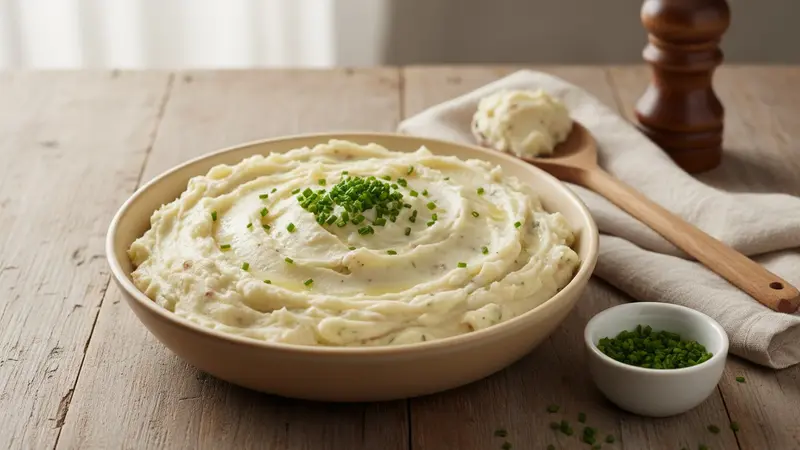

Russets are the go-to when you want the airiest, fluffiest mash. Their high starch content creates dry, separate flakes when cooked right; those flakes trap butter and warm milk so the result feels light rather than gummy. That starchiness is why Russets respond well to being riced or processed through a food mill: those tools break the potato into fine, dry pieces that recombine into a cloud rather than a gluey paste.
To get even, dry flakes, cut russets into regular 1½–2-inch cubes so pieces finish at the same time, and always start them in cold water. Bring to a gentle simmer and cook until a fork slides in with little resistance—overcooking a few pieces makes the whole pot waterlogged. After draining, give them a short steam-dry step in the hot pot to shed surface moisture before mashing.
For a simple, repeatable russet method: rice or mill the hot potatoes into a warmed bowl, fold in 2–4 tablespoons butter per pound and then add warm milk or cream a few tablespoons at a time—aim roughly for 1/4 to 1/3 cup warm milk per pound as a starting point. A ricer or food mill will get you the signature fluffy texture; a stiff hand masher can work too if you stop once the lumps are gone. Try the Creamy Boursin Mashed Potatoes with Chives for a russet-based example that leans ultra-creamy while keeping that lifted texture.