Beef Tallow Fried Chicken
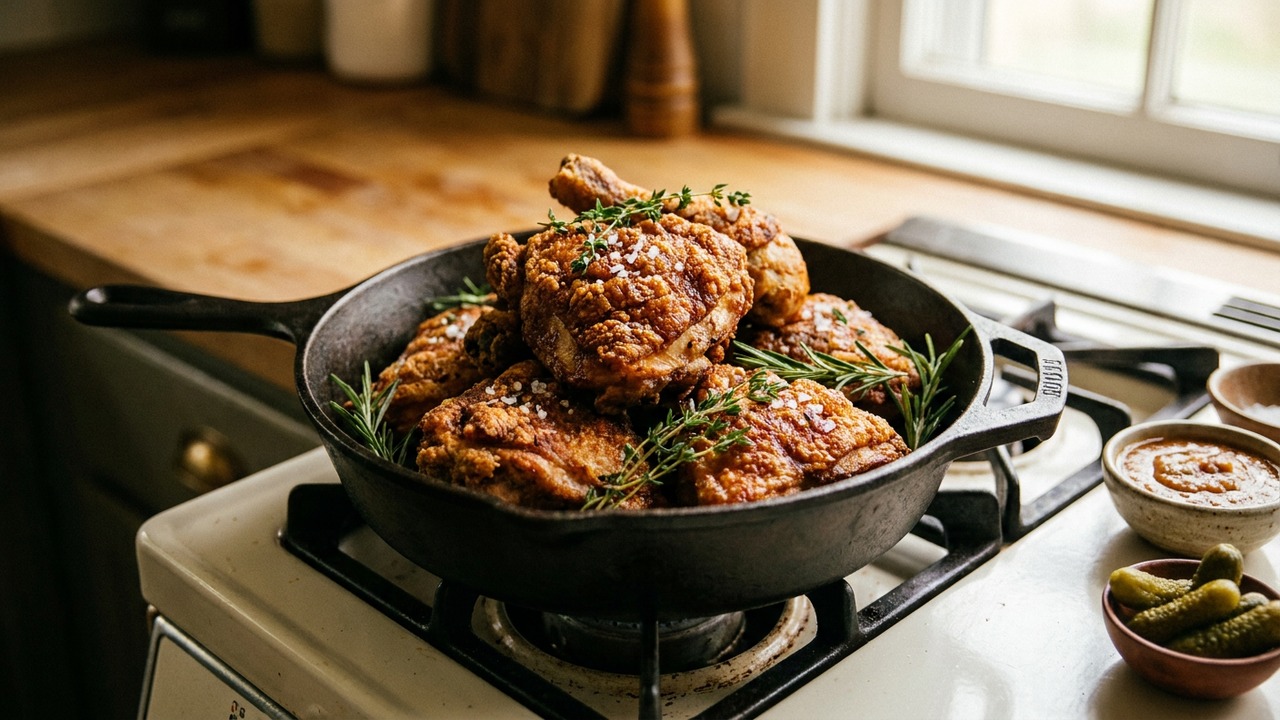
Crispy, deeply savory fried chicken cooked in beef tallow for a richer, beefy aroma and an extra-crisp crust. This stovetop method delivers juicy meat and crackling skin without a deep fryer—perfect for a special weeknight or weekend feast.
Ingredient Spotlight
Rendered beef tallow
Rendered beef tallow is beef fat that has been slowly cooked and strained to remove solids, leaving a shelf-stable cooking fat traditionally used for frying and roasting in many cuisines (classic British/American uses and older peasant/charcuterie traditions). It has a rich, savory, slightly beefy aroma and flavor and a very high smoke point, making it excellent for frying and achieving crispness. You can find it at butcher shops, farmers' markets, specialty grocers, or online; good substitutes are lard or duck fat for similar animal fat flavor, clarified butter/ghee for richness, or neutral high-smoke-point oils (avocado, peanut) if you want to avoid animal fats, noting each will alter the flavor profile.
Jake Woods's note
"This recipe leans into beef tallow’s unique flavor to elevate classic fried chicken—expect a nuttier, beef-forward note and a superior crunch. It’s ideal for dinner parties or any time you want indulgent, reliably crispy chicken."
About This Recipe
There’s something unmistakable about chicken fried in beef tallow: a deep, savory backbone and a crust so crisp it crackles with every bite. This stovetop method uses bone-in thighs or drumsticks, a quick 20–30 minute salt brine and a flour–cornstarch dredge leavened with baking powder to deliver juicy meat and an ultra-light, shatteringly crisp coating without a deep fryer. Smoked paprika and garlic powder add gentle warmth while the tallow imparts a beefy aroma that lifts the whole sandwich or plate.
The technique matters: patting the skin bone-dry, letting the coated pieces rest on a rack before frying, and keeping the fat at 325–350°F are the small moves that make the crust cling and stay crunchy through resting. Fry in batches so pieces don’t touch, and use an instant-read thermometer to hit 165°F in the thickest part. This recipe is for cooks who want a richer, savory fried chicken—ideal for weekend feasts, sandwiches, or pairing with tangy sides that cut the fat’s richness.
Ingredients for Beef Tallow Fried Chicken
- 4 pieces Bone-in chicken pieces (thighs/drumsticks)
- 4 cups Water
- 2 tbsp Kosher salt
- 1 1/2 cups All-purpose flour
- 1/2 cup Cornstarch
- 1 tsp Baking powder
- 1 tbsp Smoked paprika
- 1 tsp Garlic powder
- 1 tsp Freshly ground black pepper
- 1 1/2 cups Rendered beef tallow
How to Make Beef Tallow Fried Chicken
Step 1: Quick brine the chicken
In a large bowl, dissolve the kosher salt in the water. Submerge the chicken pieces, cover, and refrigerate 20–30 minutes to season and slightly firm the skin; then remove, pat very dry with paper towels, and let come closer to room temperature for 10 minutes.For this step
- 4 piecesBone-in chicken pieces (thighs/drumsticks)
- 4 cupsWater
- 2 tbspKosher salt
Step 2: Make the crisping dredge
In a shallow dish combine the flour, cornstarch, baking powder, smoked paprika, garlic powder, and black pepper. Whisk until even—this mix gives a light, crunchy crust with a touch of smoky flavor.For this step
- 1 1/2 cupsAll-purpose flour
- 1/2 cupCornstarch
- 1 tspBaking powder
- 1 tbspSmoked paprika
- 1 tspGarlic powder
- 1 tspFreshly ground black pepper
Step 3: Heat the beef tallow
In a heavy 12-inch skillet (cast-iron preferred) melt the beef tallow over medium heat. Heat until the fat registers 325–350°F (160–175°C) or until a pinch of flour sizzles immediately but doesn’t burn; maintain medium-low to medium heat to avoid scorching.For this step
- 1 1/2 cupsRendered beef tallow
Step 4: Dredge the chicken
Working one piece at a time, press each chicken piece into the flour mixture to fully coat, shaking off any excess. Let the coated pieces rest on a wire rack for 5–10 minutes so the coating adheres and dries slightly—this improves crispness.Step 5: Fry in batches
Add chicken to the tallow, skin-side down, spacing pieces so they don’t touch; do 2–3 pieces at a time depending on pan size. Fry 6–8 minutes per side (12–16 minutes total) over medium heat, turning once or twice, until deeply golden and an instant-read thermometer in the thickest part reads 165°F (74°C).Step 6: Drain, rest, and season
Transfer cooked chicken to a wire rack set over a sheet pan to drain and rest 5 minutes; this keeps the crust crisp. Taste and finish with a light sprinkle of kosher salt if needed, then serve hot.


- In a large bowl, dissolve the kosher salt in the water. Submerge the chicken pieces, cover, and refrigerate 20–30 minutes to season and slightly firm the skin; then remove, pat very dry with paper towels, and let come closer to room temperature for 10 minutes.
- In a shallow dish combine the flour, cornstarch, baking powder, smoked paprika, garlic powder, and black pepper. Whisk until even—this mix gives a light, crunchy crust with a touch of smoky flavor.
- In a heavy 12-inch skillet (cast-iron preferred) melt the beef tallow over medium heat. Heat until the fat registers 325–350°F (160–175°C) or until a pinch of flour sizzles immediately but doesn’t burn; maintain medium-low to medium heat to avoid scorching.
- Working one piece at a time, press each chicken piece into the flour mixture to fully coat, shaking off any excess. Let the coated pieces rest on a wire rack for 5–10 minutes so the coating adheres and dries slightly—this improves crispness.
- Add chicken to the tallow, skin-side down, spacing pieces so they don’t touch; do 2–3 pieces at a time depending on pan size. Fry 6–8 minutes per side (12–16 minutes total) over medium heat, turning once or twice, until deeply golden and an instant-read thermometer in the thickest part reads 165°F (74°C).
- Transfer cooked chicken to a wire rack set over a sheet pan to drain and rest 5 minutes; this keeps the crust crisp. Taste and finish with a light sprinkle of kosher salt if needed, then serve hot.
Beef Tallow Fried Chicken Tips
Pat the skin bone‑dry
Moisture is the enemy of crispness—thoroughly pat the chicken dry after the brine and again just before dredging to help the coating adhere and blister into flakes.
Rest the dredged pieces
Letting coated chicken sit on a wire rack for 5–10 minutes hydrates the flour just enough so the crust bonds and won’t fall off during frying.
Control pan temperature
Keep the tallow between 325–350°F by adjusting between medium-low and medium—too hot and the crust burns before the inside cooks, too cool and the crust absorbs fat and goes soggy.
Use a heavy skillet
A 12‑inch cast‑iron or stainless skillet holds steady heat and creates even browning; thin pans will have hot spots that scorch the tallow and the breading.
Finish on a rack
Drain on a wire rack over a sheet pan instead of paper towels so steam escapes and the crust stays crisp while the meat briefly rests.
Beef Tallow Fried Chicken Variations and Substitutions
Buttermilk brine version
Swap the quick salt brine for 1 cup buttermilk mixed with 1 cup water and 1 tbsp salt and brine 2–4 hours for tangier flavor and more tender meat—pat dry thoroughly before dredging.
Darker spice profile
Add 1 tsp ancho or chipotle powder and ½ tsp ground cumin to the dredge for a smoky, Southwestern twist that complements the beefy tallow.
Gluten‑free crust
Replace the 1.5 cups all‑purpose flour with 1 cup rice flour plus ½ cup tapioca starch or use a 1:1 gluten‑free flour blend; the cornstarch is already helping crispness so maintain it.
Swap the fat
If you prefer a milder flavor, use rendered duck fat for richness or a neutral high‑smoke oil (refined peanut or sunflower) to keep crispness without the beefy aroma.
How to Store and Make Beef Tallow Fried Chicken Ahead
Store leftover fried chicken in an airtight container in the refrigerator for up to 3 days; avoid stacking pieces so the crust doesn’t steam. To reheat, place on a wire rack over a sheet pan and warm in a 375°F oven for 10–12 minutes until hot and the crust is recrisped—avoid the microwave, which makes the coating limp. You can refrigerate the rendered tallow and reuse it 3–4 times if strained and kept in a clean jar.
What to Serve With Beef Tallow Fried Chicken
Balance the tallow’s richness with bright, acidic sides like a crisp cabbage slaw with vinegar and celery seed, quick pickles, or a lemon‑y potato salad. For a sandwich, pile the chicken on a toasted bun with dill pickles and a smear of spicy mayo; drink with a cold lager, saison, or a citrusy hard cider to cut through the fat. Garnish simply with flaky salt and a squeeze of lemon for brightness.
Beef Tallow Fried Chicken FAQs
Can I use boneless chicken here?
Yes, but boneless pieces cook faster and can dry out—reduce frying time and watch internal temperature closely, pulling them at 160–162°F to rest to 165°F. Thicker boneless thighs work better than thin cutlets.
Is beef tallow safe to use and where to buy it?
Rendered beef tallow is a traditional cooking fat and safe when handled like any rendered fat; buy from butcher shops, specialty grocers, or render suet at home and strain it. Store refrigerated and smell it before reuse—off or rancid odors mean discard.
Why is cornstarch and baking powder in the dredge?
Cornstarch limits gluten formation and gives a glassy, shattering crispness, while baking powder creates tiny bubbles in the crust for a lighter, more porous texture. Together they produce that delicate crunch without a heavy, bready coating.
Can I reuse the tallow after frying?
Yes—strain the cooled tallow through a fine mesh or cheesecloth into a clean jar, refrigerate, and reuse 3–4 times for frying; discard if it darkens excessively or smells rancid. Always top up with fresh fat when needed and avoid overheating during use.
My crust is browning too quickly—what should I do?
Lower the heat and move pieces to a cooler spot in the pan; an instant‑read thermometer in the fat helps. If the exterior is nearly done but the interior isn’t, finish in a 350°F oven for 5–10 minutes until the thickest part reaches 165°F.
About the author
Jake WoodsHello, I'm Jake. I started this recipe site with the idea that I hated recipe websites that overwhelm you with long stories and ads just to see plain content that's not helpful. My goal is to provide you with quality recipes, simple ideas and a fun cooking experience. There's lots of fun things to cook, and I think as you browse the site you'll find that TopShelf.Recipes is the place for quality recipes on the web.
See all recipes by Jake Woods →Ratings & Reviews
Did you make this recipe?
Be the first to share your experience.
Nutrition Facts
Per serving: 1 serving
Nutrition values are estimated from USDA ingredient data and may vary based on preparation, brands, and portion sizes. Values are provided for informational purposes only.
Keep Reading
Guides & articles for this recipe

Healthy Eating
Gluten-Free Weeknight Grilling Plan
A 7-day gluten-free weeknight grilling plan with quick, family-friendly recipes, prep-ahead timelines, and a printable shopping list that spotlights late-summer produce and pantry staples. Includes clear cross-contamination safety tips and simple swaps to keep dinners fast and crowd-pleasing.

Healthy Eating
Low-Fat Grill Swaps for Big Flavor
A practical guide to trimming fat from grilled meals without losing juiciness or char. Learn yogurt- and citrus-based marinades, lean protein picks, searing and indirect-heat tricks, plus 5 quick low-fat marinades and a simple weeknight plan.

Recipes
DIY Edible Monster Eyes Candy
Make safe, fun edible monster eyes for cupcakes, cookies, and candy trays. Step-by-step recipes show baking-soda balls, chocolate and fondant eyes, wafer-print options, plus assembly, storage, and kid-friendly safety tips.
More from Stovetop
View all Stovetop recipes →
One-Pot Beef Bolognese

Stovetop Dutch-Oven Herb-Crusted Beef Roast with Pan Gravy

Dubai Tacos

Italian-Style Pot Roast with Tomatoes Olives and Fresh Herbs

Labor Day Grilled Lobster Rolls with Charred Scallion Brown Butter & Lemon‑Herb Aioli

Hainanese Chicken Rice

Pad Krapow Pork

Twice-Fried Restaurant Style Crispy Sweet Potato Fries (Stovetop Deep Fry)

Xiao Long Bao Soup Dumplings
Ask me anything about this recipe — substitutions, scaling, techniques, timing.
Powered by AI · 6 questions per 5 minutes, 30 per day