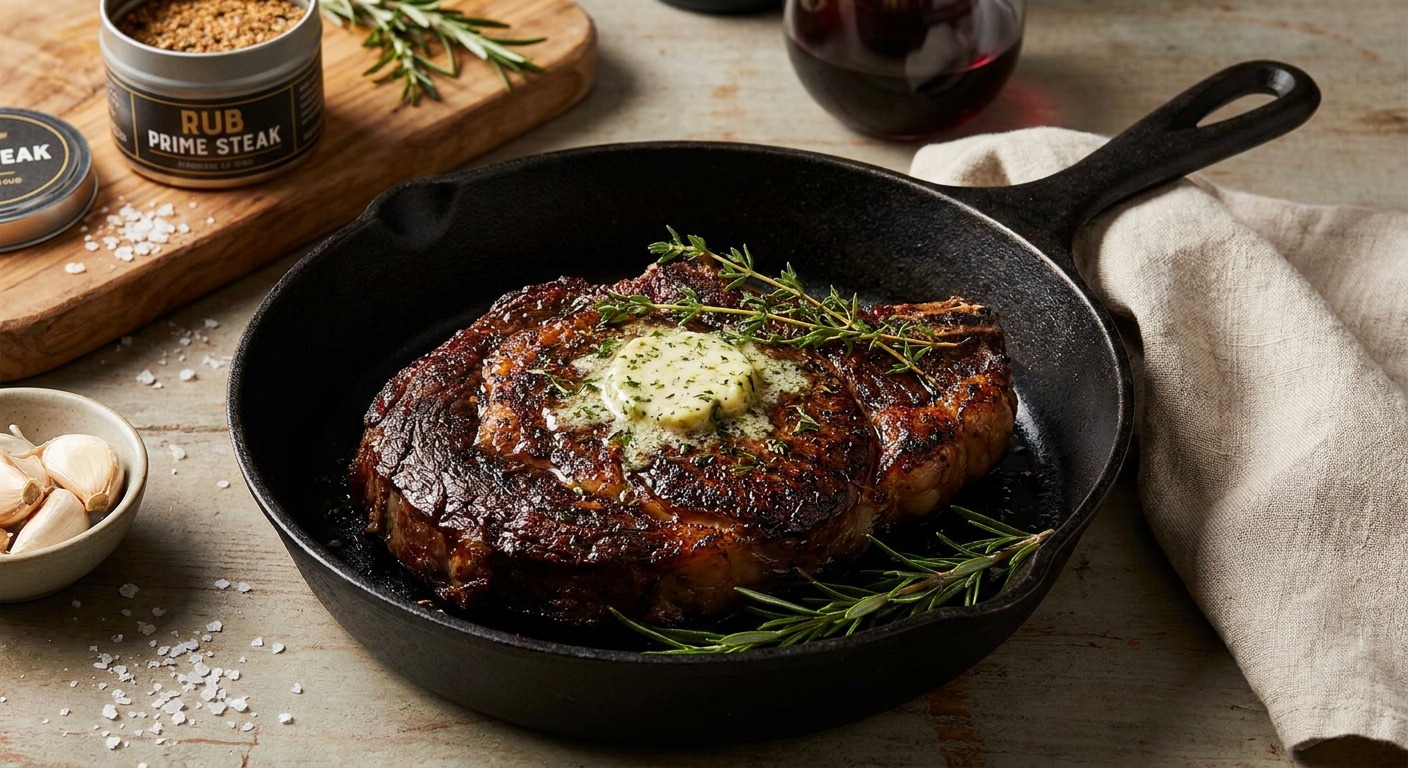
Cast Iron Pan-Seared Ribeye with RUB PRIME STEAK and Garlic Butter
A restaurant-style cast iron pan-seared ribeye finished with a garlicky butter baste and a crust built by RUB PRIME STEAK. Clear sear timing, carryover cooking guidance, and skillet-basting technique deliver a juicy medium-rare every time.
Ingredient Spotlight
RUB PRIME STEAK
Likely a branded commercial steak rub or spice blend sold for seasoning prime cuts; it’s not a single traditional ingredient but a prepared mix that often contains salt, cracked pepper, garlic, smoked paprika, onion powder, and sometimes sugar or chili. Origin is contemporary/retail (often American) and it imparts a savory, slightly smoky and sometimes sweet crust on steaks. Find it at specialty butchers, grocery spice aisles, or online; a simple homemade substitute is kosher salt + freshly ground black pepper + garlic powder + smoked paprika + a pinch of brown sugar and onion powder.
(paid link) — as an Amazon Associate we earn from qualifying purchases.
Ingredient Spotlight
high smoke point oil (grapeseed or canola)
This refers to neutral oils suitable for very high-heat searing; grapeseed oil (pressed from grape seeds) is light, very mild in flavor with a high smoke point, while refined canola is a common neutral alternative. These oils are favored for achieving a good sear without burning or imparting strong flavors. Both are widely available in supermarkets; good substitutes include refined avocado oil or peanut oil (avoid unrefined/extra-virgin olive oil for high-heat searing).
Ingredient Spotlight
flaky sea salt (finish)
A finishing salt made of large, delicate, plate‑like crystals (e.g., Maldon) that provide a bright briny hit and a pleasant crunchy texture when sprinkled over finished dishes. It’s produced by evaporating seawater and has a cleaner, sometimes slightly mineral flavor than table salt. You can find it at grocery stores, specialty shops, or online; kosher salt or regular sea salt can be used in a pinch but won’t give the same flaky crunch—use slightly less if substituting by volume.
Jake Woods's note
"This method highlights how RUB PRIME STEAK creates a blistered crust in a screaming-hot skillet while a quick butter baste adds luxury and aroma. It's perfect for a date-night dinner or any time you want a steakhouse result at home."
About This Recipe
This pan-seared ribeye is built on one simple premise: get a blistering crust and then finish gently so the center remains tender and pink. The mineral-rich RUB PRIME STEAK rub forms an almost caramelized shell where Maillard reactions concentrate beefy flavor, while the cast iron supplies even, sustained heat that a thin stainless pan cannot. The garlic-thyme butter baste that follows doesn’t just add richness—it seasons every bite and softens the crust so it’s crisp but not chalky. If you like your steaks with a salon-quality exterior and a juicy interior, this method is for you.
Ribeyes with good marbling are forgiving and reward the short, hot treatment; the timings here are tuned for 1¼–1½ inch steaks and assume you’ll use an instant-read thermometer to catch that perfect medium-rare. Don’t rush the final rest—carryover cooking will bring temperatures up a few degrees while the juices redistribute, and a light finish of flaky sea salt will make the crust sing. This recipe balances theater (the sizzling butter baste) with dependable, repeatable technique so you can hit that 130–135°F window with confidence every time.
Ingredients for Cast Iron Pan-Seared Ribeye with RUB PRIME STEAK and Garlic Butter
- 2 12 oz (340 g) steaks ribeye steaks
- 2 tbsp RUB PRIME STEAK
- 1 tsp kosher salt
- 1 tsp freshly ground black pepper
- 1 tbsp high smoke point oil (grapeseed or canola)
- 2 tbsp unsalted butter
- 4 cloves garlic cloves
- 4 sprigs fresh thyme
- 1/4 tsp flaky sea salt (finish)
🛒 = paid link — as an Amazon Associate we earn from qualifying purchases.
How to Make Cast Iron Pan-Seared Ribeye with RUB PRIME STEAK and Garlic Butter
Step 1: Temper and season the steaks
Take the ribeyes out of the fridge 30–45 minutes before cooking so they come to room temperature. Pat them very dry with paper towels, then sprinkle both sides evenly with kosher salt, RUB PRIME STEAK and freshly ground black pepper; press the rub into the meat so it adheres. Let them rest uncovered while you heat the pan—this helps the surface dry and builds a better crust.For this step
- 2 12 oz (340 g) steaksribeye steaks
- 2 tbspRUB PRIME STEAK
- 1 tspkosher salt
- 1 tspfreshly ground black pepper
Step 2: Heat the cast iron skillet
Place a 10–12 inch cast iron skillet over high heat and let it get very hot (3–5 minutes) until it’s smoking lightly. Add the high smoke point oil and swirl to coat the bottom of the pan—this thin film prevents sticking and encourages immediate browning.For this step
- 1 tbsphigh smoke point oil (grapeseed or canola)
Step 3: Sear to form a crust
Lay the steaks in the hot pan away from you and don’t move them for 2½–3½ minutes (timing varies with thickness) until a deep brown crust forms. Flip and sear the second side for about the same time; for a 1¼–1½ inch steak this usually brings you close to medium-rare. Use an instant-read thermometer to monitor doneness: 120–125°F rare, 130–135°F medium-rare, 140–145°F medium.Step 4: Butter-baste for flavor and finish
Reduce heat to medium-low, add the unsalted butter, smashed garlic cloves, and thyme to the pan. As the butter foams, tilt the pan and spoon the butter and aromatic juices over the steaks continuously for 60–90 seconds—this adds flavor and pushes the internal temp up gently while coating the crust.For this step
- 2 tbspunsalted butter
- 4 clovesgarlic cloves
- 4 sprigsfresh thyme
Step 5: Rest and finish
Transfer the steaks to a cutting board and tent loosely with foil; rest 8–10 minutes to allow carryover cooking and redistribution of juices. While resting, sprinkle a small pinch of flaky sea salt over each steak to highlight the crust.For this step
- 1/4 tspflaky sea salt (finish)
Step 6: Slice and serve
Slice the steak against the grain into ¼ inch slices and arrange on a warmed plate. Spoon any resting juices and a little of the herbed garlic butter from the pan over the slices and serve immediately with your favorite sides.


- Take the ribeyes out of the fridge 30–45 minutes before cooking so they come to room temperature. Pat them very dry with paper towels, then sprinkle both sides evenly with kosher salt, RUB PRIME STEAK and freshly ground black pepper; press the rub into the meat so it adheres. Let them rest uncovered while you heat the pan—this helps the surface dry and builds a better crust.
- Place a 10–12 inch cast iron skillet over high heat and let it get very hot (3–5 minutes) until it’s smoking lightly. Add the high smoke point oil and swirl to coat the bottom of the pan—this thin film prevents sticking and encourages immediate browning.
- Lay the steaks in the hot pan away from you and don’t move them for 2½–3½ minutes (timing varies with thickness) until a deep brown crust forms. Flip and sear the second side for about the same time; for a 1¼–1½ inch steak this usually brings you close to medium-rare. Use an instant-read thermometer to monitor doneness: 120–125°F rare, 130–135°F medium-rare, 140–145°F medium.
- Reduce heat to medium-low, add the unsalted butter, smashed garlic cloves, and thyme to the pan. As the butter foams, tilt the pan and spoon the butter and aromatic juices over the steaks continuously for 60–90 seconds—this adds flavor and pushes the internal temp up gently while coating the crust.
- Transfer the steaks to a cutting board and tent loosely with foil; rest 8–10 minutes to allow carryover cooking and redistribution of juices. While resting, sprinkle a small pinch of flaky sea salt over each steak to highlight the crust.
- Slice the steak against the grain into ¼ inch slices and arrange on a warmed plate. Spoon any resting juices and a little of the herbed garlic butter from the pan over the slices and serve immediately with your favorite sides.
Cast Iron Pan-Seared Ribeye with RUB PRIME STEAK and Garlic Butter Tips
Temper Fully First
Bringing steaks to room temperature for 30–45 minutes ensures even cooking and prevents the center from being underdone while the outside over-browns.
Pat Steaks Super Dry
Moisture is the enemy of a crust—use paper towels to remove surface wetness before seasoning so the rub can sear, not steam.
High Heat, Short Time
Get the cast iron smoking hot before the steak hits the pan and resist moving it for the full 2½–3½ minutes to let the crust develop uninterrupted.
Tilt and Spoon Baste
When the butter foams, tilt the pan and spoon the butter/garlic over the steak continuously; this pumps heat into the meat and layers flavor without burning the aromatics.
Trust Your Thermometer
Rely on an instant-read probe inserted into the thickest part of the steak; pull at 5°F below your target to account for carryover.
Cast Iron Pan-Seared Ribeye with RUB PRIME STEAK and Garlic Butter Variations and Substitutions
Reverse-Sear Version
For thicker steaks (2 inches+), roast at 250°F until 10–15°F below target, then finish with a hot cast iron sear and quick butter baste for a more even pink edge-to-edge.
Herb-Compound Butter
Make a compound butter with minced parsley, lemon zest, and anchovy paste, then top the rested steak with a pat for a bright, salty finish that complements the RUB PRIME.
Citrus-Chile Twist
Add a pinch of smoked paprika and a little orange zest to the rub, and finish with a squeeze of lime over the sliced steak for a Southwestern edge.
Swap to NY Strip
If you prefer leaner meat, NY strip works with the same technique; reduce sear time slightly if the steak is thinner to avoid overcooking.
How to Store and Make Cast Iron Pan-Seared Ribeye with RUB PRIME STEAK and Garlic Butter Ahead
Store leftover sliced steak in an airtight container in the refrigerator for up to 3 days; keep any remaining herbed butter separate to preserve texture. To reheat without drying, warm in a 250°F oven on a wire rack until internal temp reaches 110–120°F, then briefly sear each side in a hot pan for 20–30 seconds to refresh the crust. Alternatively, finish reheating sous-vide at 120°F for 30–45 minutes for near-fresh results.
What to Serve With Cast Iron Pan-Seared Ribeye with RUB PRIME STEAK and Garlic Butter
Serve with roasted fingerling potatoes tossed in garlic and rosemary, or charred broccolini dressed with lemon and chile flakes to cut the richness. A simple arugula salad with shaved Parmesan and lemon vinaigrette adds peppery lift, while a bold Cabernet Sauvignon or a smoky bourbon neat complements the beefy crust. Slice against the grain, fan on a warmed plate, and spoon any pan juices and butter over the top just before serving.
Cast Iron Pan-Seared Ribeye with RUB PRIME STEAK and Garlic Butter FAQs
My pan is smoking a lot—what should I do?
Cast iron will smoke when truly hot; ensure you’re using a high smoke point oil and that your exhaust fan is on. If smoke becomes excessive, lower the heat briefly and wipe out any polymerized bits, then continue—residual fond helps flavor the baste.
How do I adjust times for thicker or thinner steaks?
For thinner steaks (¾–1 inch), shorten each sear by about 60–90 seconds per side. For thicker cuts (1¾–2 inches), sear the exterior, then finish in a 400°F oven or use a reverse-sear to avoid overcooking the center.
Can I skip the butter baste?
You can, but the butter-thyme-garlic baste softens and flavors the crust while gently raising the internal temp; without it the crust will be drier and the steak less richly seasoned.
Why sprinkle flaky sea salt after resting?
A final dusting of flaky salt melts slowly on the warm surface and delivers bright, crunchy bursts of seasoning that highlight the crust without over-salting the interior.
Is RUB PRIME STEAK essential?
The rub builds the signature crust and layered flavors, but you can substitute a mix of coarsely ground black pepper, garlic powder, smoked paprika, and a touch of brown sugar if needed.
About the author
Jake WoodsHello, I'm Jake. I started this recipe site with the idea that I hated recipe websites that overwhelm you with long stories and ads just to see plain content that's not helpful. My goal is to provide you with quality recipes, simple ideas and a fun cooking experience. There's lots of fun things to cook, and I think as you browse the site you'll find that TopShelf.Recipes is the place for quality recipes on the web.
See all recipes by Jake Woods →Ratings & Reviews
Did you make this recipe?
Be the first to share your experience.
Nutrition Facts
Per serving: 1 serving
Nutrition values are estimated from USDA ingredient data and may vary based on preparation, brands, and portion sizes. Values are provided for informational purposes only.
Keep Reading
Guides & articles for this recipe
Tips & Techniques
Baking Soda and Tenderized Beef
Learn how baking soda can tenderize, boost browning, and improve moisture for ground beef and other meats. This practical guide covers the science, step-by-step techniques, common mistakes, and recipes to try.

Healthy Eating
Gluten-Free Weeknight Grilling Plan
A 7-day gluten-free weeknight grilling plan with quick, family-friendly recipes, prep-ahead timelines, and a printable shopping list that spotlights late-summer produce and pantry staples. Includes clear cross-contamination safety tips and simple swaps to keep dinners fast and crowd-pleasing.

Healthy Eating
Low-Fat Grill Swaps for Big Flavor
A practical guide to trimming fat from grilled meals without losing juiciness or char. Learn yogurt- and citrus-based marinades, lean protein picks, searing and indirect-heat tricks, plus 5 quick low-fat marinades and a simple weeknight plan.
More from Stovetop
View all Stovetop recipes →
One-Pot Beef Bolognese

Stovetop Dutch-Oven Herb-Crusted Beef Roast with Pan Gravy

Dubai Tacos

Italian-Style Pot Roast with Tomatoes Olives and Fresh Herbs

Labor Day Grilled Lobster Rolls with Charred Scallion Brown Butter & Lemon‑Herb Aioli

Hainanese Chicken Rice

Pad Krapow Pork

Twice-Fried Restaurant Style Crispy Sweet Potato Fries (Stovetop Deep Fry)

Xiao Long Bao Soup Dumplings
Ask me anything about this recipe — substitutions, scaling, techniques, timing.
Powered by AI · 6 questions per 5 minutes, 30 per day