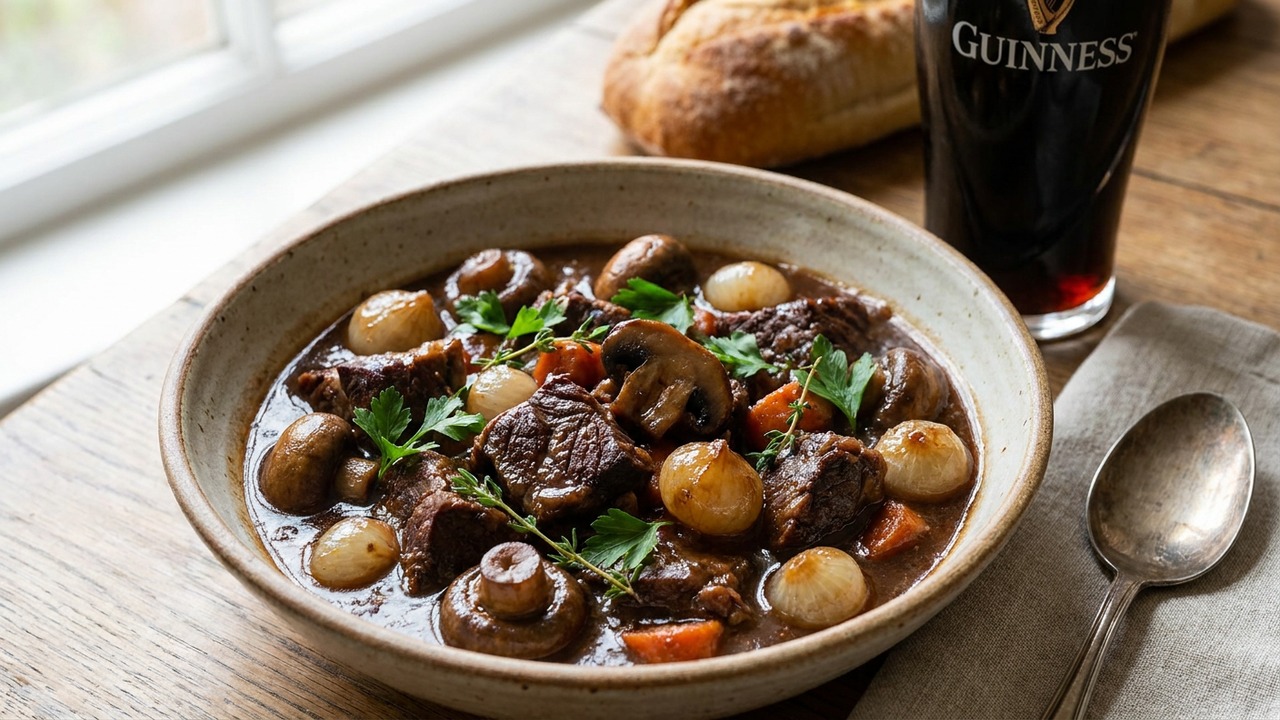
Guinness Beef Stew with Mushrooms and Pearl Onions
A rich, hearty stovetop stew that marries tender braised beef with the deep, roasty character of Guinness. Pearl onions and mushrooms add sweetness and earthiness for a cozy, pub-style meal perfect for cold nights or weekend dinners.
Ingredient Spotlight
Guinness Draught (or other stout)
Guinness Draught is an Irish dry stout with roasted-malt aromas and coffee/chocolate notes and a creamy mouthfeel; it’s used in braises and stews to add deep, slightly bitter and roasted complexity. Found in the beer aisle or kitchen liquor cabinet, any stout or porter works as a direct cooking substitute; if you don’t want to use beer, use extra beef stock with a splash of strong coffee and a teaspoon of molasses or Worcestershire for similar flavor depth.
Ingredient Spotlight
Pearl onions (peeled) or small pearl onions
Pearl onions are tiny, sweet onions commonly used whole in European stews, braises and classic dishes like coq au vin—sold fresh, frozen or canned and often peeled for convenience. They’re milder and sweeter than regular onions and add texture and presentation; if unavailable, substitute peeled shallots, whole peeled small cipollini onions, or finely chopped yellow onion (use larger quantity) as a textural/flavor stand-in.
Ingredient Spotlight
Cremini mushrooms, halved or quartered if large
Cremini mushrooms (also called baby bella) are the slightly more mature form of the common button mushroom, popular in Italian and American cooking, with a deeper, earthier flavor and firmer texture than white buttons. You’ll find them in the produce section; if you can’t get creminis, use white button mushrooms for a milder result or shiitake/portobello for stronger umami and texture.
Jake Woods's note
"This Guinness beef stew is a comforting, crowd-pleasing dish that shines on chilly evenings or for easy Sunday dinners. Home cooks will love how simple browning and a long, gentle simmer transform inexpensive beef into meltingly tender chunks."
About This Recipe
This Guinness Beef Stew is built around two complementary ideas: big, slow-braised beef and a dark, roasty liquid that deepens rather than dominates. Browning well-dredged chuck gives you a caramelized crust and the flour helps create a silky gravy without relying on heavy thickeners. Pearl onions bring a soft, sweet pop and cremini mushrooms add an earthy, almost meaty counterpoint—added at the end so they keep texture instead of disintegrating into the sauce.
What makes this version work is the balance between technique and simplicity. Take the time to brown in batches and reduce the Guinness slightly when you deglaze so the bitter notes mellow and the malty backbone concentrates; then trust a long, gentle simmer to render connective tissue into glossy, fork-tender pieces. It’s a stew that rewards patience and tastes even better the next day, which makes it perfect for chilly weeknights, low-key dinner parties, or a Sunday supper where you want comforting depth without fussing over every serving.
Ingredients for Guinness Beef Stew with Mushrooms and Pearl Onions
- 2 lb Beef chuck, trimmed and cut into 1-inch cubes
- 1/3 cup All-purpose flour (for dredging)
- 2 tbsp Vegetable oil
- 1 tsp Kosher salt and freshly ground black pepper
- 1 large Yellow onion, roughly chopped
- 12 fl oz Guinness Draught (or other stout)
- 2 cups Low-sodium beef stock
- 3 medium Carrots, peeled and cut into 1-inch pieces
- 12 oz Pearl onions (peeled) or small pearl onions
- 8 oz Cremini mushrooms, halved or quartered if large
How to Make Guinness Beef Stew with Mushrooms and Pearl Onions
Step 1: Season, dredge and brown the beef
Season the beef cubes generously with salt and pepper, then toss with the flour until evenly coated. Heat the vegetable oil in a large heavy-bottomed pot or Dutch oven over medium-high heat and brown the beef in batches, leaving space so pieces develop a deep crust; about 3–5 minutes per side. Transfer browned beef to a plate as you go and reduce heat if the pan begins to smoke.For this step
- 2 lbBeef chuck, trimmed and cut into 1-inch cubes
- 1/3 cupAll-purpose flour (for dredging)
- 2 tbspVegetable oil
- 1 tspKosher salt and freshly ground black pepper
Step 2: Sauté the aromatics
Lower the heat to medium, add the chopped onion to the pot and sauté in the remaining fond for 6–8 minutes until softened and translucent. Scrape up any browned bits from the bottom of the pot with a wooden spoon to incorporate flavor.For this step
- 1 largeYellow onion, roughly chopped
Step 3: Deglaze with Guinness and combine ingredients
Pour the Guinness into the pot to deglaze, stirring and scraping the bottom; let it simmer 2–3 minutes to reduce slightly. Return the beef to the pot, add the beef stock, carrots and pearl onions, bring to a gentle simmer, and skim any excess fat from the surface. Adjust heat so the liquid is at a low, steady simmer.For this step
- 12 fl ozGuinness Draught (or other stout)
- 2 cupsLow-sodium beef stock
- 3 mediumCarrots, peeled and cut into 1-inch pieces
- 12 ozPearl onions (peeled) or small pearl onions
Step 4: Slow-simmer until beef is tender
Cover the pot with a tight-fitting lid and simmer gently on the stovetop, or move to a low oven (300°F / 150°C) if preferred, for 1 1/2–2 hours until the beef is fork-tender. Check once midway and stir gently to ensure even cooking; add a splash of stock or water if the liquid reduces too quickly.Step 5: Add mushrooms and finish the sauce
When the beef is tender, add the mushrooms and continue to simmer uncovered for 10–15 minutes until the mushrooms are cooked and the sauce has reduced to your desired consistency. Taste and adjust seasoning with more salt and pepper if needed; for a thicker gravy, simmer a few extra minutes uncovered to concentrate the sauce.For this step
- 8 ozCremini mushrooms, halved or quartered if large
Step 6: Serve warm
Ladle the stew into bowls and serve hot with mashed potatoes, buttered noodles, or crusty bread to soak up the sauce. Leftovers taste even better the next day — reheat gently on the stovetop and add a splash of stock if needed.


- Season the beef cubes generously with salt and pepper, then toss with the flour until evenly coated. Heat the vegetable oil in a large heavy-bottomed pot or Dutch oven over medium-high heat and brown the beef in batches, leaving space so pieces develop a deep crust; about 3–5 minutes per side. Transfer browned beef to a plate as you go and reduce heat if the pan begins to smoke.
- Lower the heat to medium, add the chopped onion to the pot and sauté in the remaining fond for 6–8 minutes until softened and translucent. Scrape up any browned bits from the bottom of the pot with a wooden spoon to incorporate flavor.
- Pour the Guinness into the pot to deglaze, stirring and scraping the bottom; let it simmer 2–3 minutes to reduce slightly. Return the beef to the pot, add the beef stock, carrots and pearl onions, bring to a gentle simmer, and skim any excess fat from the surface. Adjust heat so the liquid is at a low, steady simmer.
- Cover the pot with a tight-fitting lid and simmer gently on the stovetop, or move to a low oven (300°F / 150°C) if preferred, for 1 1/2–2 hours until the beef is fork-tender. Check once midway and stir gently to ensure even cooking; add a splash of stock or water if the liquid reduces too quickly.
- When the beef is tender, add the mushrooms and continue to simmer uncovered for 10–15 minutes until the mushrooms are cooked and the sauce has reduced to your desired consistency. Taste and adjust seasoning with more salt and pepper if needed; for a thicker gravy, simmer a few extra minutes uncovered to concentrate the sauce.
- Ladle the stew into bowls and serve hot with mashed potatoes, buttered noodles, or crusty bread to soak up the sauce. Leftovers taste even better the next day — reheat gently on the stovetop and add a splash of stock if needed.
Guinness Beef Stew with Mushrooms and Pearl Onions Tips
Brown in batches
Crowding the pot steams the meat instead of caramelizing it; give each piece room and don’t rush the crust development.
Don’t skip dredging
A light coating of flour promotes Maillard browning and later helps thicken the braising liquid into a glossy gravy without additional thickening agents.
Reduce the stout
Simmer the Guinness for 2–3 minutes after pouring to cook off alcohol and concentrate its roasted flavors so they meld with the stock rather than tasting sharp.
Add mushrooms last
Mushrooms release a lot of water; adding them in the final 10–15 minutes preserves their texture and prevents the sauce from becoming diluted.
Skim and adjust fat
Remove excess fat from the surface after the initial simmer for a cleaner finish, or chill and skim if making ahead to reduce greasiness.
Guinness Beef Stew with Mushrooms and Pearl Onions Variations and Substitutions
Slow‑cooker version
Sear the beef and sauté the onions on the stovetop, then transfer to a slow cooker with the remaining ingredients and cook on low 6–8 hours, adding mushrooms in the last 30 minutes.
Short ribs swap
Use bone‑in short ribs for an even richer, gelatinous finish—extend braising to 2½–3 hours for fall‑off‑the‑bone meat.
Alcohol‑free option
Replace Guinness with a nonalcoholic stout or use beef stock plus 1 tablespoon each of molasses and soy sauce to mimic the roasted, slightly sweet depth.
Vegetarian twist
Skip the beef and use a mix of king oyster and portobello mushrooms with extra-firm tofu or seitan, and substitute vegetable stock and a vegan stout.
How to Store and Make Guinness Beef Stew with Mushrooms and Pearl Onions Ahead
Cool the stew to room temperature, then refrigerate in an airtight container for up to 3–4 days, or freeze for up to 3 months. When reheating, warm gently in a saucepan over low heat and add a splash of stock or water to loosen the sauce; if the fat solidified on top, skim it off after reheating for a cleaner finish.
What to Serve With Guinness Beef Stew with Mushrooms and Pearl Onions
Serve ladled over buttery mashed potatoes, creamy polenta, or buttered egg noodles to catch the rich sauce; a chunk of crusty bread is essential for mopping the bowl. Pair with a pint of the same stout used in the stew or a full‑bodied red like Syrah or Malbec, and a simple green salad or braised kale to cut the richness.
Guinness Beef Stew with Mushrooms and Pearl Onions FAQs
Can I use a different cut of beef?
Yes—chuck is ideal for braising because of its connective tissue, but you can use brisket, short ribs, or stew meat; just adjust cooking time until the meat is fork‑tender.
Is Guinness required or can I substitute another beer?
A dry stout like Guinness contributes roasty, slightly bitter notes, but you can substitute another stout or a porter; if you prefer no alcohol, use a nonalcoholic stout or beef stock with a splash of molasses and soy for depth.
Why are the mushrooms added at the end?
Mushrooms expel moisture and cook quickly—adding them at the end preserves their texture and prevents the sauce from watering down.
How do I thicken the gravy if it’s too thin?
Simmer uncovered to reduce and concentrate the sauce, or whisk in a beurre manié (equal parts softened butter and flour) or a small cornstarch slurry until you reach the desired consistency.
Can I make this ahead of time?
Absolutely—stews often taste better the next day as flavors meld; cool and refrigerate overnight, then gently reheat and adjust seasoning before serving.
About the author
Jake WoodsHello, I'm Jake. I started this recipe site with the idea that I hated recipe websites that overwhelm you with long stories and ads just to see plain content that's not helpful. My goal is to provide you with quality recipes, simple ideas and a fun cooking experience. There's lots of fun things to cook, and I think as you browse the site you'll find that TopShelf.Recipes is the place for quality recipes on the web.
See all recipes by Jake Woods →Ratings & Reviews
Did you make this recipe?
Be the first to share your experience.
Nutrition Facts
Per serving: about ¾ cup
Nutrition values are estimated from USDA ingredient data and may vary based on preparation, brands, and portion sizes. Values are provided for informational purposes only.
Keep Reading
Guides & articles for this recipe

Healthy Eating
Gluten-Free Weeknight Grilling Plan
A 7-day gluten-free weeknight grilling plan with quick, family-friendly recipes, prep-ahead timelines, and a printable shopping list that spotlights late-summer produce and pantry staples. Includes clear cross-contamination safety tips and simple swaps to keep dinners fast and crowd-pleasing.

Healthy Eating
Low-Fat Grill Swaps for Big Flavor
A practical guide to trimming fat from grilled meals without losing juiciness or char. Learn yogurt- and citrus-based marinades, lean protein picks, searing and indirect-heat tricks, plus 5 quick low-fat marinades and a simple weeknight plan.

Recipes
DIY Edible Monster Eyes Candy
Make safe, fun edible monster eyes for cupcakes, cookies, and candy trays. Step-by-step recipes show baking-soda balls, chocolate and fondant eyes, wafer-print options, plus assembly, storage, and kid-friendly safety tips.
More from Stovetop
View all Stovetop recipes →
One-Pot Beef Bolognese

Classic Marinara Sauce from Scratch

Rotisserie Chicken and Wild Rice Soup

Xiao Long Bao Soup Dumplings

Labor Day Grilled Lobster Rolls with Charred Scallion Brown Butter & Lemon‑Herb Aioli

Stovetop Dutch-Oven Herb-Crusted Beef Roast with Pan Gravy

Dubai Tacos

Italian-Style Pot Roast with Tomatoes Olives and Fresh Herbs

Hainanese Chicken Rice
Ask me anything about this recipe — substitutions, scaling, techniques, timing.
Powered by AI · 6 questions per 5 minutes, 30 per day