Korean-Style Roast Beef — Bulgogi-Inspired Chuck Roast with Scallion Sesame Sauce
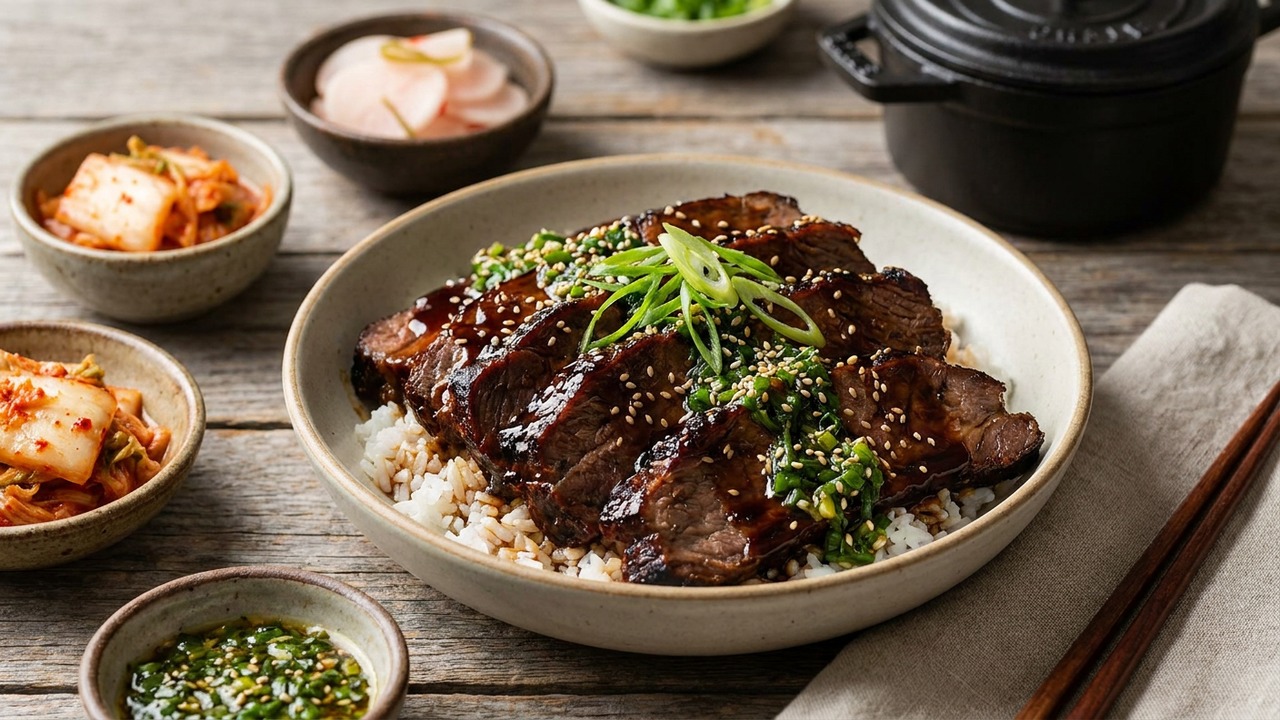
A bulgogi-inspired take on roast beef: chuck roast is marinated in sweet-savory Korean flavors, seared, then slow-braised on the stovetop until melt-in-your-mouth tender. Finished with a bright scallion-sesame sauce, it serves beautifully for weeknight dinners or a special gathering.
Ingredient Spotlight
gochujang (Korean chili paste)
Gochujang is a thick, fermented red chili paste from Korea made from red chili powder, glutinous rice, fermented soybeans and salt; it brings a complex combination of sweet, spicy, salty and deeply umami flavors with a slightly fermented aroma. It’s a staple of Korean cooking used in marinades, stews and sauces and contributes more than just heat — it adds depth and caramelized sweetness. You can find it at Asian grocery stores, many larger supermarkets in the international aisle, or online (look for brands like CJ or Chung Jung One). If unavailable, a good substitute is sambal oelek or another chili paste blended with a bit of miso (or soy sauce) and brown sugar or honey to imitate the fermented sweetness and umami character.
Jake Woods's note
"This recipe delivers deep bulgogi flavor in a slow-braised format that’s forgiving for home cooks; it’s ideal for a cozy dinner or for slicing thin for sandwiches and rice bowls. You can marinate overnight for even more depth or cook as written for a delicious same-day meal."
About This Recipe
This Korean‑style roast beef is a practical, flavor-forward riff on bulgogi that uses a humble chuck roast instead of paper-thin slices. The marinade leans on soy, brown sugar and gochujang for that sticky sweet‑savory backbone, while sesame oil, garlic and ginger round the profile into something familiar but decidedly Korean. Searing builds a deep caramelized crust, and a long, gentle stovetop braise breaks the chuck down until it becomes fork-tender—there’s a satisfying contrast between the browned exterior and the melt‑in‑your‑mouth interior.
What lifts the dish is a bright scallion‑sesame sauce made from the reserved marinade and warm braising liquid; it cuts the richness and adds freshness, so every bite feels balanced. This method is forgiving for home cooks: short marinating times still penetrate a chuck roast when followed by a slow braise, and the leftovers are endlessly useful—think bibimbap, sandwiches or quick tacos. It’s equally at home on a casual weeknight or as the centerpiece for a small gathering, because it’s mostly hands‑off once it’s simmering and rewards patience with deep, layered flavor.
Ingredients for Korean-Style Roast Beef — Bulgogi-Inspired Chuck Roast with Scallion Sesame Sauce
- 3 lb chuck roast
- 3/4 cup low-sodium soy sauce
- 1/4 cup packed brown sugar
- 2 tbsp gochujang (Korean chili paste)
- 2 tbsp sesame oil
- 6 cloves garlic, minced
- 1 1/2 tbsp fresh ginger, minced
- 2 cups low-sodium beef broth
- 6 stalks scallions (green onions)
- 2 tbsp toasted sesame seeds
How to Make Korean-Style Roast Beef — Bulgogi-Inspired Chuck Roast with Scallion Sesame Sauce
Step 1: Make the bulgogi-style marinade and marinate the roast
Whisk together soy sauce, brown sugar, gochujang, sesame oil, minced garlic and ginger in a bowl. Reserve 2 tablespoons of the mixture for finishing, then coat the roast with the remaining marinade, place in a covered container or zip-top bag, and refrigerate for at least 30 minutes or up to overnight (bring to room temperature 30 minutes before cooking).For this step
- 3 lbchuck roast
- 3/4 cuplow-sodium soy sauce
- 1/4 cuppacked brown sugar
- 2 tbspgochujang (Korean chili paste)
- 2 tbspsesame oil
- 6 clovesgarlic, minced
- 1 1/2 tbspfresh ginger, minced
Step 2: Sear the roast
Heat a large heavy-bottomed pot or Dutch oven over medium-high heat until shimmering; add the marinated roast (wipe off excess marinade if it’s dripping) and sear on all sides until deeply browned, about 3–4 minutes per side. Browning builds flavor—don’t rush it—and scrape up any fond in the pot with a wooden spoon.Step 3: Deglaze and add braising liquid
Pour in about 1/2 cup of the beef broth to deglaze the pot, scraping up browned bits, then add the remaining broth so it comes about halfway up the sides of the roast. Bring the liquid to a gentle simmer over medium heat.For this step
- 2 cupslow-sodium beef broth
Step 4: Slow-braise on the stovetop
Reduce heat to low so the surface barely bubbles, cover the pot, and simmer gently for about 3½–4 hours, turning the roast once or twice until the meat is fork-tender. Check every 45–60 minutes to ensure it’s not boiling dry; add a splash of water or broth if needed.Step 5: Rest and prepare to serve
Transfer the roast to a cutting board and tent loosely with foil; let rest 15–20 minutes so juices redistribute. For serving, slice thinly against the grain or shred with forks depending on preference.Step 6: Make the scallion-sesame sauce and finish
Thinly slice the scallions on a sharp bias and combine with toasted sesame seeds and the reserved 2 tablespoons of marinade; whisk in 1–2 tablespoons of warm braising liquid and a drizzle of sesame oil to loosen. Spoon the scallion-sesame sauce over sliced beef and serve with steamed rice or greens.For this step
- 6 stalksscallions (green onions)
- 2 tbsptoasted sesame seeds


- Whisk together soy sauce, brown sugar, gochujang, sesame oil, minced garlic and ginger in a bowl. Reserve 2 tablespoons of the mixture for finishing, then coat the roast with the remaining marinade, place in a covered container or zip-top bag, and refrigerate for at least 30 minutes or up to overnight (bring to room temperature 30 minutes before cooking).
- Heat a large heavy-bottomed pot or Dutch oven over medium-high heat until shimmering; add the marinated roast (wipe off excess marinade if it’s dripping) and sear on all sides until deeply browned, about 3–4 minutes per side. Browning builds flavor—don’t rush it—and scrape up any fond in the pot with a wooden spoon.
- Pour in about 1/2 cup of the beef broth to deglaze the pot, scraping up browned bits, then add the remaining broth so it comes about halfway up the sides of the roast. Bring the liquid to a gentle simmer over medium heat.
- Reduce heat to low so the surface barely bubbles, cover the pot, and simmer gently for about 3½–4 hours, turning the roast once or twice until the meat is fork-tender. Check every 45–60 minutes to ensure it’s not boiling dry; add a splash of water or broth if needed.
- Transfer the roast to a cutting board and tent loosely with foil; let rest 15–20 minutes so juices redistribute. For serving, slice thinly against the grain or shred with forks depending on preference.
- Thinly slice the scallions on a sharp bias and combine with toasted sesame seeds and the reserved 2 tablespoons of marinade; whisk in 1–2 tablespoons of warm braising liquid and a drizzle of sesame oil to loosen. Spoon the scallion-sesame sauce over sliced beef and serve with steamed rice or greens.
Korean-Style Roast Beef — Bulgogi-Inspired Chuck Roast with Scallion Sesame Sauce Tips
Trim but keep fat
Remove large silverskin and overly thick fat pockets, but leave some exterior fat so it can render during the long braise and keep the meat moist.
Wipe excess marinade
Before searing, wipe off dripping marinade to prevent burning; reserve the scraped marinade for the finishing sauce or to deglaze the pan.
Develop a real fond
Don't overcrowd the pot—sear in turns so each surface can brown deeply; that fond is the fastest way to build savory depth when you deglaze with broth.
Maintain a low simmer
Keep the liquid barely bubbling so the collagen slowly converts to gelatin; a rolling boil will tighten fibers and make the roast tough.
Rest and slice properly
Let the roast rest 15–20 minutes, then slice thinly across the grain for tenderness, or shred with forks if you prefer loose, saucy meat.
Korean-Style Roast Beef — Bulgogi-Inspired Chuck Roast with Scallion Sesame Sauce Variations and Substitutions
Short ribs swap
Use boneless short ribs for even more gelatinous richness; cook time is similar but check for tenderness after 3 hours and extend if needed.
Oven‑braised version
Sear as directed, then braise covered in a 300°F oven for 3–4 hours for hands‑off heat that’s more consistent than a stovetop.
Gluten‑free / Low‑sodium
Substitute tamari or coconut aminos for soy sauce and reduce added salt; replace brown sugar with coconut sugar or a bit less honey if you prefer.
Mushroom braise (vegetarian)
Replace the beef with large, meaty mushrooms (king oyster or portobello), sauté until browned, then braise briefly in the same marinade and broth for a rich, umami plant option.
How to Store and Make Korean-Style Roast Beef — Bulgogi-Inspired Chuck Roast with Scallion Sesame Sauce Ahead
Cool leftover beef to room temperature within two hours and refrigerate in an airtight container for up to 4 days, or freeze for up to 3 months. Reheat gently in a covered skillet or pot with a splash of broth over low heat to prevent drying; for oven reheating, cover and warm at 300°F until heated through. If frozen, thaw overnight in the refrigerator before reheating for best texture.
What to Serve With Korean-Style Roast Beef — Bulgogi-Inspired Chuck Roast with Scallion Sesame Sauce
Serve thin slices over steamed short‑grain rice with a spoonful of the scallion‑sesame sauce and a side of kimchi or quick pickled cucumbers for brightness. For a heartier plate, build a bibimbap‑style bowl with sautéed spinach, carrots and a fried egg; the beef also shines in toasted buns or tortillas with crunchy slaw. Pair with a light lager, chilled soju, or a floral, off‑dry Riesling to complement the sweet‑spicy elements.
Korean-Style Roast Beef — Bulgogi-Inspired Chuck Roast with Scallion Sesame Sauce FAQs
How long should I marinate the roast?
At minimum 30 minutes to let flavors penetrate the surface, though 4–12 hours (overnight) will yield deeper flavor; bring the meat to room temperature for about 30 minutes before searing to ensure even browning.
Can I use a different cut of beef?
Yes—brisket or boneless short ribs are good alternatives and will braise beautifully, while leaner cuts like eye of round will work but need careful temperature control and may be better sliced very thin after resting.
Is it okay to braise in the oven or slow cooker?
Absolutely—after searing you can braise covered in a 300°F oven for 3–4 hours, or transfer to a slow cooker on low for 6–8 hours; reduce added liquid slightly in a slow cooker to avoid diluting flavors.
What if I don’t have gochujang?
Gochujang adds heat, sweetness and fermented depth; in a pinch, mix a tablespoon of chili paste with a teaspoon miso and a touch of honey or brown sugar to approximate its complexity.
How do I thicken the finishing sauce?
Spoon out and simmer some braising liquid until reduced for an intensified glaze, or whisk a small cornstarch slurry (1 tsp cornstarch + 1 tbsp cold water) into warmed liquid and cook until glossy.
Can I make this ahead for a dinner party?
Yes—braise a day ahead and refrigerate; flavors often deepen overnight and the roast is easier to slice cold. Reheat gently in the sauce before serving and finish with the scallion‑sesame topping just before plating.
About the author
Jake WoodsHello, I'm Jake. I started this recipe site with the idea that I hated recipe websites that overwhelm you with long stories and ads just to see plain content that's not helpful. My goal is to provide you with quality recipes, simple ideas and a fun cooking experience. There's lots of fun things to cook, and I think as you browse the site you'll find that TopShelf.Recipes is the place for quality recipes on the web.
See all recipes by Jake Woods →Ratings & Reviews
Did you make this recipe?
Be the first to share your experience.
Nutrition Facts
Per serving: 1 serving
Nutrition values are estimated from USDA ingredient data and may vary based on preparation, brands, and portion sizes. Values are provided for informational purposes only.
Keep Reading
Guides & articles for this recipe

Healthy Eating
Gluten-Free Weeknight Grilling Plan
A 7-day gluten-free weeknight grilling plan with quick, family-friendly recipes, prep-ahead timelines, and a printable shopping list that spotlights late-summer produce and pantry staples. Includes clear cross-contamination safety tips and simple swaps to keep dinners fast and crowd-pleasing.

Healthy Eating
Low-Fat Grill Swaps for Big Flavor
A practical guide to trimming fat from grilled meals without losing juiciness or char. Learn yogurt- and citrus-based marinades, lean protein picks, searing and indirect-heat tricks, plus 5 quick low-fat marinades and a simple weeknight plan.

Recipes
DIY Edible Monster Eyes Candy
Make safe, fun edible monster eyes for cupcakes, cookies, and candy trays. Step-by-step recipes show baking-soda balls, chocolate and fondant eyes, wafer-print options, plus assembly, storage, and kid-friendly safety tips.
More from Stovetop
View all Stovetop recipes →
Labor Day Grilled Lobster Rolls with Charred Scallion Brown Butter & Lemon‑Herb Aioli

One-Pot Beef Bolognese

Stovetop Dutch-Oven Herb-Crusted Beef Roast with Pan Gravy

Dubai Tacos

Italian-Style Pot Roast with Tomatoes Olives and Fresh Herbs

Hainanese Chicken Rice

Pad Krapow Pork

Twice-Fried Restaurant Style Crispy Sweet Potato Fries (Stovetop Deep Fry)

Xiao Long Bao Soup Dumplings
Ask me anything about this recipe — substitutions, scaling, techniques, timing.
Powered by AI · 6 questions per 5 minutes, 30 per day