One-Pot Turkey Farro Pasta
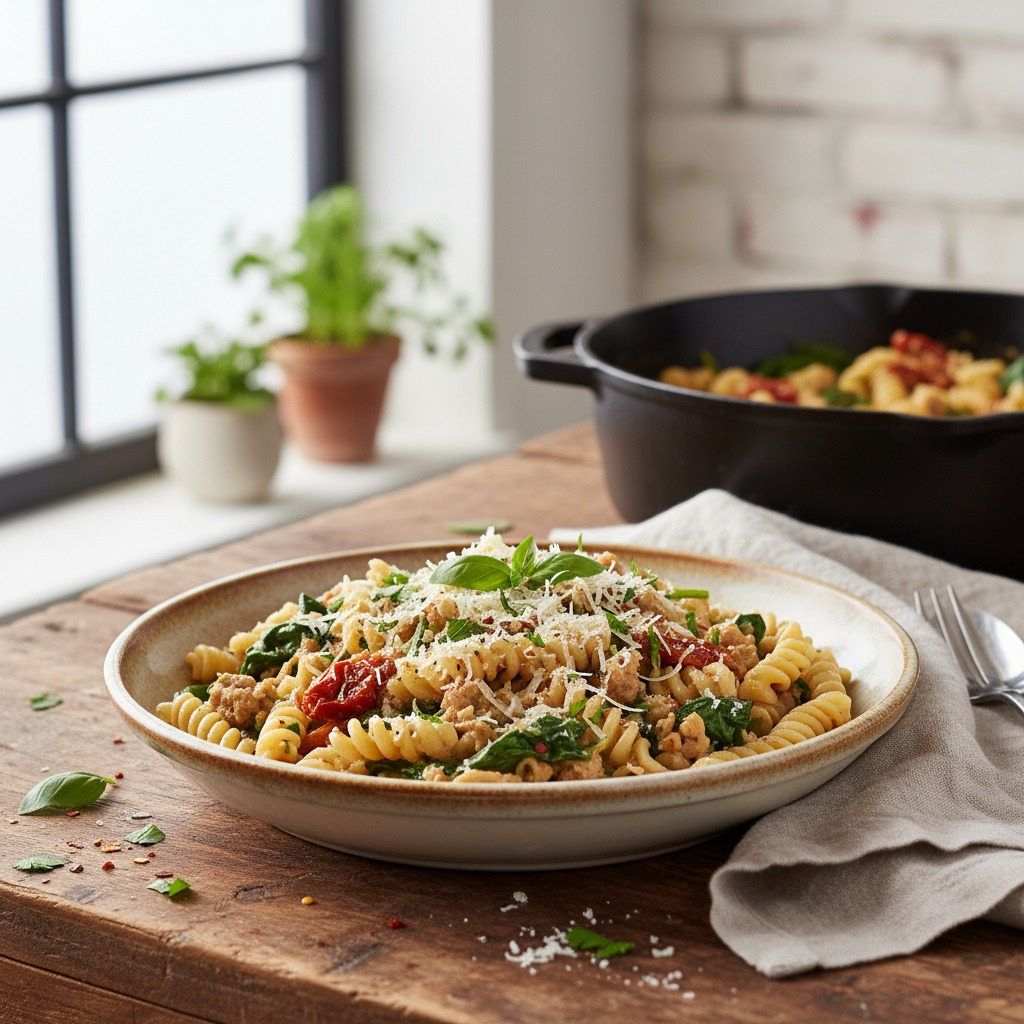
A hearty, one-pot weeknight dinner that pairs lean ground turkey with whole-grain farro pasta in a simple tomato-broth sauce. It cooks from start to finish in a single pan for minimal cleanup and maximum flavor.
Ingredient Spotlight
Dried farro pasta (or farro-based pasta), dry
Farro is an ancient hulled wheat (commonly emmer) from the Mediterranean, and farro pasta is made from farro flour; it has a nuttier, earthier flavor and a firmer, chewier bite than typical semolina pasta. It’s popular in Italian and health-food cooking and can be found at well‑stocked supermarkets, Italian markets, natural/organic stores, or online. Good substitutes are whole‑wheat or spelt pasta for a similar nutty chew, or regular durum semolina pasta if you just want neutral flavor; for gluten‑free swaps use brown‑rice, lentil, or chickpea pasta and note cooking times and texture will differ.
Jake Woods's note
"This recipe highlights farro pasta as a whole-grain alternative to traditional semolina pasta and keeps things fast with ground turkey. It's perfect for busy weeknights when you want a filling, nutritious meal with almost no cleanup."
About This Recipe
This one-pot turkey farro pasta is the kind of dinner that bridges health and comfort: lean ground turkey gives you serious protein while nutty farro pasta supplies chew, whole-grain texture, and a satisfying, slightly toothsome bite that stands up to a tomato-forward broth. The sauce is intentionally simple—canned crushed tomatoes and low-sodium chicken broth—so the pan’s browned turkey bits and melted Parmesan become the seasoning backbone. Baby spinach folded in at the end adds freshness and a burst of color without sapping the dish's weeknight ease.
What makes this version work is technique more than exotic ingredients. Browning the turkey properly and scraping up the fond builds savory depth; cooking the farro pasta directly in the tomato-broth lets the grains absorb flavor rather than floating in a separate sauce; and finishing with grated Parmesan creates a silky coating that turns a loose skillet into something almost risotto-like. It’s ideal for busy households, people tracking macros, or anyone who wants a single-pan meal that reheats well. If you pay attention to simmering gently and adjusting liquid, you’ll get consistently al dente farro and a sauce with real body every time.
Ingredients for One-Pot Turkey Farro Pasta
- 1 tbsp Extra-virgin olive oil
- 1 lb Lean ground turkey
- 1 medium Yellow onion, finely chopped
- 3 cloves Garlic cloves, minced
- 1 tsp Kosher salt & freshly ground black pepper
- 12 oz Dried farro pasta (or farro-based pasta), dry
- 14 oz Crushed tomatoes (canned)
- 3 cups Low-sodium chicken broth
- 4 cups Baby spinach, packed
- 1/2 cup Freshly grated Parmesan
How to Make One-Pot Turkey Farro Pasta
Step 1: Brown the turkey and aromatics
Heat the olive oil in a large, heavy-bottomed skillet or Dutch oven over medium-high heat. Add the ground turkey, breaking it up with a spoon, and cook until it starts to brown, about 5–6 minutes. Add the chopped onion and minced garlic, season with the salt and pepper, and cook until the onion is translucent and the turkey is fully cooked, another 3–4 minutes.For this step
- 1 tbspExtra-virgin olive oil
- 1 lbLean ground turkey
- 1 mediumYellow onion, finely chopped
- 3 clovesGarlic cloves, minced
- 1 tspKosher salt & freshly ground black pepper
Step 2: Add pasta, tomatoes and broth
Stir in the dried farro pasta, crushed tomatoes, and chicken broth, scraping up any browned bits from the bottom of the pan. Bring the mixture to a steady boil over medium-high heat, then reduce to a gentle simmer. Ensure the pasta is mostly submerged in the liquid so it can cook evenly.For this step
- 12 ozDried farro pasta (or farro-based pasta), dry
- 14 ozCrushed tomatoes (canned)
- 3 cupsLow-sodium chicken broth
Step 3: Simmer until pasta is tender
Simmer uncovered over medium-low heat, stirring every few minutes to prevent sticking, until the farro pasta is al dente and most of the liquid has been absorbed, about 12–15 minutes depending on the brand. If the pan becomes dry before the pasta is cooked, add up to 1/2 cup (120 ml) more broth or water as needed. Taste and adjust seasoning with more salt and pepper if desired.Step 4: Finish with greens and cheese
Stir in the packed baby spinach and let it wilt into the hot pasta for 1–2 minutes. Remove the pan from the heat and stir in the grated Parmesan until it melts into a creamy coating. If the sauce seems thick, add a splash of broth or reserved pasta water to loosen it.For this step
- 4 cupsBaby spinach, packed
- 1/2 cupFreshly grated Parmesan
Step 5: Serve and garnish
Divide the pasta among bowls and optionally garnish with extra Parmesan and a drizzle of olive oil or a pinch of red pepper flakes for heat. Serve hot for a comforting, protein-forward weeknight meal with minimal cleanup.


- Heat the olive oil in a large, heavy-bottomed skillet or Dutch oven over medium-high heat. Add the ground turkey, breaking it up with a spoon, and cook until it starts to brown, about 5–6 minutes. Add the chopped onion and minced garlic, season with the salt and pepper, and cook until the onion is translucent and the turkey is fully cooked, another 3–4 minutes.
- Stir in the dried farro pasta, crushed tomatoes, and chicken broth, scraping up any browned bits from the bottom of the pan. Bring the mixture to a steady boil over medium-high heat, then reduce to a gentle simmer. Ensure the pasta is mostly submerged in the liquid so it can cook evenly.
- Simmer uncovered over medium-low heat, stirring every few minutes to prevent sticking, until the farro pasta is al dente and most of the liquid has been absorbed, about 12–15 minutes depending on the brand. If the pan becomes dry before the pasta is cooked, add up to 1/2 cup (120 ml) more broth or water as needed. Taste and adjust seasoning with more salt and pepper if desired.
- Stir in the packed baby spinach and let it wilt into the hot pasta for 1–2 minutes. Remove the pan from the heat and stir in the grated Parmesan until it melts into a creamy coating. If the sauce seems thick, add a splash of broth or reserved pasta water to loosen it.
- Divide the pasta among bowls and optionally garnish with extra Parmesan and a drizzle of olive oil or a pinch of red pepper flakes for heat. Serve hot for a comforting, protein-forward weeknight meal with minimal cleanup.
One-Pot Turkey Farro Pasta Tips
Brown meat thoroughly
Give the turkey time to develop brown bits before adding onions; those fond bits are flavor gold when deglazed with the tomatoes and broth.
Keep pasta submerged
Arrange the farro pasta so most pieces are under liquid and stir occasionally—exposed pasta cooks unevenly and can dry or burn at the edges.
Adjust liquid late
If the pan dries before the pasta is tender, add small splashes of broth (up to 1/2 cup) rather than a large pour to avoid a soupy finish.
Add greens last
Stir in baby spinach off the heat or in the final 1–2 minutes so it just wilts and stays bright, contributing color and texture.
Finish with fresh cheese
Use freshly grated Parmesan for the best melt and flavor; pre-grated powder won’t create the same creamy coating.
One-Pot Turkey Farro Pasta Variations and Substitutions
Make it vegetarian
Swap the turkey for a can of rinsed brown lentils or 10–12 ounces of diced cremini mushrooms sautéed until deeply browned, and use vegetable broth instead of chicken.
Spicy sausage version
Use ground Italian or chorizo sausage for a bolder flavor, and add smoked paprika or a pinch of red pepper flakes when you add the garlic.
Gluten-free swap
Use a gluten-free short pasta (chickpea or brown rice-based) but reduce simmer time and stir gently—gluten-free pastas can overcook and break down if left to simmer too long.
Add roasted vegetables
Fold in 1–2 cups of roasted eggplant, zucchini, or bell peppers at the end for extra depth and a Mediterranean twist.
How to Store and Make One-Pot Turkey Farro Pasta Ahead
Cool leftovers to room temperature, then refrigerate in an airtight container for up to 4 days; the farro pasta will continue to absorb sauce, so expect a thicker texture. Reheat gently on the stovetop with a splash of broth or water to loosen the sauce, or microwave covered, stirring once halfway through. You can freeze for up to 2 months, but note that the pasta texture softens after freezing and thawing.
What to Serve With One-Pot Turkey Farro Pasta
Serve with a simple green salad dressed in lemon and olive oil or roasted broccoli to add brightness and contrast the tomato richness. Offer crusty bread to sop up any remaining sauce and a lemon wedge at the table to brighten flavors; pair with a medium-bodied red like Sangiovese or a crisp Sauvignon Blanc for a complementary wine match.
One-Pot Turkey Farro Pasta FAQs
Can I use regular pasta instead of farro pasta?
Yes—regular short pasta will work, but cooking times vary; start checking for doneness a few minutes earlier and be prepared to add liquid as needed. The texture will be smoother and less nutty than farro-based pasta.
My sauce evaporated before pasta was done—what went wrong?
Simmering too low or too aggressively, and not adding extra broth when needed, are common causes; keep the heat at a gentle simmer and add small amounts of hot broth or water if the liquid level drops below the pasta.
Can I use frozen spinach instead of fresh?
You can—add about 1 cup frozen spinach (thawed and well-drained) in step 4, stirring it in to warm through; fresh spinach gives better texture and appearance but frozen is a fine shortcut.
Is low-sodium broth necessary?
Using low-sodium chicken broth gives you control over seasoning and prevents the dish from becoming too salty once the Parmesan is added; you can use regular broth but taste and reduce added salt.
Can I make this ahead for meal prep?
Yes—store in single-serving containers and reheat with a splash of broth; for best texture, add a handful of fresh greens after reheating to restore color and freshness.
About the author
Jake WoodsHello, I'm Jake. I started this recipe site with the idea that I hated recipe websites that overwhelm you with long stories and ads just to see plain content that's not helpful. My goal is to provide you with quality recipes, simple ideas and a fun cooking experience. There's lots of fun things to cook, and I think as you browse the site you'll find that TopShelf.Recipes is the place for quality recipes on the web.
See all recipes by Jake Woods →Ratings & Reviews
Did you make this recipe?
Be the first to share your experience.
Nutrition Facts
Per serving: 1 serving
Nutrition values are estimated from USDA ingredient data and may vary based on preparation, brands, and portion sizes. Values are provided for informational purposes only.
Keep Reading
Guides & articles for this recipe

Healthy Eating
Gluten-Free Weeknight Grilling Plan
A 7-day gluten-free weeknight grilling plan with quick, family-friendly recipes, prep-ahead timelines, and a printable shopping list that spotlights late-summer produce and pantry staples. Includes clear cross-contamination safety tips and simple swaps to keep dinners fast and crowd-pleasing.

Healthy Eating
Low-Fat Grill Swaps for Big Flavor
A practical guide to trimming fat from grilled meals without losing juiciness or char. Learn yogurt- and citrus-based marinades, lean protein picks, searing and indirect-heat tricks, plus 5 quick low-fat marinades and a simple weeknight plan.

Recipes
DIY Edible Monster Eyes Candy
Make safe, fun edible monster eyes for cupcakes, cookies, and candy trays. Step-by-step recipes show baking-soda balls, chocolate and fondant eyes, wafer-print options, plus assembly, storage, and kid-friendly safety tips.
More from Stovetop
View all Stovetop recipes →
Rotisserie Chicken and Wild Rice Soup

One-Pot Beef Bolognese

Xiao Long Bao Soup Dumplings

Labor Day Grilled Lobster Rolls with Charred Scallion Brown Butter & Lemon‑Herb Aioli

Stovetop Dutch-Oven Herb-Crusted Beef Roast with Pan Gravy

Dubai Tacos

Italian-Style Pot Roast with Tomatoes Olives and Fresh Herbs

Hainanese Chicken Rice

Pad Krapow Pork
Ask me anything about this recipe — substitutions, scaling, techniques, timing.
Powered by AI · 6 questions per 5 minutes, 30 per day