Perfect Pan-Seared Scallops with Lemon Butter Sauce
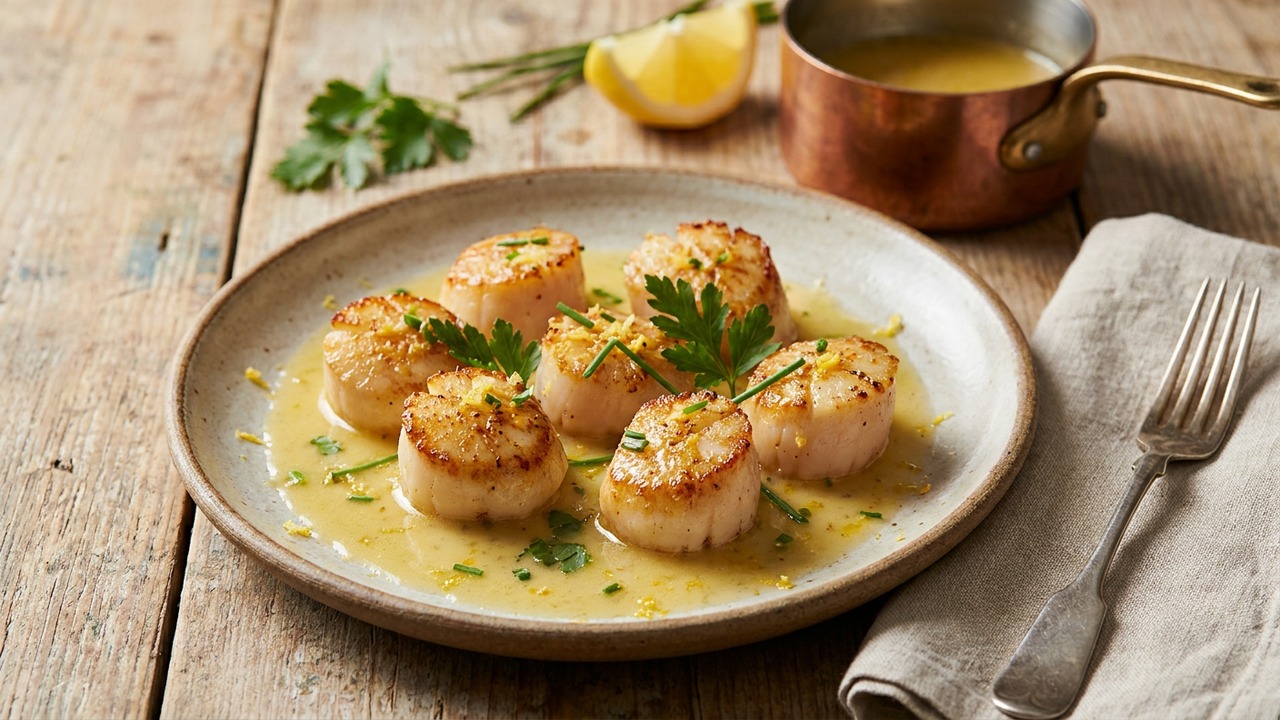
Tender, golden-brown scallops seared to perfection and finished with a silky lemon-butter sauce. This quick stovetop dish focuses on timing, pan temperature, and a simple emulsified sauce for restaurant-quality results at home.
Ingredient Spotlight
U-10 to U-15 sea scallops (dry-packed)
Sea scallops are the large adductor muscle of scallops, used widely in coastal European and East Asian cuisines; they have a sweet, briny flavor and tender, slightly firm texture. U-10 to U-15 is a size label meaning roughly 10–15 scallops per pound (lower numbers = larger scallops). “Dry-packed” indicates they haven’t been treated with phosphates or injected with water, so they’re denser, lack a waterlogged look, and sear much better; you’ll find them at fishmongers or supermarket seafood counters. If you can’t get dry-packed large scallops, good substitutes are bay (smaller) scallops adjusted for cooking time, large shrimp, or firm white fish like halibut or cod for similar texture.
Jake Woods's note
"This recipe is a reliable weeknight showstopper — quick to make but elegant enough for guests. Home cooks will appreciate the clear timing and the easy sauce technique that yields glossy, balanced flavor."
About This Recipe
Scallops are one of those miraculous ingredients that feel showy but actually respond beautifully to simple technique. This recipe leans into two contrasts: an intense, restaurant‑style Maillard crust formed by a screaming‑hot skillet and a silky, lemon‑bright butter sauce that brings the interior back to plush and succulent. Using U‑10 to U‑15 dry‑packed sea scallops gives you enough surface area for a dramatic sear without crowding the pan, and the short cook time — two to three minutes per side — keeps the centers tender instead of rubbery.
What makes this version work is the small chain of choices: patting the scallops dead dry and removing the side muscle, preheating a heavy skillet, using olive oil for the sear, then finishing with butter and lemon off the heat to create a glossy emulsion. That off‑heat finish is the secret to a stable, shiny sauce that clings to the crust without breaking. It’s a quick, high‑reward dish for weeknight celebrations or as the centerpiece of an elegant seafood course — once you master the timing here, you’ll turn these scallops into your go‑to trick for easy restaurant‑quality cooking at home.
Ingredients for Perfect Pan-Seared Scallops with Lemon Butter Sauce
- 1 1/2 lb U-10 to U-15 sea scallops (dry-packed), trimmed
- 1 tsp Kosher salt
- 1/2 tsp Freshly ground black pepper
- 2 tbsp Extra-virgin olive oil
- 4 tbsp Unsalted butter
- 2 cloves Garlic, finely minced
- 2 tbsp Fresh lemon juice
- 2 tbsp Fresh parsley, finely chopped
- 1 tsp Lemon zest (optional, for brightness)
How to Make Perfect Pan-Seared Scallops with Lemon Butter Sauce
Step 1: Prep and season the scallops
Pat scallops very dry with paper towels and remove any side muscle if present. Season both sides lightly with kosher salt and freshly ground black pepper and let rest at room temperature while you preheat the pan for 5 minutes.For this step
- 1 1/2 lbU-10 to U-15 sea scallops (dry-packed), trimmed
- 1 tspKosher salt
- 1/2 tspFreshly ground black pepper
Step 2: Heat the pan and oil
Set a large heavy skillet (cast iron or stainless steel) over medium-high heat and let it get hot for 2–3 minutes until shimmering. Add the olive oil and heat until the oil just begins to ripple but not smoke — you want a hot surface to form an instant crust.For this step
- 2 tbspExtra-virgin olive oil
Step 3: Sear the scallops
Place scallops in the pan spaced at least 1⁄2 inch apart and press gently once to ensure full contact with the surface. Sear undisturbed 2–3 minutes per side (larger scallops toward 3 minutes) until a deep golden crust forms; transfer scallops to a warm plate and keep loosely covered.Step 4: Make the lemon-butter sauce
Reduce heat to medium-low and add the butter to the same pan; when it melts and begins to foam, add the minced garlic and cook 20–30 seconds until fragrant but not browned. Add the lemon juice and lemon zest, then remove the pan from the heat and swirl in the butter off the heat to emulsify into a glossy sauce; finish with chopped parsley and adjust seasoning to taste.For this step
- 4 tbspUnsalted butter
- 2 clovesGarlic, finely minced
- 2 tbspFresh lemon juice
- 2 tbspFresh parsley, finely chopped
- 1 tspLemon zest (optional, for brightness)
Step 5: Finish and serve
Return scallops to the pan for 30 seconds to warm and coat with sauce, or spoon the sauce over them on the serving plate. Serve immediately with extra lemon wedges and a sprinkle of parsley; the scallops are best enjoyed right away while the crust is crisp and the sauce is glossy.


- Pat scallops very dry with paper towels and remove any side muscle if present. Season both sides lightly with kosher salt and freshly ground black pepper and let rest at room temperature while you preheat the pan for 5 minutes.
- Set a large heavy skillet (cast iron or stainless steel) over medium-high heat and let it get hot for 2–3 minutes until shimmering. Add the olive oil and heat until the oil just begins to ripple but not smoke — you want a hot surface to form an instant crust.
- Place scallops in the pan spaced at least 1⁄2 inch apart and press gently once to ensure full contact with the surface. Sear undisturbed 2–3 minutes per side (larger scallops toward 3 minutes) until a deep golden crust forms; transfer scallops to a warm plate and keep loosely covered.
- Reduce heat to medium-low and add the butter to the same pan; when it melts and begins to foam, add the minced garlic and cook 20–30 seconds until fragrant but not browned. Add the lemon juice and lemon zest, then remove the pan from the heat and swirl in the butter off the heat to emulsify into a glossy sauce; finish with chopped parsley and adjust seasoning to taste.
- Return scallops to the pan for 30 seconds to warm and coat with sauce, or spoon the sauce over them on the serving plate. Serve immediately with extra lemon wedges and a sprinkle of parsley; the scallops are best enjoyed right away while the crust is crisp and the sauce is glossy.
Perfect Pan-Seared Scallops with Lemon Butter Sauce Tips
Pat completely dry
Moisture is the enemy of a good crust — blot scallops with paper towels and let them air a minute if needed before seasoning.
Room‑temperature scallops
Let scallops rest out for 10–15 minutes so the cold center doesn’t drop pan temperature and lengthen cook time.
Hot pan, steady heat
Preheat a heavy skillet until very hot and add oil just before placing scallops; avoid turning the heat up more once they’re in the pan.
Don’t crowd the pan
Give each scallop at least 1/2 inch spacing to allow air and heat circulation so they brown rather than steam.
Emulsify off heat
After adding lemon, remove the pan from the burner and swirl in butter to make a glossy sauce rather than letting it break or burn.
Perfect Pan-Seared Scallops with Lemon Butter Sauce Variations and Substitutions
Brown Butter & Sage
Swap the butter step for browned butter (beurre noisette) and add a couple of torn sage leaves at the end for nutty, autumnal flavor.
White Wine Pan Sauce
Deglaze the pan with 2–3 tablespoons dry white wine or vermouth before adding the butter and lemon for extra depth and acidity.
Dairy‑Free Citrus Oil
For a vegan or dairy‑free option omit butter and whisk a tablespoon of mustard into olive oil with lemon juice and parsley to make a bright vinaigrette.
Spiced Scallops
Dust scallops lightly with smoked paprika or cayenne before searing and finish with capers for a smoky, briny contrast.
How to Store and Make Perfect Pan-Seared Scallops with Lemon Butter Sauce Ahead
Leftover scallops are best eaten the same day; store in an airtight container in the refrigerator for up to 24 hours. Reheat very gently in a warm skillet with a splash of the lemon‑butter sauce to avoid overcooking — just long enough to warm through. You can make the lemon‑butter sauce ahead and keep it refrigerated for 2–3 days, then rewarm slowly and whisk before serving.
What to Serve With Perfect Pan-Seared Scallops with Lemon Butter Sauce
Plate scallops over a creamy pea purée, lemon risotto, or a bed of herb‑buttered pasta to soak up the sauce, and finish with extra lemon zest and parsley. For something lighter, serve with a crisp arugula and shaved fennel salad dressed in lemon vinaigrette. Pair with a chilled unoaked Chardonnay, Vermentino, or a dry Riesling to complement the butter and citrus.
Perfect Pan-Seared Scallops with Lemon Butter Sauce FAQs
How can I tell when scallops are done?
They should be opaque through the center and have a springy but tender texture; when pressed lightly they should rebound. If using an instant‑read thermometer, aim for about 115–125°F for a tender result, keeping in mind residual carryover heat.
What’s the difference between dry and wet scallops?
Dry scallops haven’t been treated with phosphate solutions and will sear much better and have a cleaner flavor; wet scallops hold extra water and are more likely to steam than brown.
My scallops stuck to the pan — what went wrong?
Usually the pan wasn’t hot enough, the scallops weren’t dry, or they were moved too soon; return the pan to heat and give seared scallops an extra 10–15 seconds and they’ll release naturally once the crust forms.
Can I use butter to sear instead of oil?
Butter browns and flavors beautifully but has a low smoke point and can burn at searing temperatures; using oil for the initial sear and adding butter afterward gives you the best of both worlds.
Is it OK to finish scallops in the sauce?
Yes—briefly returning scallops to the pan for 20–30 seconds coats them in sauce and warms them through, but avoid longer to prevent overcooking.
Can I double the recipe in one pan?
You can, but avoid overcrowding: sear in two batches if needed so each scallop has room to brown; keep finished scallops warm on a baking sheet in a low oven while you cook the remainder.
About the author
Jake WoodsHello, I'm Jake. I started this recipe site with the idea that I hated recipe websites that overwhelm you with long stories and ads just to see plain content that's not helpful. My goal is to provide you with quality recipes, simple ideas and a fun cooking experience. There's lots of fun things to cook, and I think as you browse the site you'll find that TopShelf.Recipes is the place for quality recipes on the web.
See all recipes by Jake Woods →Ratings & Reviews
Did you make this recipe?
Be the first to share your experience.
Nutrition Facts
Per serving: 4 oz scallop
Nutrition values are estimated from USDA ingredient data and may vary based on preparation, brands, and portion sizes. Values are provided for informational purposes only.
Keep Reading
Guides & articles for this recipe

Healthy Eating
Gluten-Free Weeknight Grilling Plan
A 7-day gluten-free weeknight grilling plan with quick, family-friendly recipes, prep-ahead timelines, and a printable shopping list that spotlights late-summer produce and pantry staples. Includes clear cross-contamination safety tips and simple swaps to keep dinners fast and crowd-pleasing.

Healthy Eating
Low-Fat Grill Swaps for Big Flavor
A practical guide to trimming fat from grilled meals without losing juiciness or char. Learn yogurt- and citrus-based marinades, lean protein picks, searing and indirect-heat tricks, plus 5 quick low-fat marinades and a simple weeknight plan.

Recipes
DIY Edible Monster Eyes Candy
Make safe, fun edible monster eyes for cupcakes, cookies, and candy trays. Step-by-step recipes show baking-soda balls, chocolate and fondant eyes, wafer-print options, plus assembly, storage, and kid-friendly safety tips.
More from Stovetop
View all Stovetop recipes →
Labor Day Grilled Lobster Rolls with Charred Scallion Brown Butter & Lemon‑Herb Aioli

One-Pot Beef Bolognese

Stovetop Dutch-Oven Herb-Crusted Beef Roast with Pan Gravy

Dubai Tacos

Italian-Style Pot Roast with Tomatoes Olives and Fresh Herbs

Hainanese Chicken Rice

Pad Krapow Pork

Twice-Fried Restaurant Style Crispy Sweet Potato Fries (Stovetop Deep Fry)

Xiao Long Bao Soup Dumplings
Ask me anything about this recipe — substitutions, scaling, techniques, timing.
Powered by AI · 6 questions per 5 minutes, 30 per day