Saltimbocca alla Romana
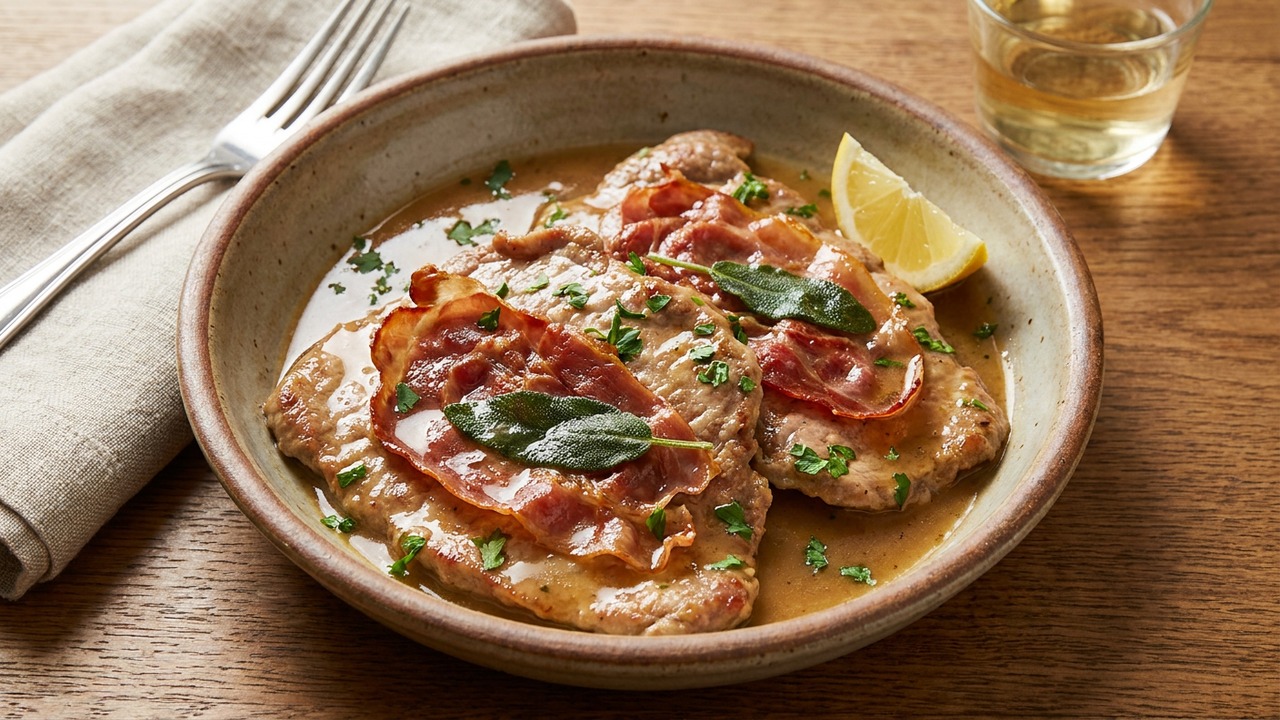
Saltimbocca alla Romana is a classic Roman stovetop dish of thin veal cutlets topped with prosciutto and sage, quickly pan-seared and finished with a bright wine-lemon pan sauce. It’s an elegant, fast main that feels special enough for guests but easy enough for a weeknight.
Ingredient Spotlight
Veal cutlets (scaloppine)
Thin slices of veal (young calf) pounded to about 1/4-inch; “scaloppine” is an Italian preparation for quickly sautéed cutlets used in dishes like veal scaloppine or saltimbocca. The meat is very tender with a mild, slightly sweet flavor and little gamey aroma. You’ll find them at a butcher, supermarket meat counter, or an Italian market; good substitutes are thin‑sliced boneless chicken breast or pork loin (pounded thin), with slightly shorter or similar cooking times.
Ingredient Spotlight
Prosciutto, thin slices
Prosciutto is a dry‑cured Italian ham (e.g., Prosciutto di Parma) served thinly sliced and uncooked; it has a delicate, salty‑sweet, nutty flavor and a melt‑in‑the‑mouth texture. It’s commonly sold at deli counters, specialty grocery stores, and Italian markets. Reasonable substitutes include Spanish jamón serrano or jamón ibérico for a similar dry‑cured profile, or in cooked preparations thinly sliced pancetta or cooked ham if you need a non‑raw option.
Jake Woods's note
"This is a reliably fast and impressive main — classic Roman flavors with minimal fuss. Home cooks will love how quickly it comes together and how the sage-prosciutto combination dresses simple veal into something celebratory."
About This Recipe
Saltimbocca alla Romana is a study in contrasts: the meat is almost paper-thin and barely cooked, prosciutto crisps and petals of sage release aromatic oil, and a quick wine-and-lemon pan sauce finishes everything with a bright, silky sheen. The allure of the dish is its speed and economy — minimal ingredients assembled with a few straightforward techniques deliver something that reads elegant on the plate yet is imminently home-cookable. Texturally, you want the veal tender, the prosciutto crackling at the edges, and the sauce light enough to coat without weighing the palate.
This version leans on a light flour dredge to promote uniform browning and give the sauce a little body without turning it into gravy; the brief pan-roast and deglaze capture those brown bits that supply most of the flavor. Use thin scallopini or pound the cutlets very lightly so they cook in 2–3 minutes per side, and choose a dry white wine or dry vermouth you would enjoy drinking — it will show up in the sauce. Saltimbocca is perfect when you want something that feels special for company but can be on the table in under 30 minutes.
Ingredients for Saltimbocca alla Romana
- 1 lb veal scallopini or thin veal cutlets
- 4 slices prosciutto slices
- 8 leaves fresh sage leaves
- 1/2 cup all-purpose flour (for dredging)
- 2 tbsp unsalted butter
- 1 tbsp extra-virgin olive oil
- 1/3 cup dry white wine (or dry vermouth)
- 1 tbsp fresh lemon juice
- 1/2 tsp kosher salt
- 1/4 tsp freshly ground black pepper
How to Make Saltimbocca alla Romana
Step 1: Prepare and season the veal
If cutlets are uneven, lightly pound them between plastic wrap to an even thickness of about 1/8–1/4 inch. Season both sides with salt and pepper, then lightly coat each cutlet in the flour, shaking off any excess.For this step
- 1 lbveal scallopini or thin veal cutlets
- 1/2 cupall-purpose flour (for dredging)
- 1/2 tspkosher salt
- 1/4 tspfreshly ground black pepper
Step 2: Assemble with prosciutto and sage
Lay a slice of prosciutto over each floured cutlet and tuck 1–2 fresh sage leaves under the prosciutto; press gently to adhere. If desired, secure each bundle with a small toothpick so it stays together while cooking.For this step
- 4 slicesprosciutto slices
- 8 leavesfresh sage leaves
Step 3: Sear the cutlets
Heat the olive oil and 1 tablespoon butter in a large skillet over medium-high heat until hot but not smoking. Add the cutlets, prosciutto side down first, and cook 2–3 minutes per side until the veal is golden and the prosciutto is crisp; transfer to a warm plate.For this step
- 1 tbspextra-virgin olive oil
Step 4: Deglaze and make the pan sauce
Lower the heat to medium and pour in the white wine, scraping up browned bits from the pan with a wooden spoon. Let the wine reduce by about half, 1–2 minutes, concentrating the flavor for the sauce.For this step
- 1/3 cupdry white wine (or dry vermouth)
Step 5: Finish the sauce and serve
Stir in the remaining tablespoon of butter and the lemon juice to finish the sauce, then return the cutlets (and any juices) to the pan to warm for 30 seconds. Remove toothpicks if used, spoon the sauce over the cutlets, and serve immediately with additional lemon wedges if desired.For this step
- 1 tbspfresh lemon juice


- If cutlets are uneven, lightly pound them between plastic wrap to an even thickness of about 1/8–1/4 inch. Season both sides with salt and pepper, then lightly coat each cutlet in the flour, shaking off any excess.
- Lay a slice of prosciutto over each floured cutlet and tuck 1–2 fresh sage leaves under the prosciutto; press gently to adhere. If desired, secure each bundle with a small toothpick so it stays together while cooking.
- Heat the olive oil and 1 tablespoon butter in a large skillet over medium-high heat until hot but not smoking. Add the cutlets, prosciutto side down first, and cook 2–3 minutes per side until the veal is golden and the prosciutto is crisp; transfer to a warm plate.
- Lower the heat to medium and pour in the white wine, scraping up browned bits from the pan with a wooden spoon. Let the wine reduce by about half, 1–2 minutes, concentrating the flavor for the sauce.
- Stir in the remaining tablespoon of butter and the lemon juice to finish the sauce, then return the cutlets (and any juices) to the pan to warm for 30 seconds. Remove toothpicks if used, spoon the sauce over the cutlets, and serve immediately with additional lemon wedges if desired.
Saltimbocca alla Romana Tips
Pound to Uniform Thickness
Lightly pound the cutlets between plastic wrap until they’re even; that ensures all pieces cook in the same 2–3 minute window and stay juicy.
Pat Veal Dry First
Blotting the veal removes surface moisture so the flour sticks and the meat browns quickly instead of steaming.
Cook Prosciutto Side Down
Start with the prosciutto on the hot pan to render fat and crisp its edges while protecting the delicate veal underneath.
Avoid Overcrowding the Pan
Work in batches if necessary; crowded cutlets steam and won’t develop the flavorful brown bits needed for a good pan sauce.
Finish with Cold Butter
Swirl in cold butter off the heat at the end for a glossy, emulsified sauce that clings to the meat.
Saltimbocca alla Romana Variations and Substitutions
Chicken Saltimbocca
Substitute thin boneless chicken cutlets for veal and increase cooking time by about 1–2 minutes per side; the assembly and sauce remain the same.
Pork or Turkey Option
Thin pork cutlets or turkey scallopini are forgiving substitutes when veal isn’t available; watch doneness since they need to reach a slightly higher internal temperature.
Mushroom ‘Saltimbocca’ (Vegetarian)
Use large portobello caps or thick slices of king oyster mushrooms topped with prosciutto substitute (or smoked tempeh) and sage, searing until caramelized and finishing with the same wine-lemon sauce.
Marsala and Capers Twist
Swap the white wine for Marsala and add a tablespoon of capers for a richer, slightly briny variation that pairs nicely with rustic sides.
How to Store and Make Saltimbocca alla Romana Ahead
Store leftover cutlets and sauce in an airtight container in the refrigerator for up to 48 hours. Reheat gently in a skillet over low heat with a splash of water, wine, or stock to loosen the sauce and prevent drying; avoid the microwave if possible. Freezing is not recommended because the delicate texture of the veal and the crispness of prosciutto degrade on thawing.
What to Serve With Saltimbocca alla Romana
Serve saltimbocca with simple, complementary sides that soak up the sauce — buttery polenta, lemony sautéed spinach, or roasted baby potatoes are classic matches. For a lighter plate, pair with wilted Swiss chard and a drizzle of extra sauce, garnished with an extra sage leaf and a lemon wedge. Pair with a crisp Italian white like Vermentino or Pinot Grigio, or a light Sangiovese if you prefer red.
Saltimbocca alla Romana FAQs
Can I use chicken instead of veal?
Yes — thin boneless chicken cutlets work well with identical assembly; increase the cook time slightly to ensure they’re cooked through and rest briefly before serving.
How can I tell when the veal is done?
Because the cutlets are very thin, they’re done when the exterior is golden and the meat is just opaque throughout, usually 2–3 minutes per side; overcooking will make veal dry.
Why do I dredge in flour?
A light flour coating promotes even browning and gives the pan sauce enough body to cling to the meat without becoming heavy or pasty.
What if my prosciutto doesn't crisp?
Increase the initial pan temperature slightly and start prosciutto side down; if the pan is too cool the ham will warm without crisping, and if it’s too hot the veal can overcook.
Can I make the sauce ahead of time?
You can reduce the wine ahead and finish with butter and lemon just before serving, but keep the sauce separate from the cutlets and reheat gently to preserve texture and the bright lemon notes.
About the author
Jake WoodsHello, I'm Jake. I started this recipe site with the idea that I hated recipe websites that overwhelm you with long stories and ads just to see plain content that's not helpful. My goal is to provide you with quality recipes, simple ideas and a fun cooking experience. There's lots of fun things to cook, and I think as you browse the site you'll find that TopShelf.Recipes is the place for quality recipes on the web.
See all recipes by Jake Woods →Ratings & Reviews
Did you make this recipe?
Be the first to share your experience.
Nutrition Facts
Per serving: 1 serving
Nutrition values are estimated from USDA ingredient data and may vary based on preparation, brands, and portion sizes. Values are provided for informational purposes only.
Keep Reading
Guides & articles for this recipe

Healthy Eating
Gluten-Free Weeknight Grilling Plan
A 7-day gluten-free weeknight grilling plan with quick, family-friendly recipes, prep-ahead timelines, and a printable shopping list that spotlights late-summer produce and pantry staples. Includes clear cross-contamination safety tips and simple swaps to keep dinners fast and crowd-pleasing.

Healthy Eating
Low-Fat Grill Swaps for Big Flavor
A practical guide to trimming fat from grilled meals without losing juiciness or char. Learn yogurt- and citrus-based marinades, lean protein picks, searing and indirect-heat tricks, plus 5 quick low-fat marinades and a simple weeknight plan.

Recipes
DIY Edible Monster Eyes Candy
Make safe, fun edible monster eyes for cupcakes, cookies, and candy trays. Step-by-step recipes show baking-soda balls, chocolate and fondant eyes, wafer-print options, plus assembly, storage, and kid-friendly safety tips.
More from Stovetop
View all Stovetop recipes →
One-Pot Beef Bolognese

Stovetop Dutch-Oven Herb-Crusted Beef Roast with Pan Gravy

Dubai Tacos

Italian-Style Pot Roast with Tomatoes Olives and Fresh Herbs

Labor Day Grilled Lobster Rolls with Charred Scallion Brown Butter & Lemon‑Herb Aioli

Hainanese Chicken Rice

Pad Krapow Pork

Twice-Fried Restaurant Style Crispy Sweet Potato Fries (Stovetop Deep Fry)

Xiao Long Bao Soup Dumplings
Ask me anything about this recipe — substitutions, scaling, techniques, timing.
Powered by AI · 6 questions per 5 minutes, 30 per day