Snake River Farms Beef Tallow Basted Ribeye
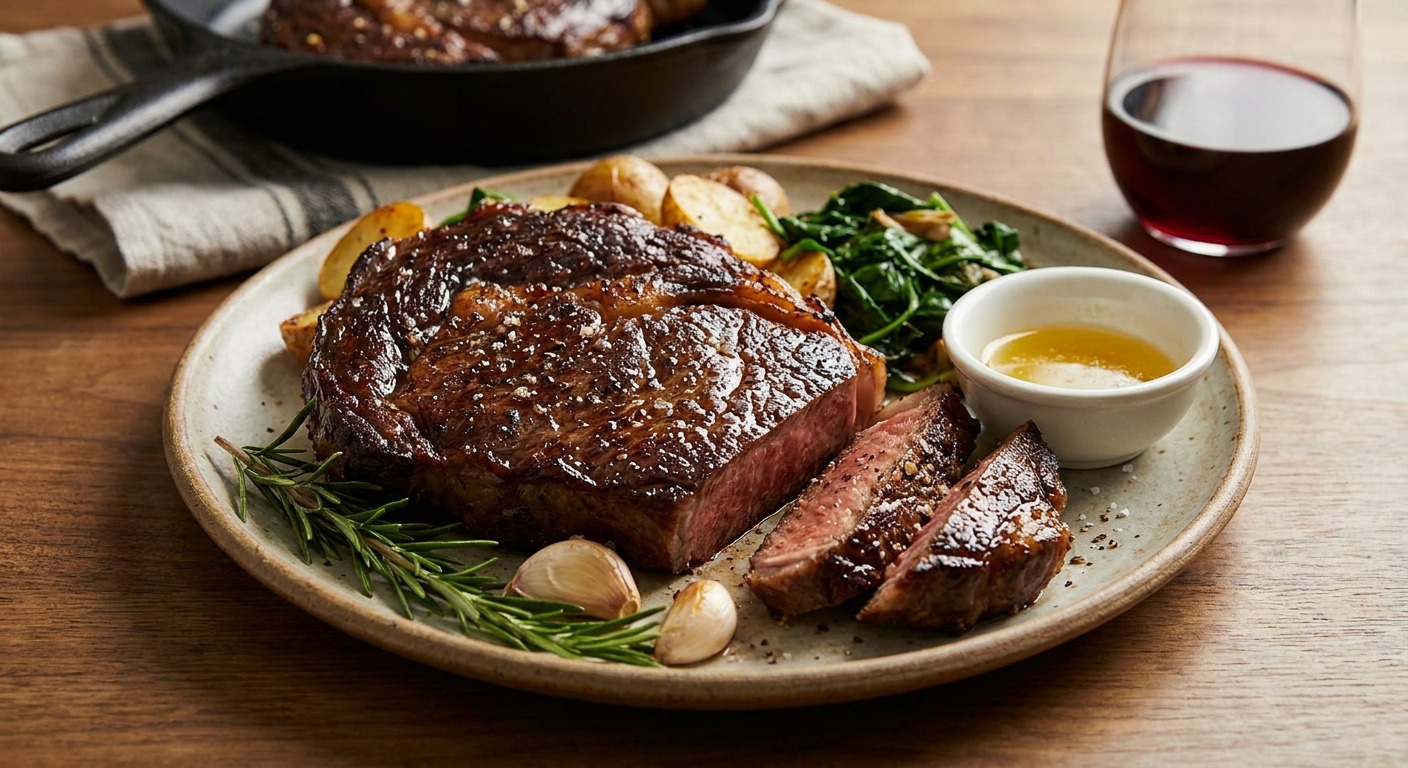
A stovetop method for a steakhouse-quality ribeye: high-heat sear to build a deep brown crust, then finish with aromatic basting using Snake River Farms Beef Tallow for rich, beef-forward flavor. Clear timing and doneness targets make this repeatable for home cooks seeking bold, restaurant-style results.
Ingredient Spotlight
Snake River Farms Beef Tallow
Rendered beef fat produced by Snake River Farms, a U.S. premium meat purveyor known for American Wagyu and high-quality beef; used as a cooking fat to sear and flavor meats. It has a rich, savory, beefy aroma and taste with a high smoke point that helps achieve good browning and a meaty finish. You can find it at specialty butcher shops, gourmet grocery stores, or directly from Snake River Farms online; suitable substitutes include generic beef tallow, duck fat, clarified butter/ghee, or a neutral high-heat oil for searing.
(paid link) — as an Amazon Associate we earn from qualifying purchases.
Jake Woods's note
"This recipe highlights Snake River Farms Beef Tallow for ultra-rich basting that intensifies beef flavor and helps carry aromatics. It shines for a special weeknight dinner or any time you want a steakhouse finish at home."
About This Recipe
This stovetop technique turns a thick ribeye into a restaurant-quality steak with a deeply browned crust and an interior finished by spooning hot tallow over it. Snake River Farms Beef Tallow brings concentrated beef flavor and a silky mouthfeel—more than butter, less likely to burn—that layers onto the steak as the aromatics of smashed garlic and thyme perfume the pan. The method is simple: a searing burst for Maillard development, then a low-and-slow basting finish that keeps the crust crisp while gently bringing the center to target temperature.
What makes this version work is the timing and small choices: start the steaks at room temperature, use a neutral oil for the initial contact so the tallow won’t scorch, and rest the meat long enough for the juices to redistribute. This recipe is for cooks who want bold, beef-forward results without a grill or oven — it’s equally at home on a weeknight or a small dinner party. Slice against the grain and spoon any reserved tallow and pan juices over each portion for a glossy, savory finish.
Ingredients for Snake River Farms Beef Tallow Basted Ribeye
- 2 each Ribeye steaks (about 12 oz / 340 g each), 1½–2" thick
- 1 tbsp Kosher salt
- 1 tsp Freshly ground black pepper
- 1 tbsp Neutral high-heat oil (canola or grapeseed)
- 3 tbsp Snake River Farms Beef Tallow
- 4 cloves Garlic cloves, lightly smashed
- 4 sprigs Fresh thyme sprigs (or rosemary)
🛒 = paid link — as an Amazon Associate we earn from qualifying purchases.
How to Make Snake River Farms Beef Tallow Basted Ribeye
Step 1: Bring steaks to room temperature and season
Remove steaks from the refrigerator 30–45 minutes before cooking and pat them very dry with paper towels. Generously season both sides with kosher salt and freshly ground black pepper — the salt helps form a deep crust and should be applied early for better seasoning penetration.For this step
- 2 eachRibeye steaks (about 12 oz / 340 g each), 1½–2" thick
- 1 tbspKosher salt
- 1 tspFreshly ground black pepper
Step 2: Preheat the pan and oil
Set a heavy-bottomed cast-iron skillet or stainless pan over high heat until smoking hot (about 5 minutes). Add the neutral high-heat oil and swirl to coat — the oil prevents the tallow from burning on first contact and helps the first sear.For this step
- 1 tbspNeutral high-heat oil (canola or grapeseed)
Step 3: Sear both sides to build a crust
Place steaks in the hot pan away from you and press gently to ensure even contact; sear undisturbed 2½–3 minutes until a dark brown crust forms. Flip and sear the second side 2 minutes; for thicker steaks you may need 3 minutes. Reduce heat to medium-low before step 4.For this step
- 3 tbspSnake River Farms Beef Tallow
- 4 clovesGarlic cloves, lightly smashed
- 4 sprigsFresh thyme sprigs (or rosemary)
Step 4: Add tallow and aromatics, then baste to finish
Add Snake River Farms Beef Tallow, the smashed garlic, and thyme to the pan. Once the tallow melts, tilt the pan and use a large spoon to baste the steaks continuously, spooning hot tallow over the top; continue 2–5 minutes, monitoring internal temperature — remove at 120–125°F for rare, 125–130°F for medium-rare, 135°F for medium. The basting both flavors and gently finishes the cook while keeping the crust crisp.Step 5: Rest, finish, and serve
Transfer steaks to a cutting board and rest loosely tented with foil 5–10 minutes so juices redistribute. Optionally sprinkle a small pinch of finishing salt, slice against the grain if serving sliced, and spoon any reserved pan juices and tallow over the steaks before serving.


- Remove steaks from the refrigerator 30–45 minutes before cooking and pat them very dry with paper towels. Generously season both sides with kosher salt and freshly ground black pepper — the salt helps form a deep crust and should be applied early for better seasoning penetration.
- Set a heavy-bottomed cast-iron skillet or stainless pan over high heat until smoking hot (about 5 minutes). Add the neutral high-heat oil and swirl to coat — the oil prevents the tallow from burning on first contact and helps the first sear.
- Place steaks in the hot pan away from you and press gently to ensure even contact; sear undisturbed 2½–3 minutes until a dark brown crust forms. Flip and sear the second side 2 minutes; for thicker steaks you may need 3 minutes. Reduce heat to medium-low before step 4.
- Add Snake River Farms Beef Tallow, the smashed garlic, and thyme to the pan. Once the tallow melts, tilt the pan and use a large spoon to baste the steaks continuously, spooning hot tallow over the top; continue 2–5 minutes, monitoring internal temperature — remove at 120–125°F for rare, 125–130°F for medium-rare, 135°F for medium. The basting both flavors and gently finishes the cook while keeping the crust crisp.
- Transfer steaks to a cutting board and rest loosely tented with foil 5–10 minutes so juices redistribute. Optionally sprinkle a small pinch of finishing salt, slice against the grain if serving sliced, and spoon any reserved pan juices and tallow over the steaks before serving.
Snake River Farms Beef Tallow Basted Ribeye Tips
Dry Thoroughly
Pat the steaks completely dry before seasoning; surface moisture steams the meat and prevents the deep brown crust you’re aiming for.
Oil Before Tallow
Coat the pan with a neutral high-smoke-point oil first so the initial sear happens without the tallow burning on contact, then add tallow for flavor.
High-Heat Sear Timing
Sear on a smoking-hot pan 2½–3 minutes per side for 1½–2" steaks to develop a dark crust, then lower the heat before basting to avoid over-browning.
Baste With Purpose
Tilt the pan and spoon fat over the top continuously to build flavor and gently raise the internal temperature without wetting the crust.
Use an Instant-Read
Pull steaks 5°F under your target temperature (120–125°F rare, 125–130°F medium-rare, 135°F medium) because carryover will finish them while resting.
Rest, Then Slice
Rest loosely tented 5–10 minutes so juices redistribute, then slice against the grain and spoon reserved pan juices back over the slices.
Snake River Farms Beef Tallow Basted Ribeye Variations and Substitutions
Bone-In Ribeye
If using a bone-in cut, allow an extra minute or two per sear and extend basting time to account for the increased mass—the bone adds flavor but slows heating.
Butter-Infused Finish
For a rounder, creamier finish add 1 tbsp unsalted butter to the melted tallow in the last 30 seconds of basting for gloss and a subtle sweetness.
Herb Sauce Contrast
Cut the richness with a bright chimichurri or parsley-caper salsa verde spooned at service; the acidity and herb freshness balance the tallow’s richness.
Reverse-Sear for Precision
For extra-thick steaks, slowly bring them to 110–115°F in a low oven or sous-vide, then finish with the high-heat sear and quick tallow baste for a perfect edge-to-center gradient.
How to Store and Make Snake River Farms Beef Tallow Basted Ribeye Ahead
Leftover ribeye keeps well refrigerated in an airtight container for up to 3 days; slice before storing to make reheating faster and more even. Reheat gently: warm in a 250°F oven until about 10–15°F below serving temp, then quickly sear in a hot skillet with a little tallow to refresh the crust—avoid microwaving, which will toughen the meat. You can freeze wrapped steaks for up to 2 months and thaw overnight in the refrigerator before reheating.
What to Serve With Snake River Farms Beef Tallow Basted Ribeye
Serve with sides that stand up to the beef’s richness—creamy pommes purée, sautéed wild mushrooms with thyme, or garlicky charred broccolini are perfect companions. A simple green salad with a bright lemon vinaigrette refreshes the palate between bites. For drinks, choose a structured red like Cabernet Sauvignon or Malbec, or a whiskey-forward cocktail (Old Fashioned) to match the tallow’s savory depth.
Snake River Farms Beef Tallow Basted Ribeye FAQs
Can I use butter instead of beef tallow?
You can, but butter has milk solids that burn at high heat; add butter only at the very end of cooking for flavor, whereas tallow can be used earlier for prolonged basting without scorching.
Why do I add oil before the tallow?
The neutral oil increases the pan’s smoke point on first contact and helps build the crust; adding tallow to an already hot, oiled surface prevents the rendered fat from immediately burning.
My pan smokes a lot—what should I do?
Use good ventilation and lower the burner slightly after the initial sear; if smoke is excessive, either reduce the heat for the basting stage or finish in a slightly cooler oven to avoid bitter burnt flavors.
How can I check doneness without a thermometer?
Press the steak with your finger—rare feels very soft, medium-rare has some resistance, and medium is noticeably firmer—but an instant-read thermometer is the most reliable way to hit precise targets.
Can I make the steaks ahead for a dinner party?
You can sear the steaks and finish them partially, then chill and reheat gently before service, but for best texture serve freshly rested after the final basting; keeping everything warm and finishing just before guests sit yields the best presentation.
About the author
Jake WoodsHello, I'm Jake. I started this recipe site with the idea that I hated recipe websites that overwhelm you with long stories and ads just to see plain content that's not helpful. My goal is to provide you with quality recipes, simple ideas and a fun cooking experience. There's lots of fun things to cook, and I think as you browse the site you'll find that TopShelf.Recipes is the place for quality recipes on the web.
See all recipes by Jake Woods →Ratings & Reviews
Did you make this recipe?
Be the first to share your experience.
Nutrition Facts
Per serving: 2½ tbsp
Nutrition values are estimated from USDA ingredient data and may vary based on preparation, brands, and portion sizes. Values are provided for informational purposes only.
Keep Reading
Guides & articles for this recipe

Healthy Eating
Gluten-Free Weeknight Grilling Plan
A 7-day gluten-free weeknight grilling plan with quick, family-friendly recipes, prep-ahead timelines, and a printable shopping list that spotlights late-summer produce and pantry staples. Includes clear cross-contamination safety tips and simple swaps to keep dinners fast and crowd-pleasing.

Healthy Eating
Low-Fat Grill Swaps for Big Flavor
A practical guide to trimming fat from grilled meals without losing juiciness or char. Learn yogurt- and citrus-based marinades, lean protein picks, searing and indirect-heat tricks, plus 5 quick low-fat marinades and a simple weeknight plan.

Recipes
DIY Edible Monster Eyes Candy
Make safe, fun edible monster eyes for cupcakes, cookies, and candy trays. Step-by-step recipes show baking-soda balls, chocolate and fondant eyes, wafer-print options, plus assembly, storage, and kid-friendly safety tips.
More from Stovetop
View all Stovetop recipes →
One-Pot Beef Bolognese

Stovetop Dutch-Oven Herb-Crusted Beef Roast with Pan Gravy

Dubai Tacos

Italian-Style Pot Roast with Tomatoes Olives and Fresh Herbs

Labor Day Grilled Lobster Rolls with Charred Scallion Brown Butter & Lemon‑Herb Aioli

Hainanese Chicken Rice

Pad Krapow Pork

Twice-Fried Restaurant Style Crispy Sweet Potato Fries (Stovetop Deep Fry)

Xiao Long Bao Soup Dumplings
Ask me anything about this recipe — substitutions, scaling, techniques, timing.
Powered by AI · 6 questions per 5 minutes, 30 per day