Cacio e Pepe Pasta
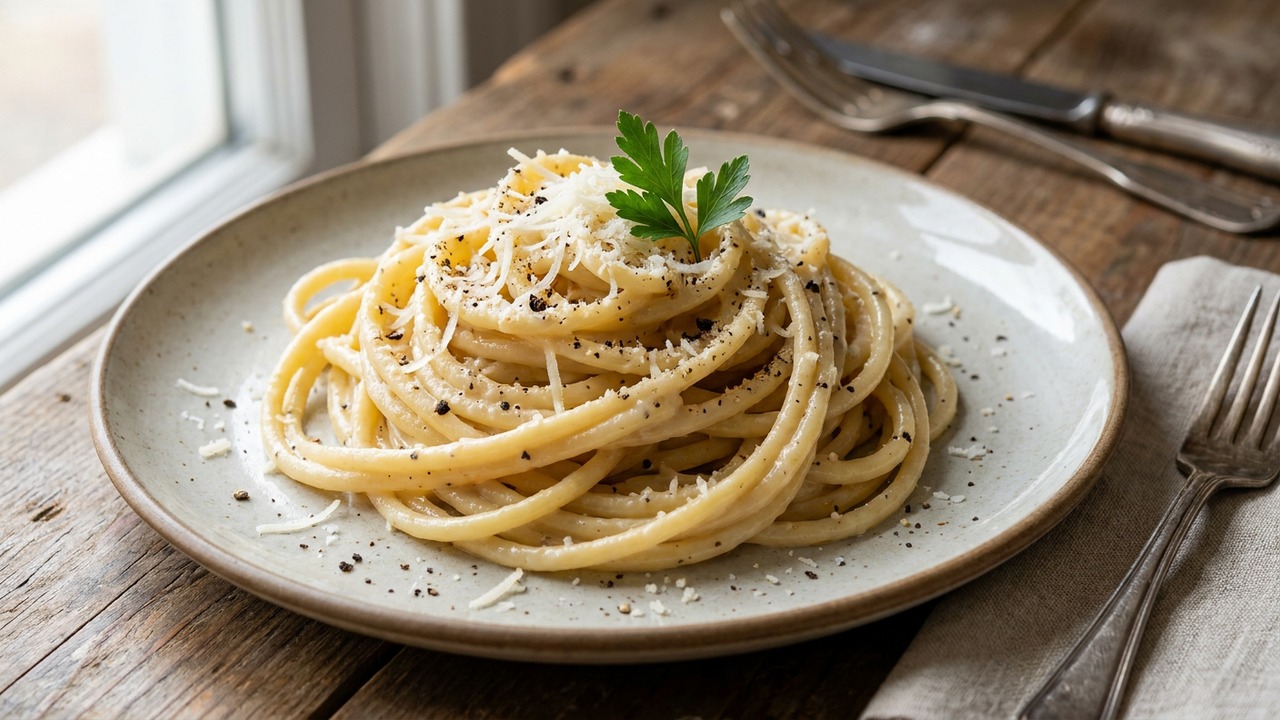
Cacio e Pepe is a deceptively simple, viral Roman pasta that hinges on technique: a silky, starchy cheese emulsion and plenty of freshly cracked pepper. Mastering the timing of reserved pasta water and how you incorporate Pecorino Romano is what makes this dish sing.
Jake Woods's note
"This recipe shines for a cozy weeknight or an impressive last-minute dinner. Home cooks will love how few ingredients deliver a creamy, restaurant-quality sauce once you learn to emulsify with hot pasta water."
About This Recipe
Cacio e Pepe is a dish about precision more than fuss: three ingredients plus water and timing. The appeal is immediate — the bright pop of freshly cracked black pepper riding a creamy, salty wave of Pecorino Romano that clings to each strand of pasta. This version leans into technique to transform simple components into a silky emulsion: toasting the pepper releases its volatile oils, very short cooking keeps the pasta toothsome, and judicious use of starchy pasta water helps the finely grated cheese bloom into a satin sauce rather than clumping into grainy bits.
This recipe is for anyone who wants a restaurant-quality result at home without specialty tools. Use a wide skillet for tossing, grate the cheese so fine it practically melts into the water, and add the cheese off the heat to protect texture. A small knob of butter is optional but useful on first tries to stabilize the emulsion; once you master the water-to-cheese rhythm, you’ll be able to make perfectly glossy cacio e pepe entirely with Pecorino, water and pepper.
Ingredients for Cacio e Pepe Pasta
- 12 oz Spaghetti (or tonnarelli)
- 1 tbsp Coarse salt (for pasta water)
- 2 tsp Freshly cracked black pepper
- 1 cup Reserved starchy pasta cooking water
- 1 1/4 cups Pecorino Romano, very finely grated
- 1 tbsp Unsalted butter (optional, for extra silkiness)
How to Make Cacio e Pepe Pasta
Step 1: Prep and toast the pepper
Bring a large pot of water to a rolling boil while cracking the black pepper coarsely. Add the coarse salt to the boiling water (it should taste like the sea). Meanwhile, toast the cracked pepper in a wide, dry skillet over medium heat until fragrant, about 1 minute, then reduce heat to low to keep warm.For this step
- 1 tbspCoarse salt (for pasta water)
- 2 tspFreshly cracked black pepper
Step 2: Cook pasta and reserve starchy water
Add the spaghetti to the boiling, generously salted water and cook until very al dente according to package directions (usually 1–2 minutes less than indicated). Before draining, ladle out 1 cup (240 ml) of the hot pasta water and set aside, then drain the pasta quickly — do not rinse.For this step
- 12 ozSpaghetti (or tonnarelli)
- 1 cupReserved starchy pasta cooking water
Step 3: Combine pasta with pepper
Add the drained pasta directly to the skillet with the toasted pepper and toss briefly over low heat. Pour in about 1/4 cup of the reserved pasta water to start loosening and coating the strands; toss vigorously to distribute the pepper and begin building a glossy base.Step 4: Emulsify with Pecorino and butter
Remove the skillet from direct heat. Gradually sprinkle the finely grated Pecorino over the pasta while tossing or stirring vigorously, adding more reserved pasta water a few tablespoons at a time to create a smooth, creamy emulsion. If using, stir in the butter now for extra silkiness; goal is a silky sauce that clings to the pasta, not a watery broth.For this step
- 1 1/4 cupsPecorino Romano, very finely grated
- 1 tbspUnsalted butter (optional, for extra silkiness)
Step 5: Adjust, plate, and serve immediately
Taste and adjust with more cracked pepper or a splash of pasta water to loosen the sauce if needed. Serve immediately in warm bowls and finish with an extra dusting of Pecorino and another crack of black pepper for a bright, savory bite.


- Bring a large pot of water to a rolling boil while cracking the black pepper coarsely. Add the coarse salt to the boiling water (it should taste like the sea). Meanwhile, toast the cracked pepper in a wide, dry skillet over medium heat until fragrant, about 1 minute, then reduce heat to low to keep warm.
- Add the spaghetti to the boiling, generously salted water and cook until very al dente according to package directions (usually 1–2 minutes less than indicated). Before draining, ladle out 1 cup (240 ml) of the hot pasta water and set aside, then drain the pasta quickly — do not rinse.
- Add the drained pasta directly to the skillet with the toasted pepper and toss briefly over low heat. Pour in about 1/4 cup of the reserved pasta water to start loosening and coating the strands; toss vigorously to distribute the pepper and begin building a glossy base.
- Remove the skillet from direct heat. Gradually sprinkle the finely grated Pecorino over the pasta while tossing or stirring vigorously, adding more reserved pasta water a few tablespoons at a time to create a smooth, creamy emulsion. If using, stir in the butter now for extra silkiness; goal is a silky sauce that clings to the pasta, not a watery broth.
- Taste and adjust with more cracked pepper or a splash of pasta water to loosen the sauce if needed. Serve immediately in warm bowls and finish with an extra dusting of Pecorino and another crack of black pepper for a bright, savory bite.
Cacio e Pepe Pasta Tips
Grate Pecorino finely
Very finely grate or microplane the cheese so it integrates smoothly with the hot water and doesn’t clump into strings.
Toast pepper briefly
Toast the cracked pepper in a dry skillet only until fragrant — this releases oils without burning and elevates the spice’s citrusy top notes.
Cook pasta extra al dente
Pull the spaghetti 1–2 minutes shy of package time so it finishes cooking while you toss and helps the sauce cling better.
Add cheese off heat
Remove the pan from direct heat before sprinkling in Pecorino; residual warmth is enough to melt the cheese gently and prevent graininess.
Reserve extra pasta water
Keep more than you think — 1 cup is a guideline — and add it in tablespoons to control sauce thickness and rescue a seized sauce.
Cacio e Pepe Pasta Variations and Substitutions
Tonarelli or Rigatoni switch
Use tonarelli for a traditional, thicker bite or rigatoni to trap the peppery sauce inside the tubes for a different texture experience.
Parmesan–Pecorino mix
If Pecorino’s saltiness is intense, blend half Pecorino with half Grana Padano or Parmigiano-Reggiano for a milder, creamier finish.
Vegan cacio-style
Combine 3/4 cup finely ground cashews, 1/4 cup nutritional yeast, a pinch of kala namak, and hot pasta water to create a savory, creamy topping in place of cheese.
Guanciale or pancetta add-in
Cooked guanciale or pancetta tossed with the pepper adds porky richness and a crunchy contrast that complements the silky cheese emulsion.
How to Store and Make Cacio e Pepe Pasta Ahead
Leftover cacio e pepe doesn’t keep its texture well and will firm up and become gluey as the sauce cools. Store in an airtight container in the fridge for up to 2 days, and reheat gently in a skillet with a splash of hot water or broth, tossing quickly and finishing with a little freshly grated Pecorino to re-emulsify the sauce. For best results, make just enough for serving and avoid long storage.
What to Serve With Cacio e Pepe Pasta
Serve in warm shallow bowls so the sauce stays glossy; a drizzle of good extra-virgin olive oil is optional but can add shine. Pair with a simple bitter salad (radicchio, arugula) dressed in lemon to cut the richness and a crisp white wine like Vermentino or an unoaked Chardonnay to complement the pepper and salty cheese.
Cacio e Pepe Pasta FAQs
Why did my sauce become grainy or clumpy?
Graininess usually means the cheese seized from too much heat or too little starchy water; take the pan off the heat and add small spoonfuls of hot pasta water while vigorously tossing to smooth it out.
How much black pepper is right?
Start with the recipe’s amount and taste — cacio e pepe is pepper-forward, so err on the generous side, but toast the pepper first to temper sharpness and add complexity.
Can I use Parmesan instead of Pecorino?
Yes — Parmigiano-Reggiano or Grana Padano will work and give a nuttier, less salty profile; you may want to reduce added salt in the pasta water if you use Pecorino–Parm mixes.
Is butter necessary for silkiness?
No, butter is optional and helpful for beginners because it stabilizes the emulsion; with properly emulsified cheese and enough starchy water, you can achieve silkiness without it.
How do I rescue a watery sauce?
If the sauce is too loose, sprinkle in a little more finely grated cheese off the heat while tossing to thicken the emulsion, or simmer very briefly to reduce, but avoid overheating to prevent separation.
About the author
Jake WoodsHello, I'm Jake. I started this recipe site with the idea that I hated recipe websites that overwhelm you with long stories and ads just to see plain content that's not helpful. My goal is to provide you with quality recipes, simple ideas and a fun cooking experience. There's lots of fun things to cook, and I think as you browse the site you'll find that TopShelf.Recipes is the place for quality recipes on the web.
See all recipes by Jake Woods →Ratings & Reviews
Did you make this recipe?
Be the first to share your experience.
Nutrition Facts
Per serving: 1 serving
Nutrition values are estimated from USDA ingredient data and may vary based on preparation, brands, and portion sizes. Values are provided for informational purposes only.
Keep Reading
Guides & articles for this recipe

Healthy Eating
Gluten-Free Weeknight Grilling Plan
A 7-day gluten-free weeknight grilling plan with quick, family-friendly recipes, prep-ahead timelines, and a printable shopping list that spotlights late-summer produce and pantry staples. Includes clear cross-contamination safety tips and simple swaps to keep dinners fast and crowd-pleasing.

Healthy Eating
Low-Fat Grill Swaps for Big Flavor
A practical guide to trimming fat from grilled meals without losing juiciness or char. Learn yogurt- and citrus-based marinades, lean protein picks, searing and indirect-heat tricks, plus 5 quick low-fat marinades and a simple weeknight plan.

Recipes
DIY Edible Monster Eyes Candy
Make safe, fun edible monster eyes for cupcakes, cookies, and candy trays. Step-by-step recipes show baking-soda balls, chocolate and fondant eyes, wafer-print options, plus assembly, storage, and kid-friendly safety tips.
More from Italian
View all Italian recipes →
Sicilian Sfincione Pizza

Neapolitan Pizza at Home

Sicilian Arancini Rice Balls

Stovetop Skillet Pizza

Zuppa di Pesce

Saltimbocca alla Romana

Focaccia Genovese

Classic Spaghetti Carbonara

Osso Buco alla Milanese
Ask me anything about this recipe — substitutions, scaling, techniques, timing.
Powered by AI · 6 questions per 5 minutes, 30 per day