Neapolitan Pizza at Home
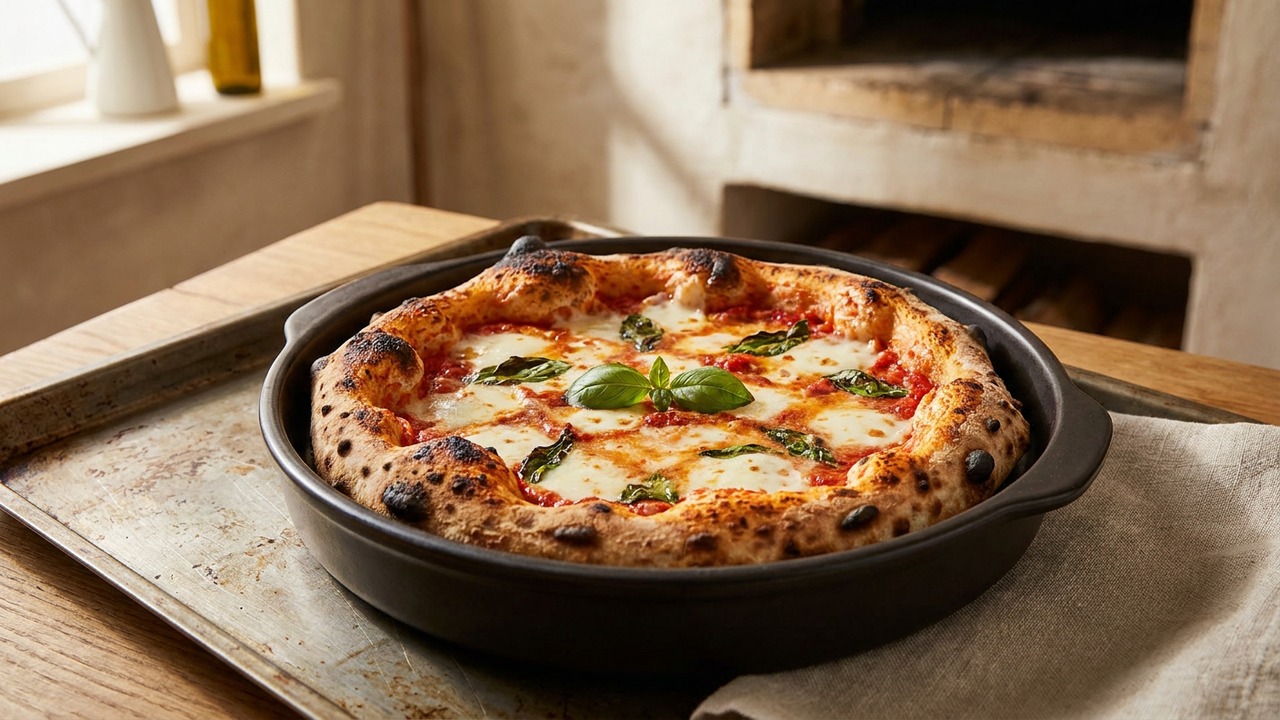
Classic Neapolitan-style pizza with a blistered, airy cornicione made at home using a pizza steel and oven-broiler technique. Step-by-step instructions and timing to get authentic char and soft interior without a wood-fired oven.
Ingredient Spotlight
Tipo 00 flour
Tipo 00 is an Italian very finely milled wheat flour (the “00” refers to grind fineness, not protein) commonly used for Neapolitan-style pizza and pasta; it gives a silky, extensible dough and a tender, slightly chewy crust. It has a neutral, wheaty flavor and handles high hydration well. Find it in the Italian or specialty-baking section of supermarkets or online. Substitute with a mix of all-purpose and a bit of bread flour (to raise protein), or use a high-quality bread flour if 00 isn’t available.
Ingredient Spotlight
Crushed San Marzano tomatoes (canned)
San Marzano are a specific variety of plum tomato grown in the volcanic soil around San Marzano, Italy, prized for their sweet, balanced flavor, low acidity, and meaty flesh; canned crushed San Marzanos are a classic base for authentic pizza sauce. They taste sweeter and less acidic than generic canned tomatoes and often have a fragrant, concentrated tomato aroma. Look for cans labeled “San Marzano” or DOP in the Italian aisle or specialty markets. A good substitute is any high-quality canned whole or crushed plum tomatoes, drained and lightly crushed, adjusted with a pinch of sugar and salt to mimic the sweetness and lower acidity.
Ingredient Spotlight
Semolina or fine cornmeal (for dusting peel)
Semolina is a coarse durum-wheat flour used in Italian pasta and bread-making; fine cornmeal is ground dried corn—both are used to dust a pizza peel to prevent sticking and give a little texture to the crust underside. They provide a gritty barrier that helps the pie slide onto a hot stone and can add a slight crunchy mouthfeel. You can find semolina near the pasta or baking aisle and cornmeal in the baking/cereal aisle. If you don’t have either, use fine polenta, rice flour, or a light dusting of flour/parchment (though flour can burn more easily under high heat).
Jake Woods's note
"This recipe focuses on the simple ingredients and a cold-fermentation dough to build flavor, then uses a pizza steel plus the broiler to achieve that prized blistered crust at home. It’s perfect for casual weeknight dinners or a pizza party where everyone tops their own pie."
About This Recipe
A true Neapolitan pizza is equal parts pillowy cornicione and tender, slightly tangy crumb, and this recipe is built to chase that memory in a conventional kitchen. The combination of Tipo 00 flour, 65% hydration, and a slow 18–24 hour cold ferment develops the gluten structure and subtle acidity that create a soft interior and dramatic oven spring, while the pizza steel and quick broiler finish recreate the sudden, intense heat of a wood-fired oven to give you the coveted charred blisters. Keeping the topping list to crushed San Marzano tomatoes, torn fior di latte, a few basil leaves and a drizzle of olive oil lets the crust sing rather than hide under weighty cheeses or puddles of sauce.
This method is for committed home bakers who want an authentic slice without a hearth: you’ll need patience for the long ferment and attention during the 30–90 second broiler sear. The technique is forgiving—don’t worry if your first pies aren’t identical to a pizzeria—but focus on dough feel, a well-heated steel, and light toppings. The payoff is a Neapolitan-style pizza with a soft, airy cornicione and a thin, tender center that still has that flash of smoky char you crave.
Ingredients for Neapolitan Pizza at Home
- 4 cups Tipo 00 flour
- 1 3/8 cups Cool water (about 65% hydration)
- 2 tsp Fine sea salt
- 1/2 tsp Instant dry yeast
- 2 tbsp Semolina or fine cornmeal (for dusting peel)
- 28 oz Crushed San Marzano tomatoes (canned)
- 14 oz Fresh mozzarella (fior di latte), torn
- 3/8 oz Fresh basil leaves
- 2 tbsp Extra-virgin olive oil (for finishing)
How to Make Neapolitan Pizza at Home
Step 1: Mix and develop the dough
Combine the flour and instant yeast in a large bowl. Add the cool water and mix until a shaggy dough forms, then sprinkle in the salt and work it in by folding and squeezing until the dough comes together. Knead by hand 6–8 minutes (or 4–5 minutes in a stand mixer) until smooth but still slightly tacky; the dough should be extensible, not stiff.For this step
- 4 cupsTipo 00 flour
- 1 3/8 cupsCool water (about 65% hydration)
- 2 tspFine sea salt
- 1/2 tspInstant dry yeast
Step 2: Cold bulk ferment for flavor
Transfer the dough to a lightly oiled container, cover, and let rest 20–30 minutes at room temperature, then place in the refrigerator for 18–24 hours for a slow cold fermentation that develops flavor. After the first 12 hours you can perform one gentle stretch-and-fold in the container to strengthen the dough if desired. This long, cold ferment is the key to an airy cornicione and deep flavor.Step 3: Divide, shape into balls, and preheat the oven/steel
Turn chilled dough onto a lightly floured surface and divide into 4 equal pieces (about 200–130g each depending on preference), shape each into a tight ball and place seam-side down on a floured tray; cover and proof at room temperature for 2–4 hours until puffy. While the dough proofs, place your pizza steel on the top rack (or one rack below broiler) and preheat the oven to its maximum temperature (550–600°F / 290–315°C) for at least 45–60 minutes so the steel is thoroughly heated.For this step
- 2 tbspSemolina or fine cornmeal (for dusting peel)
Step 4: Stretch, top simply, and prepare to launch
On a work surface dusted with semolina, gently press and stretch one dough ball into a 10–11" disk, leaving a thicker edge for the cornicione. Spread a thin layer of crushed tomatoes (season sparingly with salt), tear and distribute small pieces of mozzarella, add a few basil leaves, and finish with a light drizzle of olive oil. Keep toppings light — too much moisture or cheese prevents blistering and proper oven spring.For this step
- 28 ozCrushed San Marzano tomatoes (canned)
- 14 ozFresh mozzarella (fior di latte), torn
- 3/8 ozFresh basil leaves
- 2 tbspExtra-virgin olive oil (for finishing)
Step 5: Bake on the steel and finish under the broiler
Using a well-dusted peel, slide the pizza onto the preheated steel and bake for 4–6 minutes until the crust is risen and the bottom is set. For extra char and blistering, switch to the broiler for 30–90 seconds (watch constantly) or move the steel to the top rack and broil briefly until desired charring appears. Remove, rest 30–60 seconds, add a few fresh basil leaves and a final drizzle of olive oil, then slice and serve immediately.


- Combine the flour and instant yeast in a large bowl. Add the cool water and mix until a shaggy dough forms, then sprinkle in the salt and work it in by folding and squeezing until the dough comes together. Knead by hand 6–8 minutes (or 4–5 minutes in a stand mixer) until smooth but still slightly tacky; the dough should be extensible, not stiff.
- Transfer the dough to a lightly oiled container, cover, and let rest 20–30 minutes at room temperature, then place in the refrigerator for 18–24 hours for a slow cold fermentation that develops flavor. After the first 12 hours you can perform one gentle stretch-and-fold in the container to strengthen the dough if desired. This long, cold ferment is the key to an airy cornicione and deep flavor.
- Turn chilled dough onto a lightly floured surface and divide into 4 equal pieces (about 200–130g each depending on preference), shape each into a tight ball and place seam-side down on a floured tray; cover and proof at room temperature for 2–4 hours until puffy. While the dough proofs, place your pizza steel on the top rack (or one rack below broiler) and preheat the oven to its maximum temperature (550–600°F / 290–315°C) for at least 45–60 minutes so the steel is thoroughly heated.
- On a work surface dusted with semolina, gently press and stretch one dough ball into a 10–11" disk, leaving a thicker edge for the cornicione. Spread a thin layer of crushed tomatoes (season sparingly with salt), tear and distribute small pieces of mozzarella, add a few basil leaves, and finish with a light drizzle of olive oil. Keep toppings light — too much moisture or cheese prevents blistering and proper oven spring.
- Using a well-dusted peel, slide the pizza onto the preheated steel and bake for 4–6 minutes until the crust is risen and the bottom is set. For extra char and blistering, switch to the broiler for 30–90 seconds (watch constantly) or move the steel to the top rack and broil briefly until desired charring appears. Remove, rest 30–60 seconds, add a few fresh basil leaves and a final drizzle of olive oil, then slice and serve immediately.
Neapolitan Pizza at Home Tips
Weigh your ingredients
Measure flour and water by weight (use a scale) for consistent hydration and dough feel; 65% hydration is about 650 g water to 1000 g flour.
Use cool water
Cool water slows fermentation so the long fridge rest can develop flavor without overproofing; if your kitchen is warm, drop temperature slightly.
Stretch without rolling
Gently coax the dough into shape using your hands and gravity to preserve the gas pockets in the cornicione; a rolling pin will flatten the structure you worked for.
Dust with semolina
Semolina or fine cornmeal under the dough helps it slide off the peel and adds a little crunch to the bottom crust—avoid excess which will burn on the steel.
Broil with attention
The broiler step is fast and can go from perfect to burnt in seconds, so stay at the oven door and use the light to judge blistering.
Neapolitan Pizza at Home Variations and Substitutions
Classic Marinara
Skip the mozzarella and finish with garlic, oregano, olive oil and a few anchovy fillets for a minimalist marinara that showcases the tomato sauce and blistered crust.
Prosciutto and Arugula
After baking, top with thin slices of prosciutto, a handful of peppery arugula and a shaving of Parmigiano-Reggiano for a savory, restaurant-style finish.
Vegan Cheese Option
Use a high-moisture plant-based mozzarella (or thin slices of cashew cream) and be even lighter with toppings to prevent excess moisture on the pie.
Longer Cold Ferment
You can extend the cold ferment to 48–72 hours for deeper flavor—reduce the yeast slightly if you plan to go longer to avoid overproofing.
How to Store and Make Neapolitan Pizza at Home Ahead
Leftover slices keep best refrigerated for up to 48 hours; reheat on a preheated pizza steel or in a hot cast-iron skillet (3–5 minutes) to revive crispness. You can freeze unbaked dough balls tightly wrapped for up to 3 months—thaw in the fridge overnight and allow a gentle room-temperature proof before shaping.
What to Serve With Neapolitan Pizza at Home
Serve with a simple bitter salad (arugula with lemon and extra-virgin olive oil) or a fennel and orange salad to cut the richness. Pair with a chilled Italian white like Vermentino or a light lager, and present pizza whole (or cut into quarters) so guests can appreciate the blistered crust and soft interior.
Neapolitan Pizza at Home FAQs
Can I use active dry yeast instead of instant?
Yes—bloom active dry yeast in a small portion of the water first (about 5–10 minutes) and then proceed; you may need to use a slightly higher amount by weight to match the rise speed of instant yeast.
My oven won't reach 550°F; what then?
Place the steel as high as possible and preheat for at least an hour; increase bake time slightly and finish under the broiler to encourage blistering, though results will be less dramatic than at higher temperatures.
How do I know the dough is properly fermented?
After cold fermentation it should show small gas bubbles and feel relaxed when you shape it; if it collapses or smells very sharp, it may be over-fermented and will be harder to form a good cornicione.
Why are my bottoms soggy?
Sogginess usually comes from underheating the steel, overloading toppings, or not baking long enough; ensure the steel is fully preheated, use a light hand with sauce and cheese, and bake until the bottom has color before broiling the top.
Can I use a pizza stone instead of a steel?
Yes—a stone will work but heats and transfers heat more slowly than steel, so expect longer bake times and slightly less oven spring; preheat the stone thoroughly and manage moisture similarly.
About the author
Jake WoodsHello, I'm Jake. I started this recipe site with the idea that I hated recipe websites that overwhelm you with long stories and ads just to see plain content that's not helpful. My goal is to provide you with quality recipes, simple ideas and a fun cooking experience. There's lots of fun things to cook, and I think as you browse the site you'll find that TopShelf.Recipes is the place for quality recipes on the web.
See all recipes by Jake Woods →Ratings & Reviews
Did you make this recipe?
Be the first to share your experience.
Nutrition Facts
Per serving: 1 serving
Nutrition values are estimated from USDA ingredient data and may vary based on preparation, brands, and portion sizes. Values are provided for informational purposes only.
Keep Reading
Guides & articles for this recipe

Healthy Eating
Gluten-Free Weeknight Grilling Plan
A 7-day gluten-free weeknight grilling plan with quick, family-friendly recipes, prep-ahead timelines, and a printable shopping list that spotlights late-summer produce and pantry staples. Includes clear cross-contamination safety tips and simple swaps to keep dinners fast and crowd-pleasing.

Healthy Eating
Low-Fat Grill Swaps for Big Flavor
A practical guide to trimming fat from grilled meals without losing juiciness or char. Learn yogurt- and citrus-based marinades, lean protein picks, searing and indirect-heat tricks, plus 5 quick low-fat marinades and a simple weeknight plan.

Recipes
DIY Edible Monster Eyes Candy
Make safe, fun edible monster eyes for cupcakes, cookies, and candy trays. Step-by-step recipes show baking-soda balls, chocolate and fondant eyes, wafer-print options, plus assembly, storage, and kid-friendly safety tips.
More from Italian
View all Italian recipes →
Sicilian Sfincione Pizza

Cacio e Pepe Pasta

Sicilian Arancini Rice Balls

Stovetop Skillet Pizza

Zuppa di Pesce

Saltimbocca alla Romana

Focaccia Genovese

Classic Spaghetti Carbonara

Osso Buco alla Milanese
Ask me anything about this recipe — substitutions, scaling, techniques, timing.
Powered by AI · 6 questions per 5 minutes, 30 per day