Zuppa di Pesce
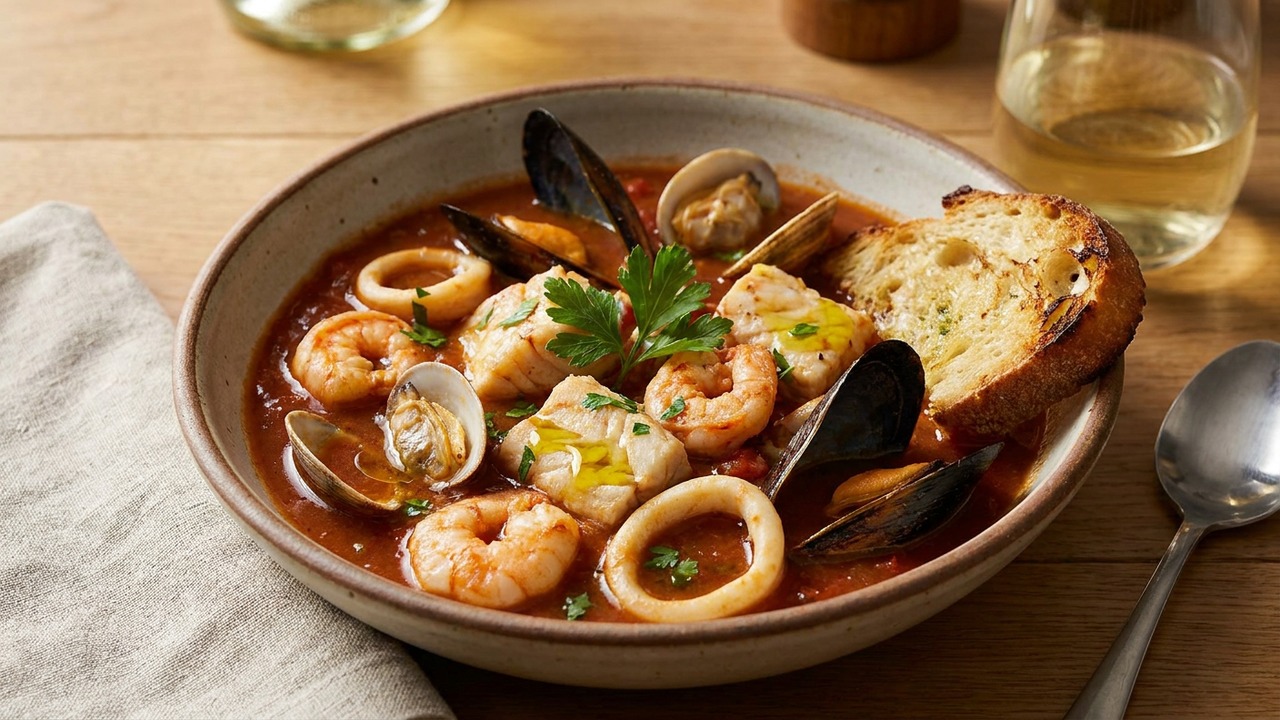
Zuppa di Pesce is a classic Italian stovetop fish stew built from a fragrant tomato-and-wine broth studded with a mix of firm white fish, shrimp, calamari, mussels and clams. Light, briny and intensely savory, it’s an elegant yet approachable seafood supper that highlights the freshness of each shellfish rather than heavy tomato gravy.
Ingredient Spotlight
Crushed San Marzano tomatoes (canned)
San Marzano is a specific plum tomato variety grown in the volcanic soil around Mount Vesuvius in Italy; canned San Marzano tomatoes are prized for a sweeter, less acidic, and more concentrated tomato flavor than generic canned tomatoes. They’re a staple in authentic Italian sauces and pizza, and are sold in many supermarkets and Italian specialty stores (look for DOP/Protected Designation of Origin on the label). If you can’t find them, good substitutes are other high-quality canned crushed tomatoes or whole peeled tomatoes crushed by hand, and you can brighten them with a pinch of sugar and a little tomato paste to mimic the richer flavor.
Ingredient Spotlight
Fish stock or clam juice
Fish stock (fumet) is a concentrated broth made from fish bones and aromatics, while clam juice is the strained liquid from steamed clams; both provide a clean, briny, umami-rich seafood base for soups and sauces. They’re used widely in European and coastal cuisines and are available bottled or canned in the soup/seafood aisle or at fishmongers; you can also make them quickly at home by simmering shells and heads with aromatics. If unavailable, substitute with low-sodium chicken or vegetable stock plus a splash of dry white wine and a little seaweed (kombu) or fish sauce for umami, or use canned clam juice diluted with water.
Ingredient Spotlight
Mussels and clams, cleaned and debearded
Mussels and clams are shellfish bivalves with a briny, slightly sweet ocean flavor commonly used in seafood stews, paella, and pasta dishes; “cleaned and debearded” means the shells have been scrubbed and the mussel’s fibrous beard (byssus) removed. They’re sold live at fishmongers, seafood counters, and some supermarkets—buy fresh, keep them cold, discard any with broken shells or that don’t close when tapped. If fresh shellfish are hard to source, you can substitute extra shrimp, scallops, firm white fish, or good-quality canned clams or mussels (adjust cooking times accordingly).
Jake Woods's note
"This Zuppa di Pesce shines for a weekend family dinner or a relaxed supper with friends — it’s quick to make but feels celebratory. Home cooks will love the layered flavors: keep seafood fresh and cook briefly so each component keeps its texture."
About This Recipe
Zuppa di Pesce is a coastal Italian supper that celebrates the sea without smothering it in tomato sauce. This version leans on bright, canned San Marzano tomatoes, a splash of dry white wine and seafood stock or clam juice to create a fragrant, slightly briny broth that frames rather than overpowers each component. Firm white fish, shrimp and calamari are added first and simmered gently so they stay tender, and mussels and clams are steamed in at the end so their liquor enriches the pot — the result is a stew with clear layers of flavor and a pleasing contrast of textures.
What makes this recipe work is its restraint: modest tomato presence, a short cooking window and an emphasis on technique rather than long braises. Small choices — thinly sliced garlic, a quick wine reduction, and a final drizzle of extra-virgin olive oil and chopped parsley — add polish and freshness. It’s equally at home as an elegant dinner for guests or a relaxed weeknight, because the hands-on time is minimal and the payoff is a lively, satisfying bowl that invites crusty bread for scooping and a wedge of lemon for brightness.
Ingredients for Zuppa di Pesce
- 3 tbsp Extra-virgin olive oil
- 1 medium Yellow onion, finely chopped
- 4 cloves Garlic cloves, thinly sliced
- 1 can (28 oz) Crushed San Marzano tomatoes (canned)
- 1/2 cup Dry white wine
- 2 cups Fish stock or clam juice
- 1 1/2 lb Mixed seafood (firm white fish like cod, peeled shrimp, calamari rings), cut into bite-size pieces
- 1 lb Mussels and clams, cleaned and debearded
- 1/4 cup (chopped) Fresh flat‑leaf parsley, chopped
- 1 to taste Salt and freshly ground black pepper
How to Make Zuppa di Pesce
Step 1: Sauté aromatics
Heat the olive oil in a large, heavy-bottomed saucepan or Dutch oven over medium heat. Add the chopped onion and a pinch of salt and cook until translucent, about 5–7 minutes, stirring occasionally; add the garlic and cook 1 minute more until fragrant, taking care not to brown.For this step
- 3 tbspExtra-virgin olive oil
- 1 mediumYellow onion, finely chopped
- 4 clovesGarlic cloves, thinly sliced
- 1 to tasteSalt and freshly ground black pepper
Step 2: Deglaze and build the broth
Raise the heat to medium-high and pour in the white wine to deglaze, scraping any browned bits from the pan; simmer until reduced by half, about 2 minutes. Add the crushed tomatoes and fish stock (or clam juice), bring to a gentle simmer, then lower the heat and let the broth meld for 8–10 minutes; taste and season with salt and pepper.For this step
- 1 can (28 oz)Crushed San Marzano tomatoes (canned)
- 1/2 cupDry white wine
- 2 cupsFish stock or clam juice
Step 3: Add firm seafood and simmer gently
Stir in the mixed seafood (cubed firm fish, shrimp and calamari) into the simmering broth, making sure pieces are submerged. Simmer gently, uncovered, until the fish is opaque and shrimp are pink, about 3–5 minutes depending on size—avoid overcooking so seafood stays tender.For this step
- 1 1/2 lbMixed seafood (firm white fish like cod, peeled shrimp, calamari rings), cut into bite-size pieces
Step 4: Cook shellfish until they open
Add the cleaned mussels and clams, cover the pot and increase heat to medium-high. Steam until most shells have opened, about 4–6 minutes; discard any that remain tightly closed. Give the stew a gentle stir to distribute juices from the shellfish.For this step
- 1 lbMussels and clams, cleaned and debearded
Step 5: Finish and adjust seasoning
Remove the pot from heat and stir in the chopped parsley and an extra drizzle of olive oil if desired; taste and adjust salt and pepper. For brightness, squeeze a little lemon at the table or add a small pinch of red pepper flakes while simmering if you like heat.For this step
- 1/4 cup (chopped)Fresh flat‑leaf parsley, chopped
Step 6: Serve warm
Ladle the zuppa di pesce into warmed bowls, making sure each portion gets a mix of broth, fish and shellfish. Serve immediately with crusty bread for dipping and a wedge of lemon on the side.


- Heat the olive oil in a large, heavy-bottomed saucepan or Dutch oven over medium heat. Add the chopped onion and a pinch of salt and cook until translucent, about 5–7 minutes, stirring occasionally; add the garlic and cook 1 minute more until fragrant, taking care not to brown.
- Raise the heat to medium-high and pour in the white wine to deglaze, scraping any browned bits from the pan; simmer until reduced by half, about 2 minutes. Add the crushed tomatoes and fish stock (or clam juice), bring to a gentle simmer, then lower the heat and let the broth meld for 8–10 minutes; taste and season with salt and pepper.
- Stir in the mixed seafood (cubed firm fish, shrimp and calamari) into the simmering broth, making sure pieces are submerged. Simmer gently, uncovered, until the fish is opaque and shrimp are pink, about 3–5 minutes depending on size—avoid overcooking so seafood stays tender.
- Add the cleaned mussels and clams, cover the pot and increase heat to medium-high. Steam until most shells have opened, about 4–6 minutes; discard any that remain tightly closed. Give the stew a gentle stir to distribute juices from the shellfish.
- Remove the pot from heat and stir in the chopped parsley and an extra drizzle of olive oil if desired; taste and adjust salt and pepper. For brightness, squeeze a little lemon at the table or add a small pinch of red pepper flakes while simmering if you like heat.
- Ladle the zuppa di pesce into warmed bowls, making sure each portion gets a mix of broth, fish and shellfish. Serve immediately with crusty bread for dipping and a wedge of lemon on the side.
Zuppa di Pesce Tips
Buy the freshest seafood
Choose firm-fleshed fish and live mussels or clams if possible; smell the fish for a clean ocean scent and avoid anything fishy. Fresh ingredients make the short cooking time shine.
Don’t overcook the fish
Add cubed firm fish, shrimp and calamari only long enough for them to turn opaque — usually 3–5 minutes — to keep them tender. Remove from heat as soon as they’re done because residual heat continues to cook.
Reserve shellfish liquor
Before adding mussels and clams, set aside any clams that have opened early and their juices; fold those back into the pot for extra briny depth. Never rinse away the flavorful cooking liquor unless it’s sandy.
Simmer gently, don’t boil
A rolling boil will toughen squid and shrink fish; keep the broth at a gentle simmer so proteins cook evenly and the tomatoes don’t become harsh.
Finish with fresh fat
Stir in a tablespoon or two of good extra-virgin olive oil and chopped parsley off the heat to lift the flavors and add silkiness to the broth.
Zuppa di Pesce Variations and Substitutions
Tomato‑Light Broth
Use half the crushed tomatoes and replace the rest with extra fish stock for a subtler, clearer broth that highlights shellfish flavor more directly.
Saffron and Fennel Twist
Add a pinch of saffron threads with the stock and a handful of thinly sliced fennel during the onion sauté for a fragrant, slightly aniseed variation that pairs beautifully with mussels.
White Wine‑Free Option
Substitute the white wine with an equal amount of additional fish stock plus 1 tablespoon white wine vinegar or lemon juice to add acidity without alcohol.
Vegetarian Sea‑Inspired
Replace seafood with firm oyster mushrooms, artichoke hearts and hearts of palm, and use seaweed-infused vegetable stock to mimic oceanic notes for a meatless version.
How to Store and Make Zuppa di Pesce Ahead
Zuppa di Pesce is best eaten the day it’s made because seafood textures degrade with storage; keep leftovers in an airtight container in the refrigerator for up to 24–48 hours. If possible, strain and store the broth separately from the shellfish and fish to preserve texture, then gently reheat the broth and add seafood just long enough to warm through. Avoid long reheating or boiling which will toughen the proteins, and do not refreeze previously cooked shellfish.
What to Serve With Zuppa di Pesce
Serve the stew in shallow bowls with plenty of crusty bread or grilled baguette rubbed with garlic for sopping up the broth. A crisp, citrusy white wine such as Vermentino or Pinot Grigio complements the dish, and a simple green salad with lemon vinaigrette keeps the meal light and balanced. For a rustic touch, offer little bowls for discarded shells and a lemon wedge at the table.
Zuppa di Pesce FAQs
Can I use frozen seafood?
Yes — frozen shrimp and white fish work fine if fully thawed and patted dry; add them slightly earlier or adjust cook time because frozen pieces tend to release extra water. Avoid frozen mussels or clams unless they were flash-frozen alive and labeled safe to cook from frozen.
How do I clean mussels and clams safely?
Rinse shells under cold water, scrub any debris with a brush and remove beards from mussels by pulling them toward the hinge. Discard any shells that are cracked or remain open after a tap test.
What if some shells don’t open?
Discard any mussels or clams that remain tightly closed after steaming; they’re unsafe to eat. It’s normal for a few to stay closed, but most should open within 4–6 minutes.
Can I make this ahead of time?
You can make the broth a day ahead and refrigerate it separately from the seafood; reheat the broth gently and add fresh seafood to finish cooking just before serving for best texture.
Why does my broth taste flat or bitter?
Flatness often means underseasoning or lack of acidity — adjust with salt and a squeeze of lemon at the end. Bitterness can come from overcooked garlic or tomatoes that cooked too long at high heat; cook aromatics gently and simmer tomatoes briefly.
About the author
Jake WoodsHello, I'm Jake. I started this recipe site with the idea that I hated recipe websites that overwhelm you with long stories and ads just to see plain content that's not helpful. My goal is to provide you with quality recipes, simple ideas and a fun cooking experience. There's lots of fun things to cook, and I think as you browse the site you'll find that TopShelf.Recipes is the place for quality recipes on the web.
See all recipes by Jake Woods →Ratings & Reviews
Did you make this recipe?
Be the first to share your experience.
Nutrition Facts
Per serving: 1 serving
Nutrition values are estimated from USDA ingredient data and may vary based on preparation, brands, and portion sizes. Values are provided for informational purposes only.
Keep Reading
Guides & articles for this recipe

Healthy Eating
Gluten-Free Weeknight Grilling Plan
A 7-day gluten-free weeknight grilling plan with quick, family-friendly recipes, prep-ahead timelines, and a printable shopping list that spotlights late-summer produce and pantry staples. Includes clear cross-contamination safety tips and simple swaps to keep dinners fast and crowd-pleasing.

Healthy Eating
Low-Fat Grill Swaps for Big Flavor
A practical guide to trimming fat from grilled meals without losing juiciness or char. Learn yogurt- and citrus-based marinades, lean protein picks, searing and indirect-heat tricks, plus 5 quick low-fat marinades and a simple weeknight plan.

Recipes
DIY Edible Monster Eyes Candy
Make safe, fun edible monster eyes for cupcakes, cookies, and candy trays. Step-by-step recipes show baking-soda balls, chocolate and fondant eyes, wafer-print options, plus assembly, storage, and kid-friendly safety tips.
More from Italian
View all Italian recipes →
Sicilian Sfincione Pizza

Neapolitan Pizza at Home

Cacio e Pepe Pasta

Sicilian Arancini Rice Balls

Stovetop Skillet Pizza

Saltimbocca alla Romana

Focaccia Genovese

Classic Spaghetti Carbonara

Osso Buco alla Milanese
Ask me anything about this recipe — substitutions, scaling, techniques, timing.
Powered by AI · 6 questions per 5 minutes, 30 per day