Classic Spaghetti Carbonara
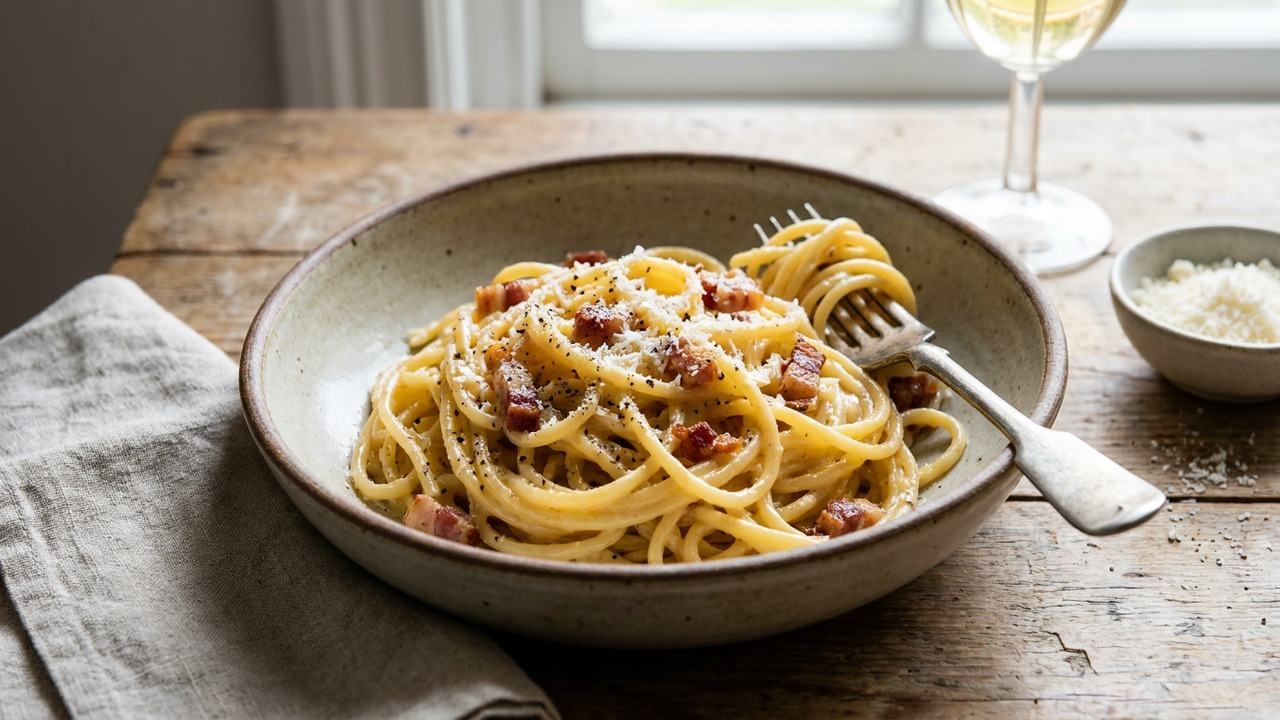
A simple, authentic Roman spaghetti alla carbonara made without cream — just guanciale, pecorino, eggs and freshly ground black pepper. The sauce is an emulsion of eggs, cheese and hot pasta water that yields a silky, clingy coating over perfectly al dente spaghetti.
Ingredient Spotlight
Guanciale
Cured pork jowl (cheek) from Italy, especially Lazio/Rome, used classically in carbonara and amatriciana. It has a rich, silky fattiness and intensely porky, slightly sweet flavor with a delicate melt-in-the-mouth texture. You can find it at Italian delis, specialty butchers, or some well-stocked supermarkets and online retailers. Substitute with pancetta for a closer flavor/texture match or with unsmoked bacon in a pinch, noting bacon’s smokiness and pancetta’s leaner texture.
Ingredient Spotlight
Pecorino Romano
A hard, salty, aged sheep’s-milk cheese from Italy (traditionally Sardinia, Lazio, or Tuscany) frequently used grated over Roman pasta dishes. It’s tangier and saltier than Parmigiano-Reggiano with a sharper, more piquant bite and a crystalline, crumbly texture when aged. You can buy it at grocery store cheese counters, Italian markets, or online. Substitute with Parmigiano-Reggiano or Grana Padano if necessary, but expect a milder, less salty result—add a pinch of salt to compensate if desired.
Jake Woods's note
"This is a true no-cream carbonara that shines for weeknight dinners or when entertaining — it comes together quickly but feels special. Home cooks will love how the simple technique creates a rich, silky sauce without heavy cream."
About This Recipe
This is the Carbonara people rave about when they discover how little stands between them and an impossibly silky plate of pasta: good guanciale, sharp Pecorino Romano, eggs, coarse black pepper and careful timing. There is no cream here — the sauce is a delicate emulsion of beaten eggs and cheese coaxed into a glossy coating by hot pasta and starchy cooking water. The payoff is contrast: al dente spaghetti draped in a clingy, savory custard punctuated by pockets of crisp, salty guanciale and the bright, citrusy bite of freshly ground pepper.
This version works because of measured ratios and a few technique choices — extra yolks for richness, most of the cheese whisked into the eggs with a little held back for finishing, and rendering the guanciale from cold to maximize crispness and flavor. It’s a show-off weeknight dish: fast, ingredient-forward, and forgiving if you pay attention to heat and the pasta-water trick. It suits cooks who like to be hands-on for a short, very rewarding stretch right before serving.
Ingredients for Classic Spaghetti Carbonara
- 14 oz Spaghetti
- 1 tablespoon Kosher salt (for pasta water)
- 6 oz Guanciale, diced into 1/2-inch pieces
- 2 large Large eggs (whole)
- 2 yolk(s) Large egg yolks
- 1 cup Pecorino Romano, finely grated
- 2 teaspoons Freshly ground black pepper
How to Make Classic Spaghetti Carbonara
Step 1: Make the egg-cheese mixture
In a medium bowl whisk together the whole eggs, egg yolks, and about three-quarters of the grated Pecorino until smooth. Season generously with freshly ground black pepper (this is a primary flavor), taste and set the mixture aside in the refrigerator while you cook the pasta and guanciale.For this step
- 2 largeLarge eggs (whole)
- 2 yolk(s)Large egg yolks
- 1 cupPecorino Romano, finely grated
- 2 teaspoonsFreshly ground black pepper
Step 2: Bring salted water to a boil and cook spaghetti
Bring a large pot of water to a rolling boil and add the kosher salt so the water tastes like the sea. Add the spaghetti and cook until very al dente (about 1–2 minutes less than package instructions), reserving 1 1/2 to 2 cups (350–475 ml) of the pasta cooking water before draining.For this step
- 14 ozSpaghetti
- 1 tablespoonKosher salt (for pasta water)
Step 3: Render the guanciale until crisp
While the pasta cooks, place the diced guanciale in a cold, medium skillet and turn the heat to medium. Cook, stirring occasionally, until the fat is rendered and the pieces are crisp and golden, about 6–8 minutes; remove from heat and set the pan to the side but keep the fat in the skillet.For this step
- 6 ozGuanciale, diced into 1/2-inch pieces
Step 4: Combine pasta with guanciale and some pasta water
Add the drained hot spaghetti to the skillet with the guanciale (heat off or very low) and toss to coat in the rendered fat. Add 1/2 cup (120 ml) of the reserved pasta water and toss vigorously to loosen any bits and help the pasta start to emulsify.Step 5: Finish with the egg-cheese emulsion
Working quickly but off the direct heat, pour the egg-cheese mixture over the hot pasta and toss constantly, adding more pasta water a tablespoon at a time as needed until you achieve a glossy, creamy sauce that clings to the noodles. The residual heat cooks the eggs gently — do not return the skillet to high heat or the eggs will scramble.Step 6: Serve and garnish
Divide the carbonara between warmed plates, finish with the remaining Pecorino and another generous crack of black pepper. Serve immediately so the sauce stays silky and enjoy with a simple green salad or crusty bread if desired.


- In a medium bowl whisk together the whole eggs, egg yolks, and about three-quarters of the grated Pecorino until smooth. Season generously with freshly ground black pepper (this is a primary flavor), taste and set the mixture aside in the refrigerator while you cook the pasta and guanciale.
- Bring a large pot of water to a rolling boil and add the kosher salt so the water tastes like the sea. Add the spaghetti and cook until very al dente (about 1–2 minutes less than package instructions), reserving 1 1/2 to 2 cups (350–475 ml) of the pasta cooking water before draining.
- While the pasta cooks, place the diced guanciale in a cold, medium skillet and turn the heat to medium. Cook, stirring occasionally, until the fat is rendered and the pieces are crisp and golden, about 6–8 minutes; remove from heat and set the pan to the side but keep the fat in the skillet.
- Add the drained hot spaghetti to the skillet with the guanciale (heat off or very low) and toss to coat in the rendered fat. Add 1/2 cup (120 ml) of the reserved pasta water and toss vigorously to loosen any bits and help the pasta start to emulsify.
- Working quickly but off the direct heat, pour the egg-cheese mixture over the hot pasta and toss constantly, adding more pasta water a tablespoon at a time as needed until you achieve a glossy, creamy sauce that clings to the noodles. The residual heat cooks the eggs gently — do not return the skillet to high heat or the eggs will scramble.
- Divide the carbonara between warmed plates, finish with the remaining Pecorino and another generous crack of black pepper. Serve immediately so the sauce stays silky and enjoy with a simple green salad or crusty bread if desired.
Classic Spaghetti Carbonara Tips
Start guanciale cold
Put diced guanciale in a cold pan and bring it up to medium heat so the fat renders slowly and the pieces crisp without burning.
Salt like the sea
Season the pasta water generously — the spaghetti itself needs seasoning because the sauce has concentrated flavors and the guanciale alone won’t salt every strand.
Reserve plenty water
Save 1½–2 cups of cooking water; the starchy liquid is your emulsifier, added tablespoon by tablespoon to achieve a glossy sauce without scrambling the eggs.
Off-heat finishing
Always add the egg-cheese mixture off direct heat and toss constantly; residual heat cooks the eggs gently and keeps the texture silky rather than curdled.
Taste and adjust
Because pecorino and guanciale vary in saltiness, taste before adding extra cheese and adjust pepper aggressively — it’s a signature flavor in carbonara.
Classic Spaghetti Carbonara Variations and Substitutions
Pancetta or bacon swap
If guanciale is unavailable, use thick-cut pancetta for a similar porky flavor or unsmoked bacon in a pinch, but reduce added salt when using bacon because it’s often already quite salty.
Vegetarian mushroom carbonara
Replace guanciale with a generous sauté of cremini and shiitake mushrooms cooked until deeply browned with a splash of soy for umami; keep the egg-cheese emulsion for the authentic texture.
Gluten-free pasta option
Use a high-quality gluten-free spaghetti and follow the same cook-to-very-al-dente timing, as GF pastas can become mushy if overcooked; rely on reserved water for emulsification.
Creamy, nontraditional finish
For a richer but nontraditional take, whisk a quarter cup of cream into the egg-cheese mixture — it makes the sauce more forgiving when reheating but dilutes the classic flavor profile.
How to Store and Make Classic Spaghetti Carbonara Ahead
Carbonara is best eaten immediately; leftovers will lose silkiness. Store cooled leftovers in an airtight container in the refrigerator for up to 2 days, ideally keeping pasta and guanciale together. Reheat gently in a skillet over low heat with a splash of reserved pasta water (or milk/cream) while tossing to re-emulsify the sauce, rather than microwaving at high power which can cause curdling.
What to Serve With Classic Spaghetti Carbonara
Serve on warmed plates and finish with extra Pecorino and a heavy grind of black pepper. Pair with a simple peppery arugula salad dressed with lemon and olive oil, crusty bread to mop up any sauce, and a zesty Italian white like Verdicchio or a light, chilled Frascati.
Classic Spaghetti Carbonara FAQs
Can I use bacon instead of guanciale?
Yes — thick-cut unsmoked bacon or pancetta will work, though the flavor will be slightly different; reduce added salt because these substitutes can be saltier than guanciale.
Why did my sauce scramble?
Scrambling happens when the eggs meet too much heat. Finish the pasta off heat, toss constantly, and add starchy pasta water gradually so the eggs cook gently into a creamy emulsion rather than curds.
How do I know when the pasta is ready to combine?
Cook spaghetti 1–2 minutes less than package directions so it’s very al dente; it will finish cooking while you toss with guanciale and the egg-cheese mixture, absorbing flavor without going soft.
Can I make components ahead of time?
You can render the guanciale and grate the cheese a day ahead, and whisk the eggs with cheese just before using; avoid assembling the finished dish more than 20–30 minutes before serving to preserve texture.
Is Pecorino Romano necessary or can I use Parmesan?
Pecorino Romano gives a tangy, salty backbone that’s traditional, but a firm Parmigiano-Reggiano will work if you prefer a milder, nuttier flavor — consider blending the two for balance.
About the author
Jake WoodsHello, I'm Jake. I started this recipe site with the idea that I hated recipe websites that overwhelm you with long stories and ads just to see plain content that's not helpful. My goal is to provide you with quality recipes, simple ideas and a fun cooking experience. There's lots of fun things to cook, and I think as you browse the site you'll find that TopShelf.Recipes is the place for quality recipes on the web.
See all recipes by Jake Woods →Ratings & Reviews
Did you make this recipe?
Be the first to share your experience.
Nutrition Facts
Per serving: 1 serving
Nutrition values are estimated from USDA ingredient data and may vary based on preparation, brands, and portion sizes. Values are provided for informational purposes only.
Keep Reading
Guides & articles for this recipe

Healthy Eating
Gluten-Free Weeknight Grilling Plan
A 7-day gluten-free weeknight grilling plan with quick, family-friendly recipes, prep-ahead timelines, and a printable shopping list that spotlights late-summer produce and pantry staples. Includes clear cross-contamination safety tips and simple swaps to keep dinners fast and crowd-pleasing.

Healthy Eating
Low-Fat Grill Swaps for Big Flavor
A practical guide to trimming fat from grilled meals without losing juiciness or char. Learn yogurt- and citrus-based marinades, lean protein picks, searing and indirect-heat tricks, plus 5 quick low-fat marinades and a simple weeknight plan.

Recipes
DIY Edible Monster Eyes Candy
Make safe, fun edible monster eyes for cupcakes, cookies, and candy trays. Step-by-step recipes show baking-soda balls, chocolate and fondant eyes, wafer-print options, plus assembly, storage, and kid-friendly safety tips.
More from Italian
View all Italian recipes →
Sicilian Sfincione Pizza

Neapolitan Pizza at Home

Cacio e Pepe Pasta

Sicilian Arancini Rice Balls

Stovetop Skillet Pizza

Zuppa di Pesce

Saltimbocca alla Romana

Focaccia Genovese

Osso Buco alla Milanese
Ask me anything about this recipe — substitutions, scaling, techniques, timing.
Powered by AI · 6 questions per 5 minutes, 30 per day