Stovetop Skillet Pizza
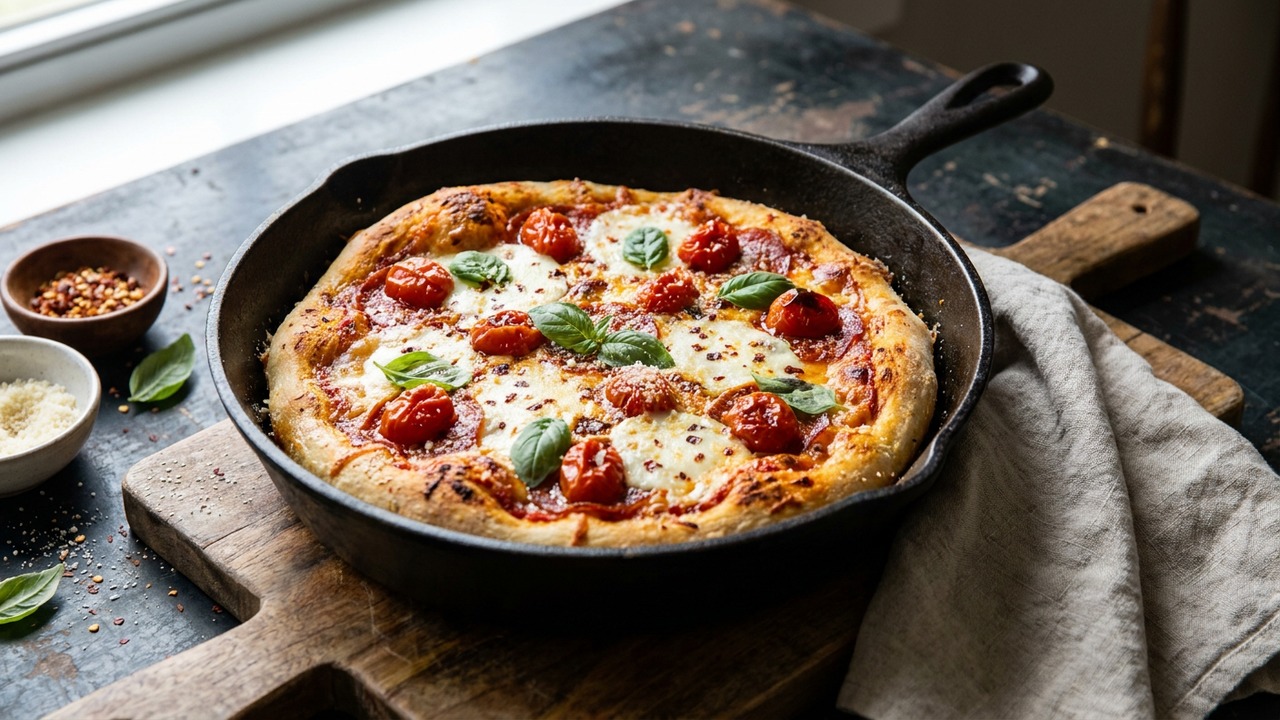
A reliable oven-free pizza technique that yields a crisp, golden crust and melty topping using only a heavy skillet and a lid. Perfect for renters and small kitchens who want quality pizza without an oven.
Jake Woods's note
"This stovetop skillet method produces a crunchy bottom and perfectly melted cheese in under 30 minutes — ideal for weeknights or small kitchens. Swap toppings freely to make it your go-to no-oven pizza."
About This Recipe
This stovetop skillet pizza is the answer when you want a blistered, deeply browned crust and gooey cheese without firing up an oven. The secret is direct contact: a heavy skillet (cast iron is ideal) delivers steady, high heat to the dough's underside, creating a crunchy base that contrasts with a tender interior. A thin, uncooked tomato-garlic sauce keeps brightness and a fresh bite, while covering the pan traps just enough steam to melt the mozzarella without turning the crust soggy. Brushing oil both under and over the dough encourages even browning and prevents sticking, and finishing with bright basil lifts the pie.
This technique is perfect for renters, students, or anyone with a tiny kitchen who refuses to compromise on pizza quality. It rewards small adjustments — slightly lower heat, a tighter lid, a thinner sauce — and works best with simple, fast-melting toppings like prosciutto, thin-sliced tomatoes, or olives. Once you learn how your skillet behaves, you can reliably turn one pound of store dough into two restaurant-style skillet pizzas in about 30 minutes.
Ingredients for Stovetop Skillet Pizza
- 1 lb (about 16 oz) Store-bought pizza dough (about 16 oz)
- 2 tbsp Extra-virgin olive oil
- 2 cloves Garlic, minced
- 1 tsp Salt
- 3/4 cup Crushed tomatoes (or quick pizza sauce)
- 8 oz Shredded mozzarella
- 1 tbsp Cornmeal or all-purpose flour (for dusting)
- 8 leaves Fresh basil leaves (for finishing)
How to Make Stovetop Skillet Pizza
Step 1: Prepare quick sauce and aromatics
Combine the crushed tomatoes with the minced garlic and salt in a small bowl and taste, adjusting seasoning as needed. This simple sauce doesn't require cooking ahead — it will warm and meld under the lid while the cheese melts.For this step
- 2 clovesGarlic, minced
- 1 tspSalt
Step 2: Shape dough and preheat skillet
Divide the dough into two even portions if needed and gently stretch each into a 7–8 inch disc on a cornmeal-dusted surface to prevent sticking. Heat a heavy 10–12 inch skillet (cast iron is ideal) over medium-high heat, then brush the pan and the top of the dough lightly with olive oil.For this step
- 1 lb (about 16 oz)Store-bought pizza dough (about 16 oz)
- 2 tbspExtra-virgin olive oil
- 1 tbspCornmeal or all-purpose flour (for dusting)
Step 3: Sear the crust in the skillet
Place one dough disc oil-side down in the hot skillet and cook, uncovered, until the bottom is deeply golden and crisp, about 2–4 minutes — lift an edge to check. Reduce heat slightly if the crust is browning too fast; the goal is a firm, browned base before adding toppings.Step 4: Top, cover, and melt cheese
Flip the seared dough so the cooked side is up, spread a thin layer of the tomato sauce, and sprinkle the shredded mozzarella evenly over the surface. Lower the heat to medium-low, cover the skillet with a tight-fitting lid, and cook until the cheese is melted and the bottom is fully crisp, about 4–6 minutes.For this step
- 3/4 cupCrushed tomatoes (or quick pizza sauce)
- 8 ozShredded mozzarella
Step 5: Finish and serve
Remove the pizza from the skillet onto a cutting board, tear fresh basil over the top, and let it rest 1–2 minutes before slicing to avoid sliding toppings. Repeat for the second pizza (or keep warm in a low oven if available) and serve hot.For this step
- 8 leavesFresh basil leaves (for finishing)


- Combine the crushed tomatoes with the minced garlic and salt in a small bowl and taste, adjusting seasoning as needed. This simple sauce doesn't require cooking ahead — it will warm and meld under the lid while the cheese melts.
- Divide the dough into two even portions if needed and gently stretch each into a 7–8 inch disc on a cornmeal-dusted surface to prevent sticking. Heat a heavy 10–12 inch skillet (cast iron is ideal) over medium-high heat, then brush the pan and the top of the dough lightly with olive oil.
- Place one dough disc oil-side down in the hot skillet and cook, uncovered, until the bottom is deeply golden and crisp, about 2–4 minutes — lift an edge to check. Reduce heat slightly if the crust is browning too fast; the goal is a firm, browned base before adding toppings.
- Flip the seared dough so the cooked side is up, spread a thin layer of the tomato sauce, and sprinkle the shredded mozzarella evenly over the surface. Lower the heat to medium-low, cover the skillet with a tight-fitting lid, and cook until the cheese is melted and the bottom is fully crisp, about 4–6 minutes.
- Remove the pizza from the skillet onto a cutting board, tear fresh basil over the top, and let it rest 1–2 minutes before slicing to avoid sliding toppings. Repeat for the second pizza (or keep warm in a low oven if available) and serve hot.
Stovetop Skillet Pizza Tips
Heat the Skillet Well
Preheat a heavy 10–12 inch skillet over medium-high until it's uniformly hot so the dough sears immediately and forms a crisp crust.
Check the Crust Often
Lift an edge with a spatula after 2 minutes to inspect color; reduce heat if it's browning too fast to allow the interior to cook through.
Brush Both Sides Lightly
A thin coat of olive oil under and on top of the dough promotes a golden crust and prevents sticking without making the surface greasy.
Use a Tight Lid
Covering the skillet traps steam to melt the cheese quickly, but a snug lid keeps most of that moisture above the pizza instead of condensing on the crust.
Trim Toppings Thinly
Use pre-shredded mozzarella and thin or precooked toppings so everything heats through in the 4–6 minute covered step.
Let Dough Relax
If store dough is tough to stretch, let it rest at room temperature 10–20 minutes; relaxed gluten stretches faster and resists spring-back.
Stovetop Skillet Pizza Variations and Substitutions
Vegan Cheese and Veg
Swap shredded mozzarella for a high-quality vegan melting cheese and use olive oil, garlic, roasted mushrooms, and spinach for a dairy-free pie that still melts and browns nicely.
White Garlic-Ricotta Pizza
Skip the tomato sauce and dollop a thin layer of ricotta mixed with minced garlic and salt, then top with mozzarella for a creamy white skillet pizza.
Gluten-Free Dough
Use a store-bought gluten-free pizza dough or pre-made crust; lower the initial heat slightly and watch closely since these crusts brown faster and can burn.
BBQ Chicken Twist
Swap crushed tomatoes for a thin layer of barbecue sauce, add cooked shredded chicken and red onion, then finish with cilantro instead of basil for a tangy variation.
How to Store and Make Stovetop Skillet Pizza Ahead
Store leftover pizza in an airtight container in the refrigerator for up to 3 days; separating layers with parchment prevents sticking. To reheat, warm slices in a dry skillet over medium-low for 3–5 minutes to revive the crisp bottom and remelt the cheese, or finish in a toaster oven for a similar effect; microwaving will soften the crust quickly.
What to Serve With Stovetop Skillet Pizza
Serve these skillet pizzas with a simple peppery arugula salad dressed with lemon and olive oil or a bowl of marinated olives and roasted red peppers to complement the bright tomato-garlic sauce. For drinks, a crisp Italian lager, a light Chianti, or a citrusy aperitif like Aperol Spritz pairs well; present the pizzas on a wooden board and slice into quarters for casual sharing.
Stovetop Skillet Pizza FAQs
Can I cook one large pizza instead of two smaller ones?
Yes, but a single large pizza needs a bigger skillet and more time to cook through; you may need to lower the heat slightly and extend the covered melting stage so the center heats without burning the edges.
My crust is soggy after covering — how do I fix it?
Make sure the bottom is well-seared before adding toppings and use a thin layer of sauce; also reduce the lid time or crack the lid near the end to let excess steam escape so the crust stays crisp.
Can I add raw meat toppings directly on the pizza?
No — raw sausage or thick chicken won't cook through in the short covered step; precook any raw meats or use thinly sliced cured meats like prosciutto, which just need warming.
What if my skillet is too large or too small?
A 10–12 inch skillet is ideal for a 7–8 inch disc; in a smaller pan, the dough will pile up and cook unevenly, while in a much larger pan you may need to stretch a single large pizza instead of two rounds and adjust timing.
How do I keep the second pizza warm while the first is served?
Place the finished pizza on a wire rack in a warm (150–175°F/65–80°C) oven if available, or tent loosely with foil on a cutting board to prevent sogginess while you cook the second pie.
About the author
Jake WoodsHello, I'm Jake. I started this recipe site with the idea that I hated recipe websites that overwhelm you with long stories and ads just to see plain content that's not helpful. My goal is to provide you with quality recipes, simple ideas and a fun cooking experience. There's lots of fun things to cook, and I think as you browse the site you'll find that TopShelf.Recipes is the place for quality recipes on the web.
See all recipes by Jake Woods →Ratings & Reviews
Did you make this recipe?
Be the first to share your experience.
Nutrition Facts
Per serving: 1 serving
Nutrition values are estimated from USDA ingredient data and may vary based on preparation, brands, and portion sizes. Values are provided for informational purposes only.
Keep Reading
Guides & articles for this recipe

Healthy Eating
Gluten-Free Weeknight Grilling Plan
A 7-day gluten-free weeknight grilling plan with quick, family-friendly recipes, prep-ahead timelines, and a printable shopping list that spotlights late-summer produce and pantry staples. Includes clear cross-contamination safety tips and simple swaps to keep dinners fast and crowd-pleasing.

Healthy Eating
Low-Fat Grill Swaps for Big Flavor
A practical guide to trimming fat from grilled meals without losing juiciness or char. Learn yogurt- and citrus-based marinades, lean protein picks, searing and indirect-heat tricks, plus 5 quick low-fat marinades and a simple weeknight plan.

Recipes
DIY Edible Monster Eyes Candy
Make safe, fun edible monster eyes for cupcakes, cookies, and candy trays. Step-by-step recipes show baking-soda balls, chocolate and fondant eyes, wafer-print options, plus assembly, storage, and kid-friendly safety tips.
More from Italian
View all Italian recipes →
Sicilian Sfincione Pizza

Neapolitan Pizza at Home

Cacio e Pepe Pasta

Sicilian Arancini Rice Balls

Zuppa di Pesce

Saltimbocca alla Romana

Focaccia Genovese

Classic Spaghetti Carbonara

Osso Buco alla Milanese
Ask me anything about this recipe — substitutions, scaling, techniques, timing.
Powered by AI · 6 questions per 5 minutes, 30 per day