Classic Tiramisu
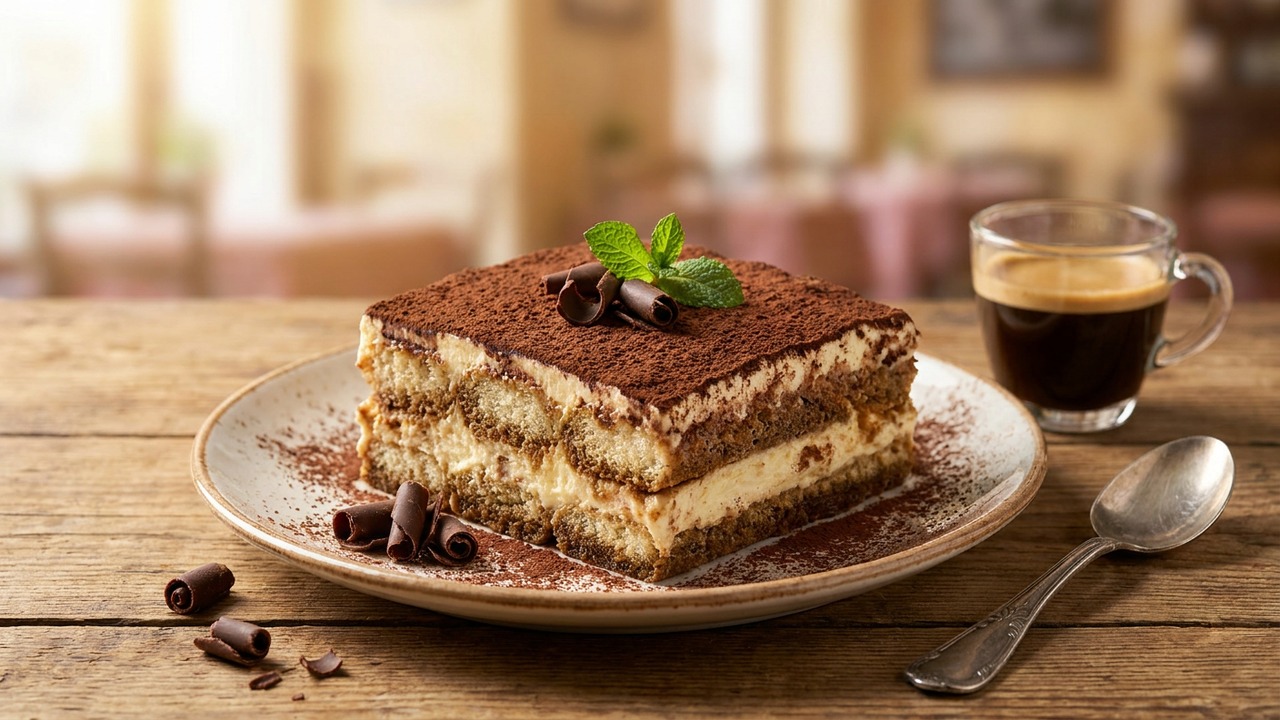
Classic Tiramisu is a layered Italian dessert of espresso-soaked ladyfingers and a smooth mascarpone custard, dusted with cocoa. Rich but airy, it combines bold coffee and liqueur flavors with silky texture for an elegant make-ahead dessert.
Ingredient Spotlight
Mascarpone cheese
A soft, spreadable Italian cream cheese from Lombardy commonly used in desserts like tiramisu; it’s made from heavy cream and has a very rich, silky texture. Flavor is mildly sweet, buttery and very creamy with a subtle milky aroma. Find it in the refrigerated cheese/dairy section of supermarkets or specialty Italian markets. Substitute with full‑fat cream cheese thinned with a little heavy cream (or a mix of ricotta and cream) for texture and richness.
Ingredient Spotlight
Ladyfingers (savoiardi)
Light, dry, sponge‑like cookies of Italian origin (savoiardi) that are slightly sweet and designed to absorb coffee or liqueur without falling apart. They’re crisp when dry but quickly become spongey and moist after soaking, which is key for tiramisu’s texture. Available in most grocery stores’ cookie/biscuit aisle or at Italian markets; if you can’t find them, use slices of sponge cake/genoise or make homemade sponge fingers as a substitute.
Ingredient Spotlight
Coffee liqueur (Kahlúa, Marsala, or similar)
Kahlúa is a Mexican coffee‑flavored liqueur (sweet, molasses/rum notes) commonly used in desserts and cocktails; Marsala is a Sicilian fortified wine (nutty, caramel, oxidized flavors) often used in tiramisu variations though it isn’t a coffee liqueur. These add boozy depth and sweetness; find them at liquor stores or well‑stocked supermarkets. Substitute with strong espresso mixed with a little sugar and a splash of rum, brandy, or non‑alcoholic coffee extract if you prefer no alcohol.
Jake Woods's note
"This tiramisu shines at dinner parties and holiday gatherings because it can be made a day ahead for deeper flavor and easier serving. Home cooks will love how the layers come together with just a few classic ingredients and simple assembly tips for perfect texture."
About This Recipe
Tiramisu is one of those desserts that reads as luxurious but is surprisingly straightforward to execute, and this version leans into the classic balance of bold espresso, a whisper of liqueur, and the cloudlike richness of a mascarpone-zabaglione custard. The zabaglione—egg yolks whisked over a bain-marie to a safe 160°F—gives the filling a lifted, velvety structure that keeps the cream from collapsing, while folding in gently whipped cream preserves an airy texture that melts on the tongue. Quick-dipped ladyfingers provide an economical sponge for the coffee, absorbing just enough liquid to be tender without turning mushy, and a last-minute dusting of unsweetened cocoa keeps the finish slightly bitter and sophisticated.
This recipe is tailored for entertaining and make-ahead planning: assemble a day ahead to let the flavors marry and the custard firm up, and you’ll be rewarded with cleaner slices and a more integrated coffee note. It’s aimed at home cooks who appreciate technique—temperature control for the zabaglione and careful folding make the difference—but it’s forgiving enough to adapt, whether you’re trimming sweetness, omitting alcohol, or swapping in gluten-free cookies. The end result is elegant yet approachable, perfect for a dinner party finale or a weekend treat when you want something showy without last-minute fuss.
Ingredients for Classic Tiramisu
- 1 1/4 cups Freshly brewed espresso, cooled
- 1/4 cup Coffee liqueur (Marsala, Kahlúa, or similar)
- 5 count Large egg yolks
- 3/4 cup Granulated sugar
- 2 cups (about 16 oz) Mascarpone cheese
- 1 cup Heavy cream (35% or whipping cream)
- 24 count Ladyfingers (savoiardi)
- 2 tablespoons Unsweetened cocoa powder (for dusting)
How to Make Classic Tiramisu
Step 1: Prepare coffee soak
Brew very strong espresso and let it cool to room temperature, then stir in the coffee liqueur in a shallow dish. Chilling the mixture briefly speeds assembly, but it should remain liquid enough for quick dipping.For this step
- 1 1/4 cupsFreshly brewed espresso, cooled
- 1/4 cupCoffee liqueur (Marsala, Kahlúa, or similar)
Step 2: Make the zabaglione base
Whisk the egg yolks and granulated sugar together in a heatproof bowl set over a simmering pan of water (bain-marie) until pale, thick, and the sugar dissolves—about 6–8 minutes; the mixture should reach roughly 160°F (71°C) for safety. Remove from heat and beat with a hand mixer 2–3 minutes until slightly cooled and velvety.For this step
- 5 countLarge egg yolks
- 3/4 cupGranulated sugar
Step 3: Combine mascarpone and whipped cream
Gently fold the mascarpone into the cooled yolk mixture until smooth and lump-free; avoid overbeating which can thin the custard. Separately whip the heavy cream to soft peaks, then fold it into the mascarpone mixture in two additions to lighten the texture without deflating the cream.For this step
- 2 cups (about 16 oz)Mascarpone cheese
- 1 cupHeavy cream (35% or whipping cream)
Step 4: Assemble the layers
Quickly dip each ladyfinger (1–2 seconds) into the coffee mixture—do not soak—and arrange a single, snug layer in a 9x9-inch (or similar) dish. Spread half the mascarpone mixture over the cookies, repeat with a second dipped ladyfinger layer, and finish with the remaining mascarpone mixture, smoothing the top with an offset spatula.For this step
- 24 countLadyfingers (savoiardi)
Step 5: Chill and finish
Cover and refrigerate at least 4 hours (ideally overnight) to allow flavors to meld and the custard to set. Just before serving, dust generously with unsweetened cocoa powder and optionally shave dark chocolate over the top; keep chilled until served.For this step
- 2 tablespoonsUnsweetened cocoa powder (for dusting)


- Brew very strong espresso and let it cool to room temperature, then stir in the coffee liqueur in a shallow dish. Chilling the mixture briefly speeds assembly, but it should remain liquid enough for quick dipping.
- Whisk the egg yolks and granulated sugar together in a heatproof bowl set over a simmering pan of water (bain-marie) until pale, thick, and the sugar dissolves—about 6–8 minutes; the mixture should reach roughly 160°F (71°C) for safety. Remove from heat and beat with a hand mixer 2–3 minutes until slightly cooled and velvety.
- Gently fold the mascarpone into the cooled yolk mixture until smooth and lump-free; avoid overbeating which can thin the custard. Separately whip the heavy cream to soft peaks, then fold it into the mascarpone mixture in two additions to lighten the texture without deflating the cream.
- Quickly dip each ladyfinger (1–2 seconds) into the coffee mixture—do not soak—and arrange a single, snug layer in a 9x9-inch (or similar) dish. Spread half the mascarpone mixture over the cookies, repeat with a second dipped ladyfinger layer, and finish with the remaining mascarpone mixture, smoothing the top with an offset spatula.
- Cover and refrigerate at least 4 hours (ideally overnight) to allow flavors to meld and the custard to set. Just before serving, dust generously with unsweetened cocoa powder and optionally shave dark chocolate over the top; keep chilled until served.
Classic Tiramisu Tips
Monitor zabaglione temperature
Use an instant-read thermometer and stop at about 160°F (71°C) to ensure safety while keeping the mixture silky; overheated yolks will scramble or become grainy.
Dip ladyfingers briefly
One- to two-second dips are enough—too long and they’ll collapse into sogginess, too short and they’ll stay dry; work quickly and assemble on a baking sheet to speed things up.
Bring mascarpone to room temperature
Softened mascarpone folds in smoothly and minimizes lumps; cold cheese requires more mixing and can break the custard.
Whip cream to soft peaks
Stop when peaks barely hold—overwhipping makes the filling grainy and difficult to fold, while underwhipping yields a dense final texture.
Dust cocoa last-minute
Apply the cocoa powder just before serving to keep it from absorbing moisture and losing its dry, bitter contrast against the sweet custard.
Classic Tiramisu Variations and Substitutions
Alcohol-free coffee soak
Replace the coffee liqueur with an equal amount of strong brewed espresso and a teaspoon of vanilla extract or a splash of almond extract for depth without alcohol.
Chocolate-layer tiramisu
Spread a thin layer of chocolate ganache between layers or use cocoa-dusted ladyfingers and fold 2–3 tablespoons of melted dark chocolate into the mascarpone for a fudgier profile.
Berry and citrus twist
Add a layer of macerated raspberries or thinly sliced orange segments between the ladyfingers and mascarpone to introduce bright acidity that cuts the richness.
Gluten-free option
Use gluten-free sponge fingers or thinly sliced gluten-free pound cake, dipped carefully in the coffee for the same structure and soak behavior as traditional savoiardi.
How to Store and Make Classic Tiramisu Ahead
Store tiramisu covered in the refrigerator for up to 48 hours; flavors continue to meld but the ladyfingers will gradually soften. For longer storage, freeze tightly wrapped for up to one month—thaw overnight in the fridge and note the texture will be slightly wetter. Do not attempt to reheat; serve chilled or bring to room temperature for 10–15 minutes before plating.
What to Serve With Classic Tiramisu
Cut into neat squares and use long, thin spatulas for clean slices, dusting cocoa just before bringing plates to the table. Pair with an espresso or a small glass of Vin Santo, Marsala, or a rich tawny port to echo the dessert’s coffee and liqueur notes; a few fresh berries or a sprig of mint brightens the plate visually and palate-wise.
Classic Tiramisu FAQs
Are the raw egg yolks safe to eat?
This recipe cooks the yolks into a zabaglione over a bain-marie until about 160°F (71°C), which reduces bacterial risk and produces a thick, safe custard; use pasteurized eggs if you remain concerned.
My mascarpone mixture is grainy—what went wrong?
Graininess can come from overheating the zabaglione or overfolding cold mascarpone; salvage it by gently beating with a hand mixer off-heat while adding a tablespoon of warm cream to smooth the texture.
Can I make tiramisu the same day I plan to serve it?
You can, but chilling for at least 4 hours is required to set the custard; overnight refrigeration (8–24 hours) yields cleaner slices and a more harmonious flavor.
What if the ladyfingers get too soggy?
If over-soaked, you can spoon a little of the mascarpone into the gaps to stabilize, but prevention is best—dip each cookie very briefly and assemble quickly to avoid prolonged contact with the liquid.
Can I use cream cheese instead of mascarpone?
Cream cheese is tangier and firmer; blend it with a little heavy cream (about 2–3 tablespoons per 8 ounces) and a touch of mascarpone or crème fraîche to mimic the mouthfeel, though the flavor will be different from classic tiramisu.
About the author
Jake WoodsHello, I'm Jake. I started this recipe site with the idea that I hated recipe websites that overwhelm you with long stories and ads just to see plain content that's not helpful. My goal is to provide you with quality recipes, simple ideas and a fun cooking experience. There's lots of fun things to cook, and I think as you browse the site you'll find that TopShelf.Recipes is the place for quality recipes on the web.
See all recipes by Jake Woods →Ratings & Reviews
Did you make this recipe?
Be the first to share your experience.
Nutrition Facts
Per serving: about 1¾ cups
Nutrition values are estimated from USDA ingredient data and may vary based on preparation, brands, and portion sizes. Values are provided for informational purposes only.
Keep Reading
Guides & articles for this recipe

Healthy Eating
Gluten-Free Weeknight Grilling Plan
A 7-day gluten-free weeknight grilling plan with quick, family-friendly recipes, prep-ahead timelines, and a printable shopping list that spotlights late-summer produce and pantry staples. Includes clear cross-contamination safety tips and simple swaps to keep dinners fast and crowd-pleasing.

Healthy Eating
Low-Fat Grill Swaps for Big Flavor
A practical guide to trimming fat from grilled meals without losing juiciness or char. Learn yogurt- and citrus-based marinades, lean protein picks, searing and indirect-heat tricks, plus 5 quick low-fat marinades and a simple weeknight plan.

Recipes
DIY Edible Monster Eyes Candy
Make safe, fun edible monster eyes for cupcakes, cookies, and candy trays. Step-by-step recipes show baking-soda balls, chocolate and fondant eyes, wafer-print options, plus assembly, storage, and kid-friendly safety tips.
More from Italian
View all Italian recipes →
Sicilian Sfincione Pizza

Neapolitan Pizza at Home

Cacio e Pepe Pasta

Sicilian Arancini Rice Balls

Stovetop Skillet Pizza

Zuppa di Pesce

Saltimbocca alla Romana

Focaccia Genovese

Classic Spaghetti Carbonara
Ask me anything about this recipe — substitutions, scaling, techniques, timing.
Powered by AI · 6 questions per 5 minutes, 30 per day